
Royal Pardons for Anwar and Najib: is every Royal Pardon really the same?

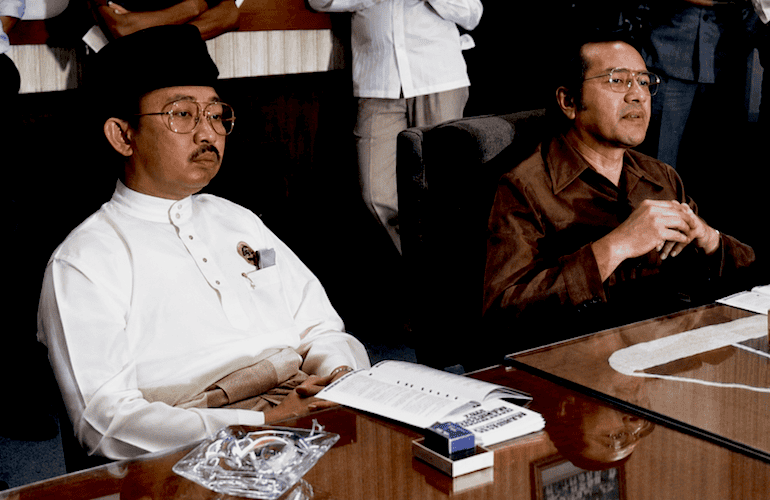
A royal pardon is not always what it seems. Nor are all pardons born equal. This essay sets Anwar’s legal clean slate against Najib’s trimmed sentence, and asks what that reveals about power, process, and the Malaysian Constitution. Along the way, it shows how two decisions of the Pardons Board produced strikingly different outcomes in law, politics, and public meaning – a tale of delays, denials, and enduring debates.

Read More

Can an insurer cancel or void a policy in the face of MIB – and by when?

In Malaysia, if a car is validly insured when an accident happens, the insurer must pay the victim. Compulsory-insurance legislation, the Motor Insurers’ Bureau Agreements, and consumer-protection reforms now make post‑accident cancellations and technical excuses very difficult. The whole scheme is designed to protect injured people, not insurers’ balance sheets.

Read More

The Greatest Judges of All Time: the Titans who defied history

When history called, eleven judges answered: “Here I stand.” From Atkin’s neighbour principle to Dixon’s legalism, from Solomon’s wisdom to Bao Zheng’s integrity, from Abu Hanifa’s reasoning to Ginsburg’s equality crusade—these titans of justice dared to choose courage over comfort, principle over precedent. Their legacy lives in every courtroom where fairness still matters—proof that law can be humanity’s greatest tool for justice.

Read More

Has the RTA made the ‘insurable interest defence’ and the ‘recovery action,’ redundant?

Should innocent accident victims be forced into costly legal battles twice—once against the driver and again, [by what has come to be known as a ‘Recover Action’] against the insurer? How did Malaysia’s Federal Court in the 2022 Sa' Amran decision demolish 70 years of established insurance practice? How did it revolutionise third-party victim compensation?

Read More

The Promise and the Perils of Artificial Intelligence in Court Work

Artificial Intelligence flows through the hallowed halls of justice as the morning mist—pervasive, transformative, and unstoppable. Courts and lawyers alike should embrace AI — with wisdom, not fear. Frost reminds us, “The best way out is always through.” No machine can ever match the human soul's eternal quest for justice. That fire burns beyond all programming.

Read More

Can the Home Minister declare a 7-star hotel as a prison?

"Don't be ridiculous!", is what you would say. Why not? This is because on March 6, 2025, it was reported that Malaysia’s Home Minister could declare any place (including a house) as a 'prison' under sec.3 of the Prisons Act 1995 (the Act). This was meant to – and did spark – a heated debate: could the Home Minister use his discretion to incarcerate a prisoner at a luxurious residence? ...

Read More

Do Malaysian non-Muslims have the fundamental right to worship?

The answer is, Yes. The Malaysian Federal Constitution, specifically Article 11(1), read with Art 3(1) and (5), guarantees every individual’s right to ‘profess’, ‘practice’, and, subject to certain laws prohibiting proselytisation to Muslims, to ‘propagate’ their religion. The Constitution therefore guarantees that non-Muslims have the same fundamental right of worship as do our Muslim counterparts. I will all tell you an interesting story at the end.

Read More

Is the test for a stay of execution in personal injury cases, different?

The test for a stay of execution in personal injury cases involving the Road Transport Act 1987 (RTA) differs significantly from other civil cases. This essay examines the nuances of this test and addresses several key questions. It concludes that the test is far higher because of the operation of sec. 96(2)(b), read with ss.96(1) and 91(3) of the RTA. The other question is whether the insurer's 'right to intervene' ...

Read More