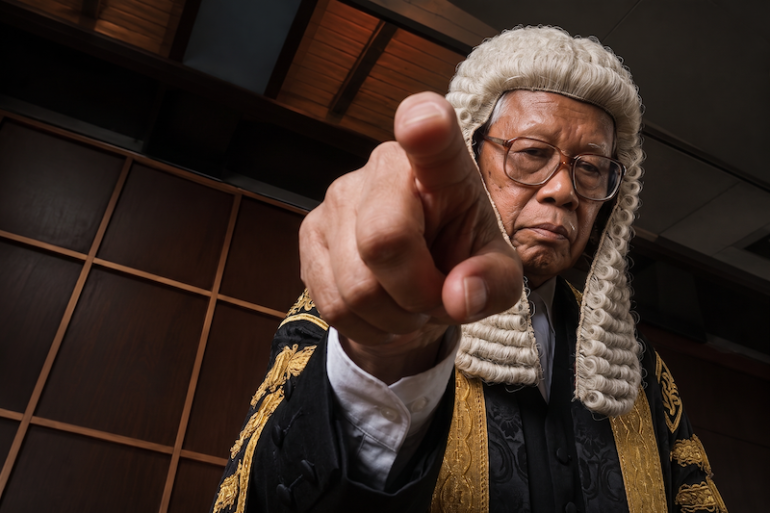

How should Professional Bodies punish multiple disciplinary offences? The principle of ‘Totality’

When a professional is found guilty of multiple misconducts, should a disciplinary body impose separate punishments for each offence, and then add them up, or just impose a single punishment for all? What if the offences occurred during the same incident, or at different times? How should the appropriate punishment be decided?

Read More

Is Anwar’s position as prime minister dissolved by Article 48(3) of the Constitution?

When the King’s ‘unconditional’ pardon does not explicitly use the magic words that, “We remove this person’s disqualification to stand in elections,” what happens? Can a ‘free’ pardon ‘automatically restore’ a politician’s rights to compete in an election? The answer lies hidden in the delicate rules of constitutional interpretation.

Read More

Are pension fund managers legally accountable for investment losses?

Billions lost, explanations offered, but contributors still left in the dark. While the EPF assures transparency and blames 'global market volatility', the legal world tells a deeper story. Around the world, pension fund trustees have been sued, sometimes successfully. Discover how courts in the UK, US, and Commonwealth nations deliver justice when public and pension funds go astray — and what it means for every Malaysian who contributes.

Read More

What is the difference between ‘Questions of Law’, ‘Questions of Fact’ and ‘Mixed’ questions?

Every courtroom dispute hinges on a deceptively simple question: "What exactly are we arguing about?" Yet this fundamental inquiry—whether we are debating what the law says, what actually happened, or how proven facts fit legal standards—can determine the fate of both victims and defendants. The distinction isn't merely academic; it shapes everything from appeal strategies to awards for compensation.

Read More

Can a court change the language of a written constitution?

No: only Parliament wields the power to amend the Constitution:(Article 159). Yet deeper currents flow beneath: MA63 protects East Malaysian rights. Any constitutional amendment requires their consent. And it is an international Treaty lodged with the UN. And timeless wisdom echoes: "Why fix what isn't broken?"

Read More

Who guards the Guardians? What happens when the PM has the power to pick judges, but is in conflict?

The PM, the CJ, and other constitutional appointees are all guardians of the Constitution. If one falters, what happens? When a Prime Minister faces a suit in court, yet it is he who must pick the senior judges who will head the judiciary— he is immediately placed in an irreconcilable position of conflict. Three constitutional paths emerge from Malaysia’s deepest democratic paradox. What are they? There is no point in ...

Read More