Can Three Sentences Run a Whole Country? The Broadcaster on the Bench: Tun Suffian
A wartime newsreader became Lord President — and three of his sentences still decide Malaysian cases today.
Read MoreA wartime newsreader became Lord President — and three of his sentences still decide Malaysian cases today.

Read MoreThe letter that brought down the Malaysian judiciary asked for nothing. It made no demand. It threatened nobody. It sought no remedy from any court. It expressed disappointment, and it expressed a hope. It was also not the Lord President's idea.
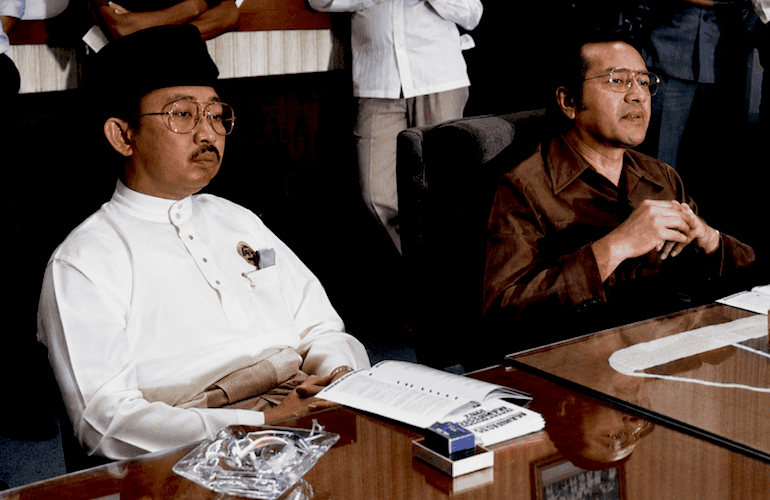
Read MoreThe head of the judiciary spent 1987 publicly refusing to criticise the Government. He was removed in 1988 for talking too much.
Read MoreThirty branches. Nobody had registered them. That was enough to kill the party that had governed Malaysia since independence. Not a coup. Not a scandal. Thirty forms nobody had filed.
Read MoreA Prime Minister complained, on the record, of a judiciary that would not do as it was told. Two years of investigation later, the government's own panel could find exactly one ruling to support the complaint — and it favoured a foreigner, not a political enemy. A Lord President lost his career inside that gap.
Read MoreA two-hour submission, one raised hand, and forty minutes: how a Federal Court judge quietly rewrote Malaysian law.
Read MoreCan a King’s mercy bypass constitutional procedure? In a landmark ruling, Justice Alice Loke says, “No”. She affirms that even royal prerogatives must give way to Constitutional 'due process'.
Read MoreStep into the Court of Appeal on a busy day. Fifteen or more leave applications, each one dragging on—an hour gone with every hearing. Judges listen, counsel argue, yet somehow the essentials get lost in the shuffle. Is there a better way?
Read MoreIs Malaysia still a land where everyone stands equal before the law? Or have powerful hands quietly reshaped our justice system to favour the few?
Read More