
How should Professional Bodies punish multiple disciplinary offences? The principle of ‘Totality’

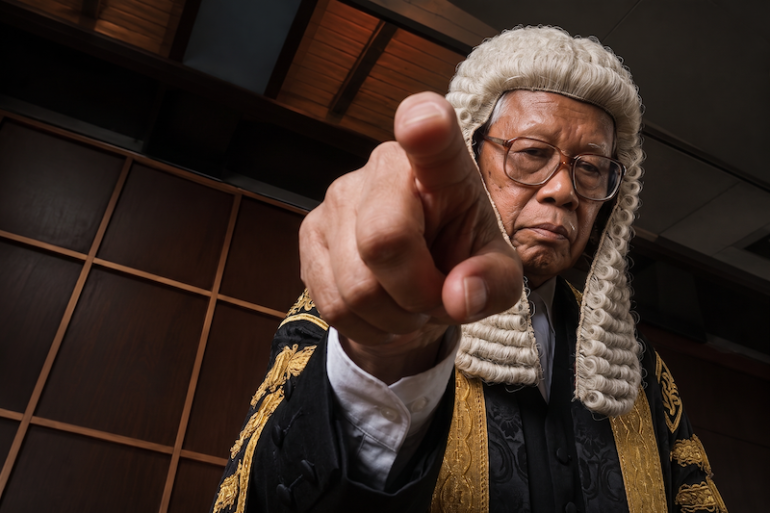
When a professional is found guilty of multiple misconducts, should a disciplinary body impose separate punishments for each offence, and then add them up, or just impose a single punishment for all? What if the offences occurred during the same incident, or at different times? How should the appropriate punishment be decided?

Read More

Why did India’s greatest legal mind refuse the Chief Justiceship?

For seven years, he was briefless. Politicians feared his moral courage. He refused the post of CJ. That post would have been his for five and a half years. Yet when Seervai spoke, the Constitution itself seemed to roar. This is the untold story of how one man's unwavering integrity shaped constitutional law across the Commonwealth—and why his final act on Republic Day 1996 was the perfect ending to ...

Read More

What is the difference between ‘Questions of Law’, ‘Questions of Fact’ and ‘Mixed’ questions?

Every courtroom dispute hinges on a deceptively simple question: "What exactly are we arguing about?" Yet this fundamental inquiry—whether we are debating what the law says, what actually happened, or how proven facts fit legal standards—can determine the fate of both victims and defendants. The distinction isn't merely academic; it shapes everything from appeal strategies to awards for compensation.

Read More

Who guards the Guardians? What happens when the PM has the power to pick judges, but is in conflict?

The PM, the CJ, and other constitutional appointees are all guardians of the Constitution. If one falters, what happens? When a Prime Minister faces a suit in court, yet it is he who must pick the senior judges who will head the judiciary— he is immediately placed in an irreconcilable position of conflict. Three constitutional paths emerge from Malaysia’s deepest democratic paradox. What are they? There is no point in ...

Read More

The Greatest Judges of All Time: the Titans who defied history

When history called, eleven judges answered: “Here I stand.” From Atkin’s neighbour principle to Dixon’s legalism, from Solomon’s wisdom to Bao Zheng’s integrity, from Abu Hanifa’s reasoning to Ginsburg’s equality crusade—these titans of justice dared to choose courage over comfort, principle over precedent. Their legacy lives in every courtroom where fairness still matters—proof that law can be humanity’s greatest tool for justice.

Read More

Has the RTA made the ‘insurable interest defence’ and the ‘recovery action,’ redundant?

Should innocent accident victims be forced into costly legal battles twice—once against the driver and again, [by what has come to be known as a ‘Recover Action’] against the insurer? How did Malaysia’s Federal Court in the 2022 Sa' Amran decision demolish 70 years of established insurance practice? How did it revolutionise third-party victim compensation?

Read More

Did the Malaysian Federal Court in AmGeneral v Sa’Amran revolutionise motor insurance law?

Private cars on the road outnumber the entire population. Malaysia's Federal Court made a landmark decision in AmGeneral v Sa'Amran. That decision changed motor insurance law completely. The court ruled that protecting accident victims matters more than business interests. Millions of road users now have better protection. This is a manifestation that Malaysia's Federal Court has returned to the highest Commonwealth legal standards.

Read More

What Happened During the Malaysian Judicial Crisis in 1988?

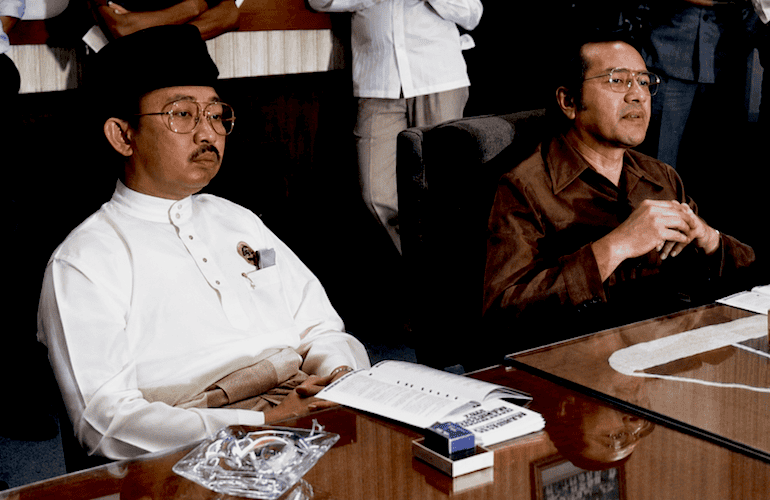
In 1988, a tremor rent Malaysia’s halls of justice: an institutional earthquake that cleaved its very bedrock. Constitutional pillars crumbled; and the Beacon that once burned bright for Justice flickered, and then, died. Sacred robes, woven with centuries of honour, lay torn in the rubble. The Unthinkable carved its wound into the very beating heart of the Constitution. Here sleep the lasting memories of those who fell, shields raised against the ...

Read More