
Why did India’s greatest legal mind refuse the Chief Justiceship?
For seven years, he was briefless. Politicians feared his moral courage. He refused the post of CJ. That post would have been his for five and a half years. Yet when Seervai spoke, the Constitution itself seemed to roar. This is the untold story of how one man’s unwavering integrity shaped constitutional law across the Commonwealth—and why his final act on Republic Day 1996 was the perfect ending to an extraordinary life.
The Lion’s Roar: The Untold Story of H.M. Seervai
This is the story of how one man’s moral courage changed the course of constitutional law across the Commonwealth. Hormasji Maneckji Seervai (or more popularly known as “H.M. Seervai”) didn’t just defend cases—he defended the very soul of the Constitution itself.
In an era when political pressure could bend even the strongest wills, Seervai stood firm, earning him a reputation that extended far beyond India’s borders to become a legend quoted in judgments from Australia to Canada.
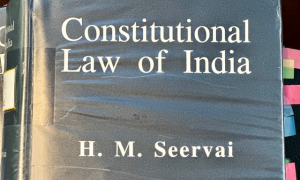
Cover of H.M. Seervai’s authoritative book ‘Constitutional Law of India,’ Silver Jubilee Edition, Fourth Edition.
The briefless years that built a giant
December 1906. Bombay. A middle-class Parsi family welcomed Hormasji Maneckji Seervai into the world. His name, fittingly, meant “a lion’s roar” in Parsi. But for the first seven years of his legal career, this lion was silent.1Michael Kirby, ‘H.M.Seervai, His Life, Book & Legacy’ at http://www.commonlii.org/in/journals/INJlConLaw/2009/1.pdf; Swapnil Tirupathi, ‘Remembering H.M.Seervai – India’s Authority on Constitutional Law’ at https://thebasicstructureconlaw.wordpress.com/2024/01/26/remembering-h-m-seervai-indias-authority-on-constitutional-law/
Called to the Bombay Bar in 1929, Seervai joined the chambers of the legendary Sir Jamshedji Kanga.
Yet for seven long years, he remained virtually briefless. While other young lawyers chased clients, Seervai buried himself in legal research, literature, and philosophy. These years of apparent failure would prove to be his greatest investment. 2 Michael Kirby, ‘H.M.Seervai, His Life, Book & Legacy’ at http://www.commonlii.org/in/journals/INJlConLaw/2009/1.pdf; Michael Kirby, ‘Legal Studies, Centenary of H.M Seervai – Doyen of Indian Constitutional Law – An Australian Appreciation’ at https://www.michaelkirby.com.au/images/stories/speeches/2000s/vol63/2007/2206-SEERVAI_LEGAL_STUDIES_MARCH_2007.doc
“His self-assurance and conviction in his own judgment were remarkable,” Justice Michael Kirby would later observe.
“He had courage ‘like a lion,’ and the fearlessness that one would hope for in a leading surgeon, a brave soldier or a senior advocate.” 3 Michael Kirby, ‘Legal Studies, Centenary of H.M Seervai – Doyen of Indian Constitutional Law – An Australian Appreciation’ at https://www.michaelkirby.com.au/images/stories/speeches/2000s/vol63/2007/2206-SEERVAI_LEGAL_STUDIES_MARCH_2007.doc
The teetotaller who defended alcohol laws
Providence has a sense of irony.
The man who detested alcohol would make his name defending prohibition laws. In the early 1950s, when Bombay’s Prohibition Act came under constitutional attack, Seervai was asked to assist Advocate General Daphtary. 4Michael Kirby, ‘H.M.Seervai, His Life, Book & Legacy’ at http://www.commonlii.org/in/journals/INJlConLaw/2009/1.pdf; Swapnil Tirupathi, ‘Remembering H.M.Seervai – India’s Authority on Constitutional Law’ at https://thebasicstructureconlaw.wordpress.com/2024/01/26/remembering-h-m-seervai-indias-authority-on-constitutional-law/
But Daphtary had his own relationship with alcohol. He once joked with characteristic wit: “A republic without a pub is only a relic!”
Remove ‘pub’ from ‘republic’ and you get ‘relic’—clever wordplay that revealed his reluctance to defend the government’s dry stance. 5 Bar Council of India, ‘Legends of the Bar’, https://www.barcouncilofindia.org/info/legends-of-the-bar
When Daphtary proved unenthusiastic, destiny pushed Seervai forward.
His closing speech in defense of the Prohibition Act was brilliant.
Chief Minister Morarji Desai, a fanatical moralist who despised alcohol, was impressed.
In Seervai, he saw potential as a defender of unpopular but principled causes. 6Michael Kirby, ‘H.M.Seervai, His Life, Book & Legacy’ at http://www.commonlii.org/in/journals/INJlConLaw/2009/1.pdf
The Supreme Court breakthrough in 1956
RMD Chamarbaugwala v. State of Bombay was case that would change everything for Seervai:
The government had banned prize competitions—essentially lotteries. The Government was challenged.
Seervai was asked to argue the case.
He lost at trial.
He lost on appeal.
But Seervai never gave up on a righteous cause.
The Supreme Court appeal was crucial.
The government called in its biggest gun—Solicitor General Daphtary. But again, Daphtary was unprepared to argue. The brief fell to Seervai.
His opponents were formidable: Attorney General MC Setalvad, the legendary N.A. Palkhivala, and Sir Nusserwanji Engineer.
Against this array of legal titans, Seervai argued for days about the complex questions of extra-territorial operation of state laws and fundamental rights.
The Supreme Court agreed with him. Overnight, Seervai shot to fame.
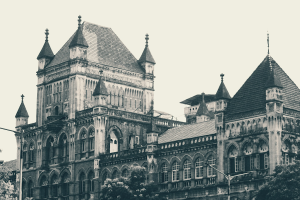
Vintage black and white photograph of the High Court of Bombay showcasing its historic Gothic Revival architecture [Shreyas Jadhav, Unsplash]
Advocate General: the moral Guardian
In 1957, Seervai became Advocate General of Bombay, now called ‘Maharashtra’. For seventeen years, he held this office with distinction. The pay was ridiculously low—just Rs. 150 per appeal, equivalent to $1.79 today. Yet Seervai devoted himself exclusively to state work, refusing lucrative private practice. 7Michael Kirby, ‘H.M.Seervai, His Life, Book & Legacy’ at http://www.commonlii.org/in/journals/INJlConLaw/2009/1.pdf
But here’s what made Seervai extraordinary: he practiced a principle that would shock modern lawyers. He believed a government lawyer’s duty was to justice and law—not to the government that employed him.
“Seervai condemned as heresy the ideology that ‘a Government lawyer must always be committed to the philosophy of the Government that employed him’”.
When politicians sought legal opinions to advance their interests, Seervai sent back terse notes brimming with authorities, advising against any action that favored politicians. The government quietly dropped those cases.
His professional reputation was so formidable that ministers personally sought appointments at his chambers.
He did not go to them—they came to him.
The ‘day and night’ analogy that silenced a judge
The most revealing glimpse into Seervai’s character came during a preventive detention case before Chief Justice Ray. Justice Beg was struggling with the distinction between punitive and preventive detention, remarking that “all detention is detention” and he didn’t understand the difference. 8 Swapnil Tirupathi, ‘Remembering H.M.Seervai – India’s Authority on Constitutional Law’ at https://thebasicstructureconlaw.wordpress.com/2024/01/26/remembering-h-m-seervai-indias-authority-on-constitutional-law/
Seervai was not impressed. What happened next, according to the book Evoking Seervai, shows his legendary fearlessness: 9 Swapnil Tirupathi, ‘Remembering H.M.Seervai – India’s Authority on Constitutional Law’ at https://thebasicstructureconlaw.wordpress.com/2024/01/26/remembering-h-m-seervai-indias-authority-on-constitutional-law/
Seervai lowered his voice and chided the judge:
“My lord, there is a clear difference between preventive detention and punitive detention even though it may not always be apparent. For instance, there is a time when it is day and there is a time when it is night. In between there is dawn and later, dusk when it is difficult to insist at a particular point whether it is day or night, but only a strange mind would discern no difference between day and night.”
There was silence in the courtroom. 10 Swapnil Tirupathi, ‘Remembering H.M.Seervai – India’s Authority on Constitutional Law’ at https://thebasicstructureconlaw.wordpress.com/2024/01/26/remembering-h-m-seervai-indias-authority-on-constitutional-law/
This wasn’t arrogance—it was moral courage. Seervai would rather risk his career than compromise the law’s clarity.
The resignation that shook Maharashtra [1974]
Law Minister A.R. Antulay appointed two advocates as “Honorary Legal Advisers” to the state government. Seervai saw this as undermining the prestige of the Advocate General’s office. 11 Swapnil Tirupathi, ‘Remembering H.M.Seervai – India’s Authority on Constitutional Law’ at https://thebasicstructureconlaw.wordpress.com/2024/01/26/remembering-h-m-seervai-indias-authority-on-constitutional-law/; Michael Kirby, ‘Legal Studies, Centenary of H.M Seervai – Doyen of Indian Constitutional Law – An Australian Appreciation’ at https://www.michaelkirby.com.au/images/stories/speeches/2000s/vol63/2007/2206-SEERVAI_LEGAL_STUDIES_MARCH_2007.doc
Without hesitation, he resigned. Justice Sujata Manohar later described these appointees as “party lawyers”—a move Seervai interpreted as infringing on his independent authority. 12 Swapnil Tirupathi, ‘Remembering H.M.Seervai – India’s Authority on Constitutional Law’ at https://thebasicstructureconlaw.wordpress.com/2024/01/26/remembering-h-m-seervai-indias-authority-on-constitutional-law/; Michael Kirby, ‘Legal Studies, Centenary of H.M Seervai – Doyen of Indian Constitutional Law – An Australian Appreciation’ at https://www.michaelkirby.com.au/images/stories/speeches/2000s/vol63/2007/2206-SEERVAI_LEGAL_STUDIES_MARCH_2007.doc
This resignation was not mere petty bureaucratic pride. Seervai understood that the Advocate General must be the state’s premier legal voice, not one among many. His resignation was a statement: integrity cannot be compromised. 13 Swapnil Tirupathi, ‘Remembering H.M.Seervai – India’s Authority on Constitutional Law’ at https://thebasicstructureconlaw.wordpress.com/2024/01/26/remembering-h-m-seervai-indias-authority-on-constitutional-law/; Michael Kirby, ‘Legal Studies, Centenary of H.M Seervai – Doyen of Indian Constitutional Law – An Australian Appreciation’ at https://www.michaelkirby.com.au/images/stories/speeches/2000s/vol63/2007/2206-SEERVAI_LEGAL_STUDIES_MARCH_2007.doc
The book that changed Constitutional Law forever
In 1961, after witnessing judicial decisions that troubled his legal conscience, the 56-year-old Seervai began what would become his masterpiece.
Inspired by Australian jurist Dr. K.A. Wynes, he set out to write a “critical commentary” on Indian constitutional law. 14Michael Kirby, ‘H.M.Seervai, His Life, Book & Legacy’ at http://www.commonlii.org/in/journals/INJlConLaw/2009/1.pdf
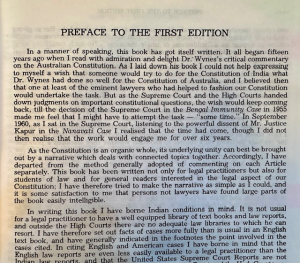
Preface to H.M. Seervai’s book ‘Constitutional Law of India,’ First Edition
For six years, Seervai researched every case, article, and commentary he could find. His only assistant was his beloved wife Feroza, a philosophy graduate and master of English. She scoured his writings and questioned his analysis, forcing him to explain or edit as needed.
When published in 1967, the first edition was proclaimed a masterpiece. Nothing like it had ever been written in India. Distinguished lawyers and academicians worldwide spoke of it with reverence.
The Critical Edge That Cut Through Falsehood
Why did Seervai insist on calling it a “critical commentary”? Because he refused to be a mere reporter of other people’s decisions.
In the famous Golak Nath case of 1967, when the Supreme Court ruled that fundamental rights could never be amended, most hailed it as a great libertarian victory. Seervai exposed the fallacies with withering criticism.
Sometimes he called judgments “productive of great public mischief and ought to be overruled”. Other times they were “startling” or “quite unintelligible”.
His commentary was “indispensable, brimming with scholarship and legal witticisms: and in some places, it positively dripped with disapproval”.
The Masterstroke in Kesavananda Bharati [1973]
The case that would define modern India was Kesavananda Bharati v. State of Kerala.
The government needed its best advocate to defend constitutional amendments that would reshape India’s economic future. 15 Swapnil Tirupathi, ‘Remembering H.M.Seervai – India’s Authority on Constitutional Law’ at https://thebasicstructureconlaw.wordpress.com/2024/01/26/remembering-h-m-seervai-indias-authority-on-constitutional-law/
Seervai’s condition for accepting the brief shocked the legal establishment: he would open the case for the government and argue first.
This violated a constitutional provision granting the Attorney General the right to first audience. Attorney General Niren De complained to Prime Minister Indira Gandhi. 16 Swapnil Tirupathi, ‘Remembering H.M.Seervai – India’s Authority on Constitutional Law’ at https://thebasicstructureconlaw.wordpress.com/2024/01/26/remembering-h-m-seervai-indias-authority-on-constitutional-law/
But Seervai prevailed. His opening argument helped establish the “basic structure doctrine”—the principle that certain constitutional features are so fundamental they cannot be amended away. This doctrine now protects democracies across the Commonwealth. 17 https://judgments.ecourts.gov.in/KBJ/?p=home%2Fintro; Swapnil Tirupathi, ‘Remembering H.M.Seervai – India’s Authority on Constitutional Law’ at https://thebasicstructureconlaw.wordpress.com/2024/01/26/remembering-h-m-seervai-indias-authority-on-constitutional-law/
Ironically, although Seervai initially argued against the basic structure doctrine, he later changed his views after witnessing the Emergency of 1975-1977. Truth mattered more than consistency. 18 Swapnil Tirupathi, ‘Remembering H.M.Seervai – India’s Authority on Constitutional Law’ at https://thebasicstructureconlaw.wordpress.com/2024/01/26/remembering-h-m-seervai-indias-authority-on-constitutional-law/
The refusal that cost him the Chief Justiceship
Success brought temptation.
Seervai was offered judgeships in the Bombay High Court, the Supreme Court of India, and the position of Attorney General.
Had he accepted the Supreme Court judgeship, he would have been Chief Justice of India for five and a half years. 19Michael Kirby, ‘H.M.Seervai, His Life, Book & Legacy’ at http://www.commonlii.org/in/journals/INJlConLaw/2009/1.pdf
He declined them all. His commitment to continuously editing his constitutional law book was more important than prestige.
He refused to maintain two houses—one in Bombay and another in Delhi—because he valued closeness to family.
Many peers have described Seervai as having extraordinary energy, focus, commitment, and memory.
Milton, Wordsworth, Keats, and Tennyson
He could quote English prose and poetry from Milton, Wordsworth, Keats, and Tennyson with ease.
In court, he relied on no heavy notes—speaking purely from memory and mind.
The roar that echoes still
Lord Denning said of him: “He was a great personality and one of the most learned I have met”.
Lord MacKay called his constitutional law book, “a permanent memorial to massive scholarship”.
Today, decades after his death, Indian and Commonwealth courts continue citing Seervai’s work. His ideas on constitutional interpretation, fundamental rights, and judicial review shape legal thinking across the former British Empire. 20 Michael Kirby, ‘Legal Studies, Centenary of H.M Seervai – Doyen of Indian Constitutional Law – An Australian Appreciation’ at https://www.michaelkirby.com.au/images/stories/speeches/2000s/vol63/2007/2206-SEERVAI_LEGAL_STUDIES_MARCH_2007.doc; Michael Kirby, ‘H.M.Seervai, His Life, Book & Legacy’ at http://www.commonlii.org/in/journals/INJlConLaw/2009/1.pdf; Swapnil Tirupathi
Milton’s words, which his friends used to capture Seervai’s spirit, remain fitting today:
“Unmoved, Unshaken, unseduced, unterrified,
His loyalty he kept, his love, his zeal;
Nor number, nor example with him wrought
To swerve from truth, or change his constant mind.”
The lion’s bones may be buried, but his roar lingers through the mists of time.
In an age when legal principles bend to political winds, H.M. Seervai’s life reminds us that some things—truth, justice, constitutional integrity—are worth defending at any cost.
This is why Seervai matters today. He is proof that one person’s moral courage can change the course of history.
The symmetry of his scholarship was breathtaking.
For 35 years, from the first edition to the fourth, Seervai continuously refined his masterpiece. Eventually, it grew to over 3,300 pages— “a massive undertaking,” as Professor Sir David Williams called it.

On January 25, 1996, H.M. Seervai completed the final line of his Constitutional Law masterpiece’s fourth edition.
The next day—Republic Day—he quietly slipped away. The man who had spent thirty-five years defending the Constitution departed on the very day India celebrates it.21 Michael Kirby, ‘H.M.Seervai, His Life, Book & Legacy’ at http://www.commonlii.org/in/journals/INJlConLaw/2009/1.pdf; Swapnil Tirupathi, ‘Remembering H.M.Seervai – India’s Authority on Constitutional Law’ at https://thebasicstructureconlaw.wordpress.com/2024/01/26/remembering-h-m-seervai-indias-authority-on-constitutional-law/
In his will, he had forbidden any future editions of his book.
No re-editing, no new additions. Many judges, including Justice Kirby, have urged that the book be updated to preserve his learning for new generations.
But the prohibition stands. Perhaps Seervai knew that some legacies are perfect as they are.
His Constitutional Law of India remains frozen in time—a monument to one man’s unwavering commitment to truth.
Today, decades later, his ideas continue shaping judgments from Mumbai to Melbourne, from Delhi to Canberra.
“Seervai,” means “a lion’s roar”
Each time a court protects fundamental rights, each time constitutional integrity prevails over political pressure, H.M. Seervai roars again.
The question for each of us remains unchanged: When our moment comes, will we have the courage to choose truth over convenience?
Will we dare to roar?
∞§∞
Gratitude:
The author thanks Miss KN Geetha, Miss TP Vaani, Miss JN Lheela, and Miss Lydia Jaynthi.
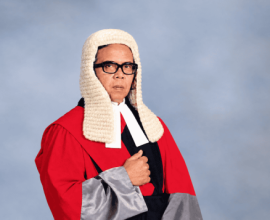
We thank Shreyas Jadhav of Unsplash for the images. Mr HM Seerva’s photo is attributed to Swapnil Tripathi [www.thebasicstructure.com]
@Copyright reserved.
All content on this site, including but not limited to text, compilation, graphics, documents, and layouts, are the intellectual property of GK Ganesan Kasinathan and are protected by local and international copyright laws. Any use shall be invalid unless written permission is obtained by writing to gk@gkganesan.com