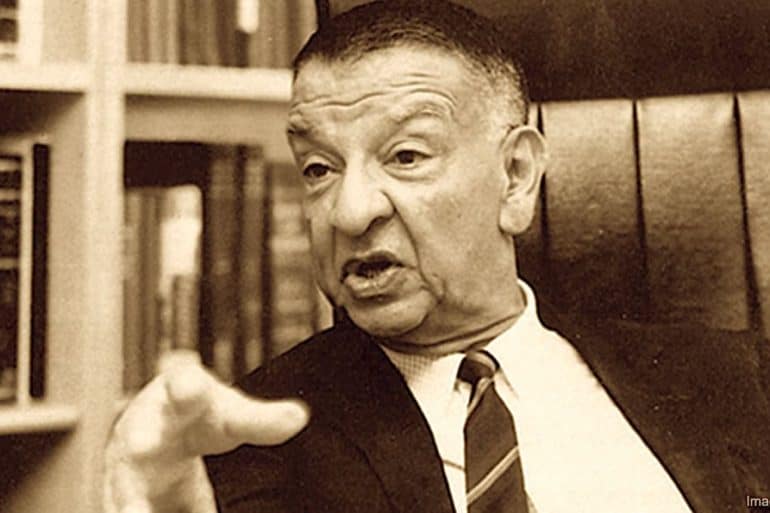

CJ’s Malta speech defines Democracy: a Government’s legitimacy depends on an Independent Judiciary

Can a judge speak truth about justice without facing negative consequences? Chief Justice Tengku Maimun’s Malta Speech exposed the deepest fractures. It revealed a constitutional cross-road by asking this question: "Will Malaysians choose constitutional rule, or arbitrary power?" What is your answer? It matters.

Read More

The Greatest Judges of All Time: the Titans who defied history

When history called, eleven judges answered: “Here I stand.” From Atkin’s neighbour principle to Dixon’s legalism, from Solomon’s wisdom to Bao Zheng’s integrity, from Abu Hanifa’s reasoning to Ginsburg’s equality crusade—these titans of justice dared to choose courage over comfort, principle over precedent. Their legacy lives in every courtroom where fairness still matters—proof that law can be humanity’s greatest tool for justice.

Read More

Has the RTA made the ‘insurable interest defence’ and the ‘recovery action,’ redundant?

Should innocent accident victims be forced into costly legal battles twice—once against the driver and again, [by what has come to be known as a ‘Recover Action’] against the insurer? How did Malaysia’s Federal Court in the 2022 Sa' Amran decision demolish 70 years of established insurance practice? How did it revolutionise third-party victim compensation?

Read More

Nine judges, two years, one crisis: Malaysia’s path between Judicial collapse and Constitutional Renewal

Malaysia's judiciary teeters on the brink. An institutional crisis looms—potentially as devastating as 1988's judicial catastrophe—threatening constitutional governance and the rule of law itself. Nine Federal Court judges departing within two years represents far more than administrative upheaval: it's a catastrophic haemorrhaging of judicial wisdom, precisely when institutional memory matters most. We should never have come to this pass. Left unchecked, this depletion spells disaster for the nation. Which path will Malaysia ...

Read More

What Happened During the Malaysian Judicial Crisis in 1988?

In 1988, a tremor rent Malaysia’s halls of justice: an institutional earthquake that cleaved its very bedrock. Constitutional pillars crumbled; and the Beacon that once burned bright for Justice flickered, and then, died. Sacred robes, woven with centuries of honour, lay torn in the rubble. The Unthinkable carved its wound into the very beating heart of the Constitution. Here sleep the lasting memories of those who fell, shields raised against the ...

Read More

The Promise and the Perils of Artificial Intelligence in Court Work

Artificial Intelligence flows through the hallowed halls of justice as the morning mist—pervasive, transformative, and unstoppable. Courts and lawyers alike should embrace AI — with wisdom, not fear. Frost reminds us, “The best way out is always through.” No machine can ever match the human soul's eternal quest for justice. That fire burns beyond all programming.

Read More

The Jurisprudential Revolution: How the Ten Principles in Mohamed Fayadh transformed sec.96(2)(a) RTA 1987

For the first time in 90 years, we are asking the right questions in the right order, especially in personal injury cases. Under s.96(2)(a) RTA 1987, must accident victims themselves notify insurers before commencing proceedings, or does this duty lie elsewhere? This article asks 10 more such questions.

Read More

Can the Home Minister declare a 7-star hotel as a prison?

"Don't be ridiculous!", is what you would say. Why not? This is because on March 6, 2025, it was reported that Malaysia’s Home Minister could declare any place (including a house) as a 'prison' under sec.3 of the Prisons Act 1995 (the Act). This was meant to – and did spark – a heated debate: could the Home Minister use his discretion to incarcerate a prisoner at a luxurious residence? ...

Read More