
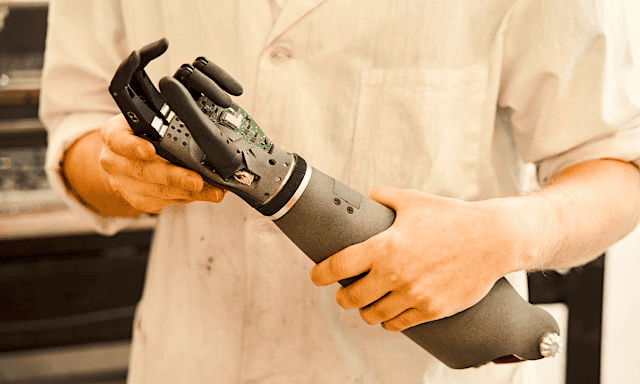
Can a Medical Device Act Stop a Court Restoring a Road Accident Victim’s Limb?
The insurer says the device is unregistered, so it need not pay. The law replies: notwithstanding any written law, it must.
Why neither the Medical Device Act nor its Exemption Orders forbids a court to award a prosthesis or orthosis to a road accident victim
There is a moment, in the assessment of damages for a ruined limb, when the defendant’s insurer abandons its fight on the medical evidence and reaches for the statute book.
The injury is admitted. The device is proved. The price, alas, is real.
So the insurer produces the Medical Device Act 2012, points to section 5, and announces that the prosthesis cannot be paid for because it is not registered — and that the orthotist had no business recommending it from the witness box.
The argument has the considerable advantage of sounding administrative, and the greater disadvantage of being wrong.
It has been tried. It has even, once, succeeded — conspicuously, in Azzeli. It deserves close examination, because once examined it does not survive.
What the Act governs — and what it does not
Section 5 provides that no medical device shall be imported, exported or placed in the market unless it is registered, and that a person who contravenes this commits an offence punishable by a fine of up to RM200,000 or three years’ imprisonment. Read the words for what they are. They are a prohibition addressed to a trader, enforced by a criminal penalty, concerned with the act of putting devices into commercial circulation. The Act is a statute of the marketplace, administered by a safety regulator, the Medical Device Authority.
Notice what is absent
The Act does not require an injured person to obtain anyone’s permission before a court may compensate her. It does not ‘license’ expert testimony. And it says nothing whatever about what an orthotist or prosthetist may recommend for a patient.
So when the insurer protests that the recommendation of an unregistered device is somehow unlawful, it has run two quite different acts together. An orthotist who tells the court which device will restore his patient’s function is giving an opinion, not conducting a sale. A judge who fixes its cost is awarding compensation, not importing a consignment. Neither places anything in any market. The licensing of sale, import and export is, to this question, simply beside the point.
To convert a market-entry offence into a ‘rule of damages’ — or into a gag on expert evidence — is not interpretation.
It is a serious mistake in the costume of rigour.
The door the Minister opened
Suppose one persists, and insists that registration matters. It is then fatal to the argument that the Minister has expressly exempted the very class of device in question.
The Medical Device (Exemption) Order 2016, made under section 77 and in force when Azzeli was decided,1 Mohd Azzeli bin Hussin v Tan Chee Chuan Fruits Supply [2023] MLJU 1720 exempted from section 5, any device for ‘personal use’ or any ‘custom-made’ device. “Personal use” is defined as a device brought into Malaysia for the use of a particular individual; “custom-made” as a device made to a practitioner’s written prescription for a particular patient.
A prosthesis or orthosis, built for one accident victim and fitted to her alone, is the textbook instance of both. The Order of 2024 — which replaced its predecessor on 5 March 2024 — keeps that architecture and widens it.
The right question, then, was never “is the device registered?” It was “is the device within an exempted class?” — and for a limb made for a single private patient the answer is plainly yes. Far from requiring the victim to seek permission, the regulations carve her device out of the registration requirement altogether. The regulator has said as much for over a decade: its Circular No. 3 of 2014 likewise exempted custom-made devices supplied for a practitioner’s own patients.
The trouble with Azzeli
Which brings us to Mohd Azzeli bin Hussin v Tan Chee Chuan Fruits Supply [2023] MLJU 1720, where the High Court announced that a prosthesis “must be approved and registered under the Medical Device Act 2012 to be used in Malaysia.”
With respect, the proposition is wrong, and wrong in more ways than one. It misreads section 5 as a condition of recovery when it is a condition of trade. It was reached without reference to the 2016 Exemption Order then in force — the very instrument that lifted personal-use and custom-made devices out of section 5 — which makes it a textbook candidate for per incuriam. It aimed at the wrong target, since the only person section 5 threatens is the trader who markets an unregistered device, not the victim and not the court. It mistook “unregistered today” for “unlawful forever”, when registration is a gate a manufacturer may yet walk through, and damages compensate a future need. And on its own facts the point barred nothing: the plaintiff’s device was registered, so the observation that an unregistered one could not be awarded was unnecessary to the result — obiter, and mistaken obiter, now pressed into service as though it were a rule.
“Approved on appeal” — but on what?
It is said that Azzeli was affirmed by the Court of Appeal. So it was. But the Court of Appeal delivered no written grounds — and there, in candour, the matter must rest. An affirmance without reasons tells us the result, never the route. The most one can fairly do is assume the appellate court agreed with the reasoning below; and that assumption cuts against the insurer, not for it. If the High Court’s reasoning was wrong — and it was — a silent affirmance cannot launder the error, for one does not reach a different destination by the same mistaken road. And if the affirmance rested on some other, unstated ground, then Azzeli is no authority on the Medical Device Act at all. Either way, it will not bear the weight now placed upon it. One says so, and stops.
The Road Transport Act settles it
All of the foregoing would be enough. But in a motor claim there is a second statute that disposes of the matter outright — and it does so in terms the insurer cannot wish away.
Section 91(3) of the Road Transport Act 1987 opens with the words: “Notwithstanding anything in any written law, a person issuing a policy of insurance … shall be liable to indemnify … in respect of any liability which the policy purports to cover.” The Medical Device Act is a written law. The opening phrase is a non obstante clause — a deliberate instruction from Parliament that the insurer’s liability is not to be cut down by any other enactment. So even if the Act could be tortured into saying something about damages, section 91(3) would override it. No written-law defence survives the clause; the legislature has shut the door and pocketed the key.2Strictly, the non obstante clause in section 91(3) governs the insurer’s duty to indemnify; the third party’s direct entitlement is secured by section 96(1), which compels payment of “any sum” under the judgment, and section 94, which voids any policy condition narrowing that liability. Read together, the scheme leaves no written-law gateway — the Medical Device Act included — through which the insurer may resist payment.
Sections 96(1) and 94 complete the work. Section 96(1) requires the insurer, once judgment is entered, to pay the person entitled to its benefit “any sum” payable under it. Section 94 strikes down any policy condition by which third-party liability is made to vanish after the event giving rise to the claim. The Federal Court in AmGeneral Insurance Bhd v Sa’Amran Atan read these provisions as the social legislation they are, enacted to give the injured third party “full and effective protection”. A large award does not alarm this statute. A large award is its entire purpose.
A settled head of damages
It helps, finally, to recall what courts across the Commonwealth in fact do, when they are not being invited to read a customs statute as a rule of compensation. They award these devices, and have done for years. In Mohd Sidik bin Muhamad Ketar v Zainal Hazril bin Zainal Mokhtar the High Court allowed close to RM4 million for a motorised arm orthosis — batteries and lifelong replacements included — and the Court of Appeal dismissed the insurer’s appeal and affirmed the award. New South Wales did the like for a myoelectric prosthesis in State Rail Authority v Luckwell, and again in Hanlon v Hanlon Enterprises; Ontario, in Giannone v Weinberg, preferred the better-functioning arm to the cheaper one. In not one of these cases did the existence of a therapeutic-goods regulator trouble the court for a moment. The advanced prosthesis or orthosis — future replacements and all — is by now an ordinary and well-trodden head of damages, not an exotic indulgence to be rationed by reference to a register.
Conclusion
Neither the Medical Device Act nor its Exemption Orders bars a court from awarding the cost of a prosthesis or orthosis to the victim of a road accident. The Act regulates a market; it does not ration a remedy, require a victim’s permission, or silence the clinician who recommends what she needs. Its Orders exempt the very devices these victims require. Its penalties fall on traders, not on the injured, nor on the judges who compensate them. And where the claim arises on the road, the Road Transport Act does not merely permit the award — it commands its payment, notwithstanding any written law to the contrary.
Azzeli took a wrong turning, was affirmed without reasons, and should be read for what it is: a caution against mistaking the rules of the shop for the rules of the courtroom. The Medical Device Act was enacted to protect patients. It was never meant to become the instrument by which a patient is sent away with an empty sleeve.
∞§∞
This article is written for a general readership and does not constitute technical or legal advice. Readers with legal questions are encouraged to seek independent legal advice.
The author thanks KN Geetha, TP Vaani, JN Lheela, and Lydia Jaynthi at GK Legal. Our gratitude to Getty Images of Unsplash for the image.
Claude, Anthropic’s AI, smoothed the drafting; Perplexity Pro checked the facts. The argument, the views, and the errors remain the author’s.
@Copyright reserved.
All content on this site, including but not limited to text, compilation, graphics, documents, and layouts, is the intellectual property of GK Ganesan Kasinathan and is protected by local and international copyright laws. Any use shall be invalid unless written permission is obtained by writing to gk@gkganesan.com.