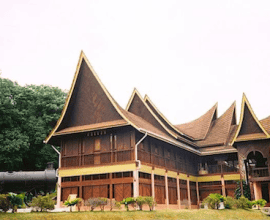
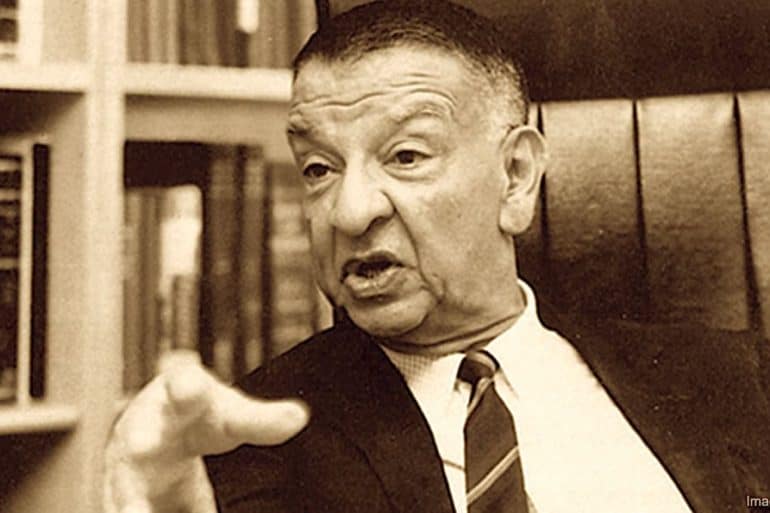
How Long Must a Judge Wait to Be Proved Right? (Justice Eusoffe Abdoolcader)
He lost the case three to two in 1988. The Federal Court handed it to him in 2024, long after he was gone.
Every Malaysian understands a lease.
You hold the land for ninety-nine years, and then you do not.
You may build on it, plant on it, raise a family on it. You may improve it far beyond anything you took over.
But the term runs, and one day it ends, and what you leave behind belongs to somebody else.
Lucretius said the same thing about a life, two thousand years ago. Vitaque mancipio nulli datur, omnibus usu.
An English classicist would render that “life is granted to none in ownership, to all in use”.
Tan Sri Eusoffe Abdoolcader translated it thus: “To none is life given in freehold; to all on lease.”1Lucretius, De Rerum Natura III.971. The rendering is Abdoolcader’s own, in his annual newspaper memorial to his late wife; it was quoted by the British High Commissioner, Vicki Treadell, at the launch of his collected judgments in 2018. See “British envoy pays tribute to legal lion Eusoffe”, Free Malaysia Today, 12 August 2018 https://www.freemalaysiatoday.com/category/nation/2018/08/12/british-envoy-pays-tribute-to-legal-lion-eusoffe.
Freehold. Lease. He did not translate the line as a scholar. He translated it as a conveyancer.
That single choice of words tells you everything about the most learned judge Malaysia has produced.
And it explains why it took the Federal Court twenty-nine years to catch up with him — and then, on a second point, thirty-six.
The Penang Boy
He was born in Penang in 1924, the third of seven children.2“Farewell Tan Sri Eusoffe Abdoolcader”, Aliran Monthly 1995 Vol 15 Nos 11 & 12 https://m.aliran.com/past-issues/1995Vol15No.11&12.pdf, reproducing a profile first published in Malaysian Business, 16 March 1994. Sources differ on the day of his birth; only the year is safe.
His father was Dr Sir Husein Hasanally Abdoolcader — a Gujarati Muslim born in Surat, an eminent lawyer, a member of the legislative assembly, and the first Malayan Indian to be knighted by King George VI.
It was the father who was knighted, not the son.
The son is sometimes given the title in tribute pieces. He never had it, and would have minded the inaccuracy more than the omission.
He passed his Senior Cambridge at fifteen, with more distinctions than were strictly necessary, and went to Raffles College in Singapore as its youngest student.
Then the war came, and it took an unexpected turn: he learned Japanese, served as an interpreter under the Occupation, so impressed the occupiers that they sent him to Kyoto Imperial University on a scholarship to read law.
Afterwards, University College London, and a First.
He was called to the English Bar at Gray’s Inn in January 1950, made a Freeman of the City of London that May, and admitted to the Malayan Bar in March 1951.
Twenty-four years at the Bar followed — twelve of them on the Bar Council, one term as Chairman of the Penang Bar.
He argued before the Privy Council. He moved the admission of Tunku Abdul Rahman himself.
He went to the High Court on 1 December 1974, to the Federal Court in 1982, and sat as a Supreme Court judge until 1989.
Thunder in One Hand
The profession’s verdict on him was delivered, anonymously, by a lawyer who had appeared before him. It has never been bettered.
“He sits with thunder in one hand and a thesaurus in the other.”3Aliran Monthly, above, quoting Malaysian Business.
Both halves were earned.
Tommy Thomas, then counsel and later Attorney General, put the thunder plainly: “He does not suffer fools at all. So if you’re not prepared, you’d get it.”
Another recalled that he was “fussy about small things like margins on an affidavit.”
As for the thesaurus — consider a single sentence from an election petition in Penang in 1981.
He held that a campaign promise was not a corrupt inducement, and he held it like this:
“…the words allegedly uttered…in the context of an election campaign often conducted with a fervour calculated to outdo even the Befrienders and invariably pregnant with partisan promises and in which some forensic flexing of political muscle is not an uncommon or unknown phenomenon, did not perforce pose or constitute a promise or pre-engagement by him in his personal capacity with any corrupt intention…”4Re Pengkalan Kota By-Election; Teoh Teik Huat v Lim Kean Siew & Anor [1981] 1 MLJ 265, 269 (HC, Penang). Quoted in Art Harun, “Election Petitions — The Standard of Proof”, LoyarBurok, 16 May 2013.
Read it aloud and count the alliteration. Pregnant with partisan promises. Forensic flexing. Perforce pose.
He delivered that sentence orally, from the Bench, grammatically intact, and the Chief Minister of Penang is said to have called it the longest sentence he had ever heard in perfect English.
He closed the same judgment by warning that nothing he had said gave “an unbridled licence to would-be political brawn crackers to transcend the twilight zone between campaign pledges and promises and electoral misfeasance.”5Quoted in Dr Venkat Iyer’s review of The Legal Lion of the Commonwealth, Singapore Law Gazette, September 2019 https://lawgazette.com.sg/lifestyle/book-shelf/the-legal-lion-of-the-commonwealth/.
Brawn crackers. In a law report.
And when a case before him ran unusually long, he opened his judgment by observing that it “lasted 33 days in the hearing” — like, he added, the papacy of Pope John Paul I.6Iyer, above. The case is not identified in the review.
The Latin of a Working Lawyer
Now, the point that matters, because it is the one everyone gets wrong.
His learning was Roman and legal, not Greek and literary.
There is no Homer in him, no Virgil, no Trojan War, no Sisyphus rolling his stone.
Search the record and you will not find a single Greek allusion.
What you find instead is Lucretius rendered in the language of the land office.
Ex necessitate rei, in the middle of a constitutional judgment.
In toto aut in partibus, in a closing sentence, where a lesser judge would have written “wholly or partly” and been done.
You find a King’s Bench case from 1920 about the importation of pyrogallic acid. You find an English Report from 1674.
He came to Latin as a grown man and never left it.
“Latin has become something of a passion for the man,” said the profile written of him in 1994.
“Already quite conversant in the language, much of his free time is spent reading up on Latin authorities. ‘It is a beautiful language,’ he says.”7Aliran Monthly, above.
That is the second thing everybody gets wrong.
This was not a schoolboy’s Latin, kept up out of vanity.
It was a middle-aged man teaching himself a language because he found it beautiful, and then using it for work.
A Teasing Illusion
Which brings us to 1987, and the judgment that made him.
Section 418A of the Criminal Procedure Code let the Public Prosecutor, by issuing a certificate, move a criminal case out of the Sessions Court and into the High Court.
No hearing. No reasons. A piece of paper from the Executive, and the case moved.
The question was whether that was an executive act or a judicial one — because Article 121(1) of the Constitution vests the judicial power of the Federation in the courts, and nowhere else.
By three to two, the Supreme Court struck it down. Abdoolcader was in the majority, and he wrote this:
“…any other view would ex necessitate rei result in relegating the provisions of article 121(1) vesting the judicial power of the Federation in the curial entities specified to no more than a teasing illusion, like a munificent bequest in a pauper’s will.”8Public Prosecutor v Dato’ Yap Peng [1987] 2 MLJ 311, 320 (SC). See “The God-provision”, The Malaysian Bar https://www.malaysianbar.org.my/article/news/legal-and-general-news/legal-news/the-god-provision.
A munificent bequest in a pauper’s will.
A magnificent gift from a man who has nothing — a promise that costs the promisor not a sen, because there was never anything behind it.
The phrase is not his.
It belongs to Robert Jackson of the United States Supreme Court, concurring in a case about a State that tried to keep poor migrants out.9Edwards v California 314 US 160, 186 (1941), per Jackson J concurring: “…it would be a promise to the ear to be broken to the hope, a teasing illusion like a munificent bequest in a pauper’s will.”
Jackson is worth a detour of his own.
He came to the Supreme Court having never finished law school, prosecuted the surviving Nazi leadership at Nuremberg, and wrote a plainer, harder English than anyone else on that bench.
Legal practitioners and law students read his opinion in the flag-salute case, West Virginia v Barnette, and see how far a single page can be made to carry.
That Abdoolcader had Jackson at his fingertips, in Kuala Lumpur in 1987, and deployed him without ceremony, tells you what his library was for.
And then, a page earlier, the sentence with the rare word in it:
“It is a legislative incursion to facilitate executive intrusion, and the Deputy in answer to a question I put to him had perforce to agree that in the context of subsection (3) of section 418A judicial power would amount to ‘doing what you are told to do’.”10Yap Peng, above, at 319.
He called it an intromission — a Scots term for meddling in what is not yours.
Nobody uses that word. He used it because it was exact.
There is a passage in the same judgment where he demolishes the Government’s stock defence — trust us, the power will be exercised reasonably — by reaching for that 1920 pyrogallic-acid case.
The Attorney General arguing for the Crown that day was Sir Gordon Hewart, who told the court the Government could be relied upon.
Nine years later Hewart wrote a book denouncing exactly that argument.
Abdoolcader lands the irony in a parenthesis and moves on.11Yap Peng, above, at 319, citing Attorney-General v Brown [1920] 1 KB 773. The passage is quoted in full by the Federal Court in SIS Forum (Malaysia) v Kerajaan Negeri Selangor, at [82]. Hewart’s book is The New Despotism (1929).
The Case He Lost
The following year he lost one, and it is the loss that matters.
Lim Kit Siang wanted to challenge the award of the North-South Highway contract.
The Supreme Court, again by three to two, held he had no standing to bring the case at all — no sufficient interest, no right to be heard.
Abdoolcader dissented.
His closing sentence:
“If this judgment reads in toto aut in partibus like an indictment, let me immediately say it is meant to — against the doctrine of retrogression in the field of public law litigation.”12Government of Malaysia v Lim Kit Siang [1988] 2 MLJ 12, 50 (SC), per Abdoolcader SCJ dissenting. Quoted at length in “The LoyarBurok Interview: NH Chan, Part 3”, 27 February 2010.
It is meant to. Four words of pure defiance, in the middle of a Latin tag.
Then came the judicial crisis of 1988
He was one of five Supreme Court judges suspended after the sitting of 2 July.
The charges against him were found not established; he resumed his seat.13Report of the Panel of Eminent Persons, The Malaysian Bar https://www.malaysianbar.org.my/cms/upload_files/document/PanelofEminentPersonsReport.pdf.
But something had gone out of it.
Observers noticed that the great constitutional cases stopped coming his way, and when he retired in 1989 there was no farewell dinner, which by the standards of the Bench is a sentence in itself.
His wife Haseenah died in 1993.
Every year on the anniversary he took out a full page in the newspapers and published a poem to her, in Latin.
He died on 11 January 1996, aged seventy-one, in circumstances the profession did not care to set out then – and I shall not set out now.
Tun Salleh Abas, writing at the time, put it as gently as it can be put:
“When his wife passed away, serving the law whose spirit and mission had become empty was, to him, no longer a fulfilling occupation and was thus devoid of any purpose. It is sad that he died in such tragic circumstances.”14Aliran Monthly, above.
The Lease Runs Out. The Improvements Stand.
Here is why the question at the head of this essay is not rhetorical.
In 2017, in Semenyih Jaya, the Federal Court went back to his definition of judicial power in Yap Peng and restored it — after a constitutional amendment in 1988 had been thought, for nearly thirty years, to have buried it.15Semenyih Jaya Sdn Bhd v Pentadbir Tanah Daerah Hulu Langat [2017] 3 MLJ 561 (FC).
Twenty-nine years late, and twenty-one years after his death, the Federal Court told him he had been right.
In 2024, in Nik Elin Zurina and again in Attorney-General of Malaysia v Sabah Law Society, the Federal Court took up the very dissent he lost three to two in 1988 — the one on standing, the one that reads like an indictment — and adopted it.16Nik Elin Zurina bt Nik Abdul Rashid v Kerajaan Negeri Kelantan [2024] 2 MLJ 150 (FC) at [22] and [27]; Attorney-General of Malaysia v Sabah Law Society (FC, 17 October 2024) at 12 https://www.kehakiman.gov.my/sites/default/files/2024-10/AG%20v%20SLS%20(17.10.2024).pdf.
Thirty-six years late.
He won both cases posthumously. Not on appeal — there was no appeal.
He won them because the reasoning was sound and would not go away, and because a later court read him and could not answer him.
That is the answer to the question.
A judge may have to wait a very long time indeed, and he may not be there to see it.
What This Means for an Ordinary Malaysian
It means the courts are yours, and cannot be quietly taken from you.
Yap Peng is why a prosecutor cannot move your case from one court to another by signing a certificate.
That is a judicial decision, and only a judge may make it.
It means you may sometimes be allowed through the door.
The law of standing decides who is permitted to bring a case at all — and if the answer is always “only the person directly injured”, then a great many wrongs have nobody to complain of them.
He said so in 1988 and was outvoted. The Federal Court now says so too.
And it means that a judgment nobody reads at the time can wait, patiently, on a shelf, for the court that will need it.
Coda
He held his life on lease and he knew it.
He said so, in Latin, in a newspaper advertisement to a woman who was no longer there to read it.
The term ran out in January 1996.
The improvements are still standing.
∞§∞
This article is written for a general readership and does not constitute technical or legal advice. Readers with legal questions are encouraged to seek independent legal advice.
The author thanks KN Geetha, TP Vaani, JN Lheela, and Lydia Jaynthi at GK Legal. Our gratitude to Penang Monthly of Unsplash for the image.
Claude, Anthropic’s AI, smoothed the drafting; Perplexity Pro checked the facts. The argument, the views, and the errors remain the author’s.
@Copyright reserved.
All content on this site, including but not limited to text, compilation, graphics, documents, and layouts, is the intellectual property of GK Ganesan Kasinathan and is protected by local and international copyright laws. Any use shall be invalid unless written permission is obtained by writing to gk@gkganesan.com.