What Happens When the Judge Who Limited Power Is Handed a Crown?
He told a convicted Menteri Besar he had betrayed his Sovereign Ruler. Eight years later, he became one.
Consider architect
For thirty years he draws the plans for other men’s buildings — this wall here and not there, this span and no wider — because he has seen what happens when a wall is put where it does not belong.
The roof comes down.
He is exact about it, and he is not thanked for it.
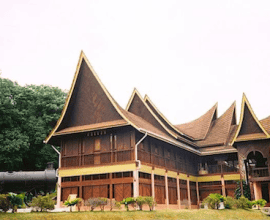
Then, late in life, he is asked to live in the greatest house in the State.
It has been built to his own drawings.
The walls standing around him are the walls he himself specified.
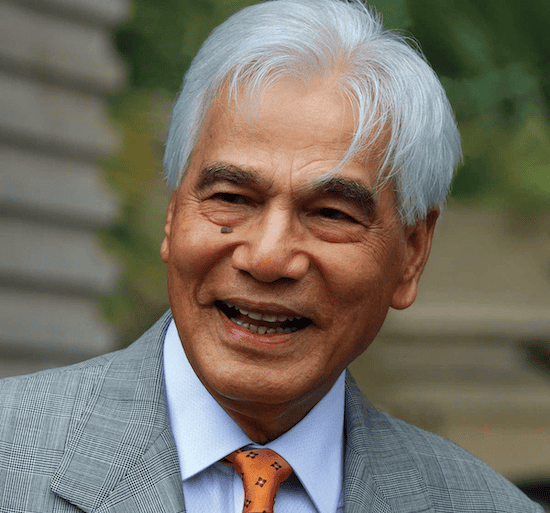
That, in one picture, is the life of Raja Azlan Shah.
He was a judge first and a Ruler afterwards.
He spent his working life telling men in power what they might not do.
He then spent his final decades holding power of a kind that no court had ever much troubled.
It is a rare sequence. It may be unique.
From Batu Gajah to the Bench
He was born on 19 April 1928 at Kampung Manggis, Batu Gajah, in Perak.
His father was Sultan Yusuf Izzuddin Shah, the 32nd Ruler of Perak.
His mother, Toh Puan Besar Hatijah binti Toh Indera Wangsa Ahmad, was not of royal birth.
He was therefore a prince with no assured throne, in a State where succession has never been a simple matter of birth order.
He went to the Government English School at Batu Gajah, then to the Malay College Kuala Kangsar.
He read law at Nottingham and took his LLB in 1953. Lincoln’s Inn called him to the Bar in 1954, and made him a Bencher thirty-four years later.1Ibid. See also and see the obituary notice
What followed was not a decorative career. It was a working one. Magistrate. President of the Sessions Court. Federal Counsel and Deputy Public Prosecutor. Legal Adviser to Pahang, and then to Johor. Registrar of the High Court of Malaya. Chief Registrar of the Federal Court.
Every rung, in order, with nothing skipped.
In 1965, aged 37, he was appointed a judge of the High Court of Malaya — the youngest ever appointed to that Bench.2RCS Lives of the Fellows, above. The official biography puts the claim wider still, describing him as the youngest judge appointed to a High Court anywhere in the Commonwealth; the narrower claim is the one the independent sources support.
He rose to the Federal Court in 1973 and became Chief Justice of the High Court in Malaya in 1979.
On 12 November 1982, aged 54, he became Lord President.
Then the succession found him. He had been made Raja Muda of Perak in July 1983. Sultan Idris Shah II died at the end of January 1984.
Raja Azlan Shah left the Bench on 2 February and became the 34th Sultan of Perak the following day. He was installed in December 1985.
In April 1989 the Conference of Rulers elected him the ninth Yang di-Pertuan Agong, and he reigned as King until April 1994. He died on 28 May 2014, aged 86.
The Sentence He Did Not Want to Pass
Before any of that, there was a morning in May 1976 when he had to sentence the Menteri Besar of Selangor. Datuk Haji Harun bin Haji Idris had been convicted on three charges of corruption. He had solicited $250,000 for his party from a bank with an application before his own Executive Council, and had accepted $25,000 and then $225,000.3Public Prosecutor v Datuk Haji Harun bin Haji Idris (No 2) [1977] 1 MLJ 15 (Raja Azlan Shah FJ, sitting in the High Court, 18 May 1976).
The trial judge was Raja Azlan Shah. The two men knew each other. He began the sentencing with a sentence no advocate ever forgets.
“It is painful for me to have to sentence a man I know. I wish it were the duty of some other judge to perform that task.”4Ibid, at p 31, letter D. Then he did it anyway. He quoted Lord Acton on power and corruption. He said what had to be said: “I repeat what I had said before — the law is no respector of persons.”5Ibid, at p 32, letter F. The spelling is as printed in the report.
He acknowledged, with a courtesy that costs nothing and means everything, that millions of his countrymen regarded the accused as a patriot. And then came the line that has followed this judge ever since.
“You have not only betrayed your party cause, for which you have spoken so eloquently, but also the oath of office which you have taken and subscribed before your Sovereign Ruler, and above all the law of which you are its servant.”6Ibid, at p 32, letters G–H.
Read that once more, and note the words your Sovereign Ruler.
The judge who wrote them would become a Sovereign Ruler within eight years, and the King of Malaysia within thirteen. He did not know it when he wrote them.
That is precisely what makes them worth reading.
One year on the first charge, two on each of the others, all concurrent. The Federal Court dismissed the appeal.7Datuk Haji Harun bin Haji Idris v Public Prosecutor [1977] 2 MLJ 155 (FC).
“Unfettered Discretion Is a Contradiction in Terms”
Three years later came the sentence for which he is best known.
A company called Sri Lempah owned a lot in Kuala Lumpur under a grant in perpetuity dating from 1900. It wanted to build shophouses and a hotel. The Land Executive Committee approved — but on condition that the company surrender its perpetual title and take back a lease of 99 years. The Committee’s chairman swore an affidavit claiming, in substance, that its discretion was unfettered.
Raja Azlan Shah, then Acting Chief Justice of Malaya, sitting with Tun Suffian LP and Chang Min Tat FJ, was not persuaded.8Pengarah Tanah dan Galian, Wilayah Persekutuan v Sri Lempah Enterprise Sdn Bhd [1979] 1 MLJ 135 (FC).
“I cannot subscribe to this proposition for a moment. Unfettered discretion is a contradiction in terms… Every legal power must have legal limits, otherwise there is dictatorship… The courts are the only defence of the liberty of the subject against departmental aggression. In these days when government departments and public authorities have such great powers and influence, this is a most important safeguard for the ordinary citizen: so that the courts can see that these great powers and influence are exercised in accordance with law.”9Ibid, at p 148, letters C–E.
And then, quietly, the sentence that carries the whole idea:
“The Committee, like a trustee, holds power on trust and acts validly only when acting reasonably.”10Ibid, at p 148, letter G.
Power held on trust. Not owned. Held.
Nearly fifty years on, that passage is still the first thing a Malaysian lawyer reaches for when a public body says it may do as it pleases.
Its afterlife is worth a paragraph of its own
In January 2021 a Federal Court of seven judges heard Maria Chin Abdullah, a challenge to a travel ban and to the provisions of the Immigration Act that shielded it from review. The court divided four to three on the constitutional question. The Chief Justice, Tengku Maimun Tuan Mat, reached for Sri Lempah at page 148 — and she was in the minority.
But a member of the majority reached for it too, and for Ho Kwan Seng besides; and the court held, whatever else it decided, that the discretion to impose the ban was not unfettered.
That is the mark of a sentence that has entered the bloodstream. It was not the property of one side of a divided court.
Both sides took it up.
Tun Suffian, who presided that day, deserves a word of his own.
He was the Lord President who made the Constitution legible to ordinary Malaysians, and his Introduction to the Constitution of Malaysia is still the shortest road into the subject.
Raja Azlan Shah cited it in his own judgments.11See Loh Kooi Choon v Government of Malaysia [1977] 2 MLJ 187, 189, citing Tun Suffian, An Introduction to the Constitution of Malaysia (2nd edn), ch 21. On Tun Suffian generally see ‘Can Three Sentences Run a Whole Country?’ at gkg.legal.
Read the two of them together and you can hear a court thinking.
Three More Sentences Worth Keeping
On being heard. In Ketua Pengarah Kastam v Ho Kwan Seng, a forwarding agent lost his licence. Raja Azlan Shah held that “the rule of natural justice that no man may be condemned unheard should apply to every case where an individual is adversely affected by an administrative action, no matter whether it is labelled ‘judicial’, ‘quasi-judicial’, or ‘administrative’ or whether or not the enabling statute makes provision for a hearing”.12Ketua Pengarah Kastam v Ho Kwan Seng [1977] 2 MLJ 152, 154, letter G (FC).
The Federal Court was still applying that reasoning in 2024.13Majlis Peguam Malaysia v Syed Ahmad Imdadz bin Said Abad & Anor [2024] 1 MLJ 527 (FC) at [29].
On the Constitution. In Loh Kooi Choon he wrote that “the Constitution is not a mere collection of pious platitudes”, and that it embodies three basic concepts: fundamental rights, the division of power between the States and the Federation, and the separation of powers — “compendiously expressed in modern terms that we are a government of laws, not of men”.14Loh Kooi Choon v Government of Malaysia [1977] 2 MLJ 187, 188, letters H–I (FC). Candour requires a footnote to that case.
Its celebrated passage has never been doubted. Its narrower holding — that our Constitution admits no doctrine of implied limits on the amending power — has been debated ever since, and the argument is not closed.15Compare Semenyih Jaya Sdn Bhd v Pentadbir Tanah Daerah Hulu Langat [2017] 3 MLJ 561 and Indira Gandhi a/p Mutho v Pengarah Jabatan Agama Islam Perak [2018] 1 MLJ 545 with the majority in Maria Chin, above.
On ordinary people. In Tan Swee Hoe, a family paid $14,000 in tea-money in 1957 for an eating shop, on an oral promise that they could stay as long as they liked. Years later the landlord relied on the written agreement, which said no such thing.
Raja Azlan Shah, by then Chief Justice of Malaya, held the promise good, and explained why in a sentence any layman can carry home:
“[O]ften people do not behave in this way and the law should accommodate to the needs of ordinary people and not expect from them the responses of astute businessmen.”16Tan Swee Hoe Co Ltd v Ali Hussain Bros [1980] 2 MLJ 16, 19, letter A (FC).
And in 1982 he gave Malaysia the Mareva injunction — the order that stops a debtor moving his money out of reach before judgment. The High Court had said the remedy was unknown here. He disagreed.
“It is an extremely useful addition to the judicial armoury and is clearly capable of general application.”17Zainal Abidin bin Haji Abdul Rahman v Century Hotel Sdn Bhd [1982] 1 MLJ 260, 263, letter D (FC).
It has been in daily use ever since.
His judgments are worth reading whole, not in snippets. They are gathered in Judgments of HRH Sultan Azlan Shah with Commentary, and his essays and speeches in Constitutional Monarchy, Rule of Law and Good Governance, both edited by Professor Dato’ Seri Visu Sinnadurai.18HRH Sultan Azlan Shah, Constitutional Monarchy, Rule of Law and Good Governance: Selected Essays and Speeches (Visu Sinnadurai ed, Professional Law Books/Sweet & Maxwell Asia 2004).
Young lawyers, start with Sri Lempah. It is four pages, and it will do you more good than four textbooks.
The House He Was Asked to Live In
Then came February 2009.
Three members of the Perak State Legislative Assembly left their parties on 2 and 3 February. The Pakatan Rakyat government lost its majority. On 4 February the Menteri Besar, Dato’ Seri Ir Hj Mohammad Nizar bin Jamaluddin, sought an audience and asked His Royal Highness to dissolve the Assembly.
The Sultan withheld his consent and asked the Menteri Besar to resign. When he did not, Dato’ Seri Dr Zambry bin Abdul Kadir was appointed and sworn in on 6 February.
What happened next is the part that matters here. The decision went to court. The High Court held for Nizar in May 2009. The Court of Appeal reversed that decision later the same month. On 9 February 2010 a Federal Court of five judges held unanimously that Nizar, having lost the confidence of the Assembly, was bound to tender his resignation, and that the appointment of his successor was lawful.19Dato’ Seri Ir Hj Mohammad Nizar bin Jamaluddin v Dato’ Seri Dr Zambry bin Abdul Kadir (Attorney General, intervener) [2010] 2 MLJ 285 (FC), 9 February 2010. The refusal of dissolution rested on Article XVIII(2)(b) of the Laws of the Constitution of Perak; the holding on resignation turned on Article XVI(6).
Consider what that sequence means. A Ruler’s most consequential decision in thirty years was examined in open court, argued both ways, lost at first instance, and finally upheld — not because of who had made it, but because the reasoning held. Examined, then upheld.
That is the whole of it. The walls held. That is all an architect can ask.
Why This Matters to Someone Who Has Never Been to Court
None of this is remote.
Sri Lempah is why a land office, a licensing board or a local council cannot simply say “we may do as we think fit”.
Ho Kwan Seng is why you must be heard before a licence is taken away.
Tan Swee Hoe is why a promise made across a table can still bind a man who later hides behind a printed form.
Zainal Abidin is why an ordinary creditor, and not merely a well-connected one, can freeze a vanishing debtor’s money.
And Harun is why a Menteri Besar went to prison.
Few judges live long enough to see their own doctrine turned upon the office they later hold. Raja Azlan Shah did.
He wrote that every legal power must have legal limits. He then accepted a power that most Malaysians would have assumed to lie beyond the courts altogether — and when the courts came to look at it, they looked.
He would, one suspects, have thought that entirely as it should be.
∞§∞
This article is written for a general readership and does not constitute technical or legal advice. Readers with legal questions are encouraged to seek independent legal advice. The author thanks KN Geetha, TP Vaani, JN Lheela, and Lydia Jaynthi at GK Legal.
Our gratitude to the website of HIs Highness for the image: https://www.sultanazlanshah.com/his-royal-highness-sultan-azlan-shah
Claude, Anthropic’s AI, smoothed the drafting; Perplexity Pro checked the facts. The argument, the views, and the errors remain the author’s.
@Copyright reserved. All content on this site, including but not limited to text, compilation, graphics, documents, and layouts, is the intellectual property of GK Ganesan Kasinathan and is protected by local and international copyright laws. Any use shall be invalid unless written permission is obtained by writing to gk@gkganesan.com.