
Is There Any Point in Learning Things by Heart? (Justice Mahadev Shankar)
Bacon said judges are lions under the throne. Mahadev Shankar made them tigers, and meant it.
Think of two cooks
The first keeps a larder — flour, salt, oil, six spices, all of it within arm’s reach — and when a guest arrives unannounced he has dinner on the table in twenty minutes.
The second must send a boy to the market for every ingredient. By the time the boy is back, the guest has gone home.
Cross-examination works the same way. So does a question from the bench at half past eleven on a Thursday.
Dato’ Mahadev Shankar has kept a very well-stocked larder for rather more than ninety years.
This is about how it was filled, and what he did with it. I have seen it opened, several times, always without warning.
The Boy in the Supreme Court Building
He was born in Kuala Lumpur in 1932, in Peel Avenue.
His father, T V Mahadevan, was Private Secretary to the Chief Justice from 1931 to 1958 — which gave him one of the best opening lines any Malaysian lawyer has ever given about himself:
“My cradle, my playpen and my kindergarten was the Supreme Court building.”1Santha Oorjitham, “Without integrity, you have nothing”, The Star, 18 March 2014 https://www.thestar.com.my/News/Nation/2014/03/18/Without-integrity-you-have-nothing.
His parents were devout, and they had a method.
In the words of the Malaysian Bar’s own citation, they “insisted on his learning, by heart, extensive passages from the Vedas.”2V C George, “Citation for Mahadev Shankar, Recipient of the Malaysian Bar Lifetime Achievement Award 2014”, 16 March 2014 https://www.malaysianbar.org.my/bar_news/berita_badan_peguam/citation_for_mahadev_shankar_recipient_of_the_malaysian_bar_lifetime_achievement_award_2014.html.
That is a great deal to ask of a small boy.
It is also, as it turned out, the finest training an advocate could be given — and nobody in that house was thinking about advocacy at the time.
Then the Second World War landed in Malaysia
At eleven he was working as a storekeeper.
He came out of the Occupation with linguistic facility in Cantonese, Malay, Tamil, Malayalam and Japanese, and added Hindi and Punjabi later. But, as it turned out, he knew Urdu much earlier.
A childhood of learning by heart, conducted in five languages at once.
At School
At the Victoria Institution he was Treacher Scholar in 1949 and Rodger Scholar in 1951.
He founded the school’s Dramatics Society, and in August 1952 he played Antonio in The Merchant of Venice — five nights, to full houses.3“Musings and Reminiscences: Dato’ Mahadev Shankar”, Victoria Institution https://www.viweb.org/vir_shankar.htm.
Antonio is the merchant who signs the bond and is then held to its literal words.
A boy of twenty playing a man undone by his own contract, half a lifetime before he would spend a career reading other men’s contracts for a living.
Life arranges these things occasionally, and rarely so neatly
He wanted to read medicine at Edinburgh. His father said law.
The Inner Temple called him in 1955; he was enrolled here in July 1956.
The Larder, in Use
He began in Seremban, the most junior of thirteen lawyers in the whole town.
He joined Shearn Delamore & Co and became a partner in 1961, aged twenty-nine. It was the only firm he ever practised in.
He did commercial work, civil work, crime, and medical negligence. He acted for the Medical Defence Union and advised the New Straits Times on libel.
He defended a barber in Bahau on a murder charge. He managed to bring it down to culpable homicide — a case he has never once called a loss:
“When I look back at that case, I do not consider it a loss. Far from it, this case impacted positively on my reputation as a lawyer.”4“Retired judge recalls murder case that had great impact on his career”, Free Malaysia Today, 15 January 2022 https://www.freemalaysiatoday.com/category/nation/2022/01/15/retired-judge-recalls-murder-case-that-had-great-impact-on-his-career.
People and places he passed through
He appeared alongside David Marshall and Peter Mooney.
Sounded out for the Singapore Bench in 1969, he declined, and dismissed the speculation as “a parlour game”.
The pupils who passed through his room include Cecil Abraham, V L Kandan, Ronald Khoo, S Woodhull and Daim Zainuddin.
A room like that is not an accident.
A tiny point made in a law journal
And in 1984, still at the Bar, he published four pages in the Malayan Law Journal on a point so small that most practitioners have never paused over it: the difference between putting a case to a witness and merely suggesting something to him.
Put it, and you are promising the court you will call evidence to prove it.
Suggest it, and you are saying only that the witness is not to be believed — and you will call nothing.5Mahadev Shankar, “Putting and Suggesting in Cross-examination” [1984] MLJ xi.
The Court of Appeal was still quoting that article, word for word, in 2020.6HE-CON Sdn Bhd v Bulyah bt Ishak & Ors (CA) at [65], quoting the article in full.
Thirty-six years is a long life for four pages.
Combatants
Seven years later he wrote on watching briefs, and the register tells you everything about the man: “In a trial whether criminal or civil, the only persons directly concerned with the process are the combatants.”7Mahadev Shankar, “Watching Briefs — Indulgence, Right or Potential Estoppel?” [1991] 1 MLJ clxi.
Not the parties. The combatants. Four blunt words where twenty would do.
Tigers Under the Throne
He went to the High Court in August 1983, to the Court of Appeal in 1994, and retired in November 1997.
I saw the larder opened on the Bench, once, and I have never forgotten it.
In the Sarwari litigation, both parties spoke Urdu. Interpreters were provided; question, answer and translation trudged along for days, and the judge said nothing at all.
Then a passage from a letter was read out in Urdu, and the witness explained, in Urdu, what it meant.
Mahadev J let the translation finish.
Then, softly, he repeated the entire passage in Urdu — and explained, in crystalline terms, what it actually said. Which was not what the witness had said it said.
After days of sepulchral silence, it was devastating.
One quiet correction, and two disciplines met inside it: the linguist caught the mistranslation, and the judge caught the witness.
The rest of that story is told elsewhere.8GK Ganesan, “Where is Sarwari No. 1 of 1994?” https://www.gkg.legal/where-is-sarwari-no-1-of-1994/.
Asked in 2014 to describe the journey from Bar to Bench, he reached for the Writ of Summons — the piece of paper that begins every civil case, issuing in the name of the Sovereign.
Then he said this:
“It is in the name of the Sovereign that we administer Justice. We Judges are but his tigers under the throne.”9“An Interlude with Mahadev Shankar”, interview by Santhi Latha, Praxis: Chronicle of the Malaysian Bar, Apr–Jun 2014, 21 https://www.malaysianbar.org.my/cms/upload_files/document/Praxis%20Apr-Jun%202014.pdf.
The phrase is Francis Bacon’s, and Bacon said lions.
He said it in his long quarrel with Sir Edward Coke over how far a judge may go against the Crown: judges should be lions, but lions under the throne.
Shankar knew that perfectly well. He changed the animal.
Sit with that for a moment.
A lion under an English throne is heraldry — it is the beast on the coat of arms, stone-still and decorative.
A tiger under a Malaysian throne is something else entirely.
It is on our coat of arms too, but it is also a real animal, in a real forest, two hours from where the writ was issued.
Nobody has ever called a tiger decorative. It is quieter than a lion, and considerably harder to see coming.
A judge who makes that substitution, in a passing answer to an interviewer, is doing in one word what a lesser man would need a lecture to do.
Three more sentences from those fourteen years.
On what a judgment actually is. In an appeal about a council’s rates, he stopped to define a word the whole system uses without thinking: “a ‘judgment’ is taken to mean both the intellectual process of arriving at a decision for the resolution of a dispute as well as the decision itself.”10Syarikat Bekerjasama Serbaguna Sungai Gelugor dengan Tanggungan Bhd v Majlis Perbandaran Pulau Pinang [1996] 1 MLRA 314, 326 (CA).
Both things. The thinking and the answer.
On witnesses and paper.
In a case about computer-generated bank records, when the courts were still nervous of them: “The viva voce evidence of the man in the witness box counts for more than a certificate issued by him.”11Gnanasegaran a/l Pararajasingam v Public Prosecutor [1997] 3 MLJ 1 (CA), per Mahadev Shankar JCA (concurring).
The live man, tested, beats his own signature on a form. Forty years of technology later, it has not aged a day.
On delay.
Allowing an appeal in 1997, he added, almost under his breath, a complaint about the whole machine: “Too many litigants get their awards so many years later that victory is academic or worse still pyrrhic!”12Majujaya Holdings Sdn Bhd v Pens-Transteel Sdn Bhd & Ors [1998] 3 CLJ 202 (CA). The full report is freely available online and is the best short sample of his prose obtainable without a subscription.
Note pyrrhic, and note that he does not stop to explain it.
King Pyrrhus of Epirus beat the Romans twice and lost so many men doing it that another such victory, he is supposed to have said, would finish him.
Shankar drops the word in and moves on, trusting his reader to keep the same larder.
That is the classical learning of his generation. Not paraded. Assumed.
There is a fourth sentence, and it is the one people remember.
Ruling on whether a father’s duty to maintain his children stops dead at eighteen, he warned that a narrow reading would leave a nineteen-year-old with nowhere to turn, and said the section “could thus become the bohsia’s charter.”13Ching Seng Woah v Lim Shook Lin [1997] 1 MLJ 109, 120 (CA), judgment of the court delivered by Mahadev Shankar JCA, sitting with Gopal Sri Ram JCA and Ahmad Fairuz J.
A husband caught by his own argument, in the same judgment, was “hoisted on his own petard” — Hamlet, and a petard was a bomb, so the engineer goes up with his own device.14Ibid, 119.
The Federal Court later read the section more narrowly than he had. The sentence outlived the holding, which is usually how it goes.
Gopal Sri Ram, who sat beside him that day, was the Court of Appeal’s great engine in those years; read the two of them side by side and you hear very different instruments in the same orchestra.
The Greeks, and a Man Who Knows He May Be Wrong
Now to the question this essay began with.
In about February 2014, a friend sent him a website about the several kinds of love the ancient Greeks distinguished — eros, philia, agape, and the rest.
He replied at length.
His reply ranged over Dostoyevsky’s The Idiot, Tolstoy’s Anna Karenina, Hardy, Wilkie Collins’s The Woman in White and TS Eliot.
He was eighty-one.
And he attached a caveat to the Eliot: that at his age, he might no longer be word perfect.15V C George, citation, above. George quotes the caveat but not the email itself, which he retains.
That caveat is the whole man.
Because he is not always word perfect, and it does not matter in the least.
A line to live by
Asked in an interview to name a line he lived by, he gave Duke Senior from As You Like It — “Sweet are the uses of adversity, which like the venomous toad, has yet a precious jewel in his head.”16“An Interview with Dato’ Mahadev Shankar”, COSMIC Magazine, July 2011, reproduced at https://viweb.org/mshankar.htm.
Shakespeare’s own lines run thus:
“Sweet are the uses of adversity,
Which, like the toad, ugly and venomous,
Wears yet a precious jewel in his head.” 17 As You Like It, II.i.
Shakespeare took three lines. Shankar does it in one, and the compression improves the delivery even as it loses the words.
That is not a man reading off a page.
That is a man for whom the line has been sitting in the larder for sixty years, slightly worn from handling.
I can vouch for the condition of the larder in 2019, because I was given a tour of it.
On 14 October that year I spoke at Taylor’s University on the skills a law student must acquire, and Mahadev — retired, and by then almost entirely blind — was guest of honour, moderating the panel.18The talk is written up in GK Ganesan, “What Should Lawyers Be Taught?” https://www.gkg.legal/what-should-lawyers-be-taught/.
I had reached into the Mahabharata for my illustration: Drona’s test of Arjuna — the bird in the tree, the single eye, the refusal to see anything else — as a figure for discernment, focus, and Dharma as the true destination of legal training.
A moderator’s job is to preside. He engaged.
He recited and situated the very passages I had drawn on, from memory, with a clarity that left me — the fellow who had carried the epic into the room — in some wonderment.
His sight had almost entirely gone. The epic had taken flesh in his memory, and needed no eyes.
A book on Greek mythology
A week before that talk, I had been taken to meet him in a law lecturer’s chambers, so that he might know what I intended to say.
On the shelf beside him sat a thick, well-thumbed volume on Greek mythology, and I asked permission to reach for it.
“Dato’ Mahadev presented it to me,” said the lecturer.
That was all the invitation he needed.
Off he went, from memory alone — Greek myth first, then Aristotle, then Plato, then how Greek thought had seeded the whole architecture of Western civilisation: its logic, its politics, its very notion of law and of the examined life.
It took him a few minutes. A syllabus would take a semester.
He kept doing it in public, too.
In a birthday tribute to an old schoolfriend, Chan Bing Fai, he recalled their Victoria Institution master Ganga Singh preaching “ad nauseam” that mens sana in corpore sano — a sound mind in a sound body.19“Chan Bing Fai on his Seventieth Birthday”, collected with his other speeches at https://www.viweb.org/vir_shankar.htm.
The line is Juvenal’s, and better chosen than most who quote it know.20Juvenal, Satire X, line 356: “orandum est ut sit mens sana in corpore sano” — the poem Samuel Johnson imitated as The Vanity of Human Wishes (1749).
It is the punchline of the Tenth Satire, which spends three hundred and fifty lines demolishing every wish men pray for — wealth, power, glory, long life — and leaves standing only this one.
Schoolmasters wore it smooth into a sports-day motto.
Spoken over a friend at seventy, it walks straight back into its original meaning: the one thing worth wishing anyone, once everything else has been exposed as vanity.
The tag went into the larder at the VI in the 1940s, planted by a master who repeated it past all patience, and came out sixty years later at exactly the moment it fitted best.
A South Pacific lyric turns up in a lecture on peace; and to the young at an Inner Temple alumni dinner in 2014:
“The sword of Justice must hang. It is no use once it drops.”21The texts of these speeches are collected at https://www.viweb.org/vir_shankar.htm.
And on 31 July 2015, at the Royal Ipoh Club, aged eighty-three, he gave the Perak Academy a lecture called “Shakespeare and the Drama of Life” — Julius Caesar through The Merchant of Venice, each play tied to matters of public interest and to cases he had tried.
He opened on “To be or not to be”, and closed on it, because the play is about choosing and so, he said, is everything else.22Perak Academy Lecture, Series 16, Royal Ipoh Club, 31 July 2015 http://perakacademy.com/shakespeare-the-drama-of-life-by-dato-mahadev-shankar/. The quotations are as recorded by a member of the audience: https://www.emily2u.com/perak-academy-lectures-shakespeare-the-drama-of-life-dato-mahadev-shankar/. No transcript or recording appears to survive.
He called his memoir Summum Bonum — Cicero’s phrase, the highest good.23Dato’ Mahadev Shankar, Summum Bonum (The Ultimate Good) (Santhi Latha ed, Sweet & Maxwell Malaysia 2021).
So: the classics are there. They are simply not where one looks for them.
They are in the letters, the after-dinner speeches, the tributes to old friends, a lecturer’s bookshelf, the lecture at the Royal Ipoh Club on a Friday afternoon for ten ringgit including tea.
In the law reports there is one pyrrhic and one petard, and that is all he permits himself.
A man who quotes everything he knows is showing you his shelves. A man who quotes one word is cooking.
Why This Matters to Someone Who Is Not a Lawyer
Because those four pages from 1984 are why a witness in a Malaysian courtroom today cannot be quietly smeared.
If counsel means to say you are lying, he must put it to you squarely and then prove it.
If he only mutters that it cannot be so, he must call nothing — and the court knows exactly what that silence is worth.
Because Anwar v Bayer is why an employee driven out by an employer’s breach can call it what it is, a dismissal, and be heard on that footing.
It is quoted in the Industrial Court most weeks of the year.24Anwar bin Abdul Rahim v Bayer (M) Sdn Bhd [1998] 2 MLJ 599 (CA).
And because a High Court judgment he gave in 1995, on damages in a broken marriage, was still being quoted by the Federal Court in 2021.25Leow Kooi Wah v Philip Ng Kok Seng & Anor [1995] 1 MLJ 852 (HC), quoted at [77] of AJS v JMH & Another Appeal [2022] 1 MLJ 778 (FC).
Twenty-six years. The reasoning was sound, so it kept working.
On Court KPIs
He also said, in that same 2014 interview, something every administrator of every court system on earth should have tattooed somewhere visible: “KPIs may be a very useful tool in assembly line industries where every item produced is identical. In the judicial process, no two cases are the same and one size does not fit all.”26Praxis, above, 20.
The Larder, After the Light Goes
His memoir took eight years to make, and it was not written. It was spoken.
Santhi Latha took it down from 2013 onwards, because his eyesight was failing.27Summum Bonum, above; and see R Nadeswaran, “Glimpses of the judiciary — good and bad”, Malaysiakini, 13 January 2022.
Four hundred and eight pages of a life — the Occupation, Seremban, Shearn Delamore, the Bench, the judicial crises — dictated by a man who could no longer comfortably read them back.
He did not need to. It was all in the larder.
Put there by two devout parents who made a small boy learn the Vedas by heart, and never once explained why.
The last time I sat with him was over lunch at the Lake Club
Mr Sila Dass, a senior practitioner, had brought him; my wife Mala and I were asked to join.
He was very old by then, and the blindness was nearly complete, yet his mind had lost none of its edge.
He asked me what I knew of the name Kilmuir.
I knew of the judge. I did not know the word.
So he told me: Cille Mhoire — Mary’s church.
Cill, the old Gaelic word for a church, a chapel, a burial ground, alive still in every Kil- on the map of Scotland and Ireland; Mhoire, the Gaelic Mary.
And yet the ear hears muir, the sea, and quietly turns Mary’s church into the church of the sea.
It was exactly that accidental rhyming of sound and meaning across languages, he said, that had fascinated him all his life — and it carried him, that afternoon, straight to India.28Personal recollection of the author. The etymology, at least, checks out.
He spoke of two streams of people, oceans apart, in the centuries before ships could join them.
On the windswept isles at the edge of Europe: horned gods of the wild, mother-figures of land and river, and a great ancestral goddess remembered as Danu.
On the hot plains of the subcontinent: Shiva — ascetic and dancer, destroyer and restorer — with the many-named Mother beside him; and Danu again, in the Rig Veda, a primordial figure of the waters.
He did not say Shiva was a Celtic god.
He did not say Parvati had been worshipped on some mist-shrouded isle.
Even at that age, even over lunch, he was careful to mark the line between fact and wonder.
The parallels, he said, were “striking” — the old stories seemed to remember, in their own tongues, a shared intuition about the divine.
And then, after a pause, four words that have stayed with me since:
“So much knowledge is lost.”
So — is there any point in learning things by heart?
There is his answer. So much knowledge is lost.
Libraries burn, languages die, lectures go unrecorded, and an email on the Greek kinds of love sits unpublished in a friend’s inbox.
Every shelf he ever relied on has been taken from him at one time or another — schooling by the war, the books by the blindness. Except one.
The shelf behind the eyes cannot be confiscated, and from it he unmasked a witness in Urdu, moderated a panel on the Mahabharata, and walked a lunch table from a Scottish churchyard to the waters of the Rig Veda.
Ask him, then. He is ninety-four.
The eyes have gone and the words have not, and he will tell you, quite cheerfully, that he may no longer be word perfect.
∞§∞
This article is written for a general readership and does not constitute technical or legal advice. Readers with legal questions are encouraged to seek independent legal advice.
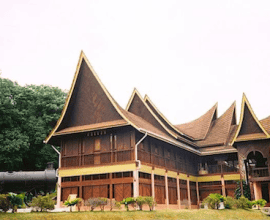
The author thanks KN Geetha, TP Vaani, JN Lheela, and Lydia Jaynthi at GK Legal. Our gratitude to —— of Unsplash for the image.
Claude, Anthropic’s AI, smoothed the drafting; Perplexity Pro checked the facts. The argument, the views, and the errors remain the author’s.
@Copyright reserved.
All content on this site, including but not limited to text, compilation, graphics, documents, and layouts, is the intellectual property of GK Ganesan Kasinathan and is protected by local and international copyright laws. Any use shall be invalid unless written permission is obtained by writing to gk@gkganesan.com.