When injustice strikes, why do Malaysians leave the Bar Council to hold up the sky alone?
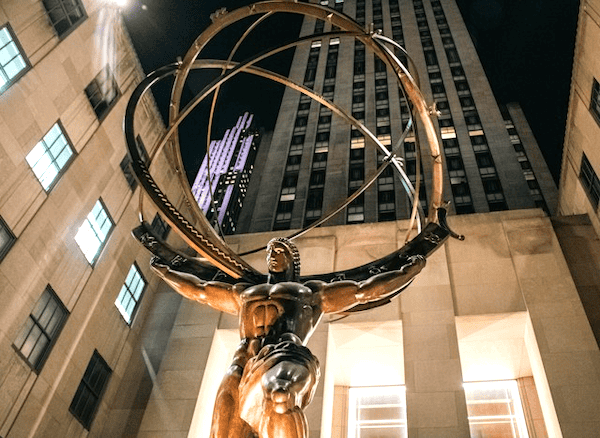
Atlas held the sky, Heracles took the apples. Malaysia has found the Bar Council its Atlas.
The Greeks told a story about a burden that was never meant for one pair of shoulders.
Atlas, a Titan who had fought on the losing side in the war of the gods, was condemned to hold up the sky. For ever. There was no provision for leave.
One day Heracles came by. He needed three golden apples from the garden of the Hesperides, and Atlas knew the way. On the advice of Prometheus, who knew everyone’s weaknesses, the hero offered to take the sky while the Titan fetched the fruit.
Atlas came back with the apples and a new idea. The sky, he had noticed, was remarkably light when someone else was holding it. He offered, most obligingly, to deliver the apples himself.
Heracles agreed at once. Would Atlas just take the sky for a moment, he asked, while he put a pad on his head?
Atlas took it. Heracles took the apples. And the sky has stayed exactly where it was.1 Apollodorus, The Library, 2.5.11 (J G Frazer’s translation, 1921, has Heracles beg Atlas to hold the sky “till he should put a pad on his head”). Other versions differ in detail; some make Heracles hold up the sky for good, others have him build pillars to do it.
Malaysia knows this story by heart, though few of us have read Apollodorus. We perform it whenever something goes badly wrong in public life.
Someone in authority does something that sets the nation’s teeth on edge. Within the hour, the WhatsApp groups light up. One line outruns all the rest.
“What is the Bar Council doing about it?”
Then, pad adjusted and apples pocketed, the nation goes back to dinner.
FIRST, FIND THE RIGHT SHOULDERS
Before we load the sky on anyone, we might at least find the right Titan. Three bodies are regularly confused, and the confusion is half the trouble.
The Malaysian Bar is the whole body of advocates and solicitors in Peninsular Malaysia. Every practising lawyer belongs to it by force of law, whether he likes the company or not.2 Legal Profession Act 1976, ss 41 and 43. Sabah and Sarawak have their own bodies, the Sabah Law Society and the Advocates Association of Sarawak.
The Bar Council is the Bar’s elected council. It manages the Bar’s affairs and its funds.3 Legal Profession Act 1976, s 47(1) (the Council exists “for the proper management of the affairs of the Malaysian Bar”) and s 56 (management of the Bar and its funds vested in the Council).
The Advocates and Solicitors Disciplinary Board(or Disciplinary Board) is another creature altogether. It disciplines lawyers, and its chairman is appointed by the Chief Judge, not elected by the Bar.4 Legal Profession Act 1976, s 93(1) and (3).
The Chief Judge appoints the chairman and fifteen practitioner members after consulting the Bar Council; the President of the Malaysian Bar, or a Council member he designates, also sits. To ask it to lead a protest is rather like asking the referee to score the equaliser.
So the question is really meant for the Malaysian Bar. Its duty is written into the statute, in a sentence of real grandeur.
Section 42(1)(a) of the Legal Profession Act 1976 charges it “to uphold the cause of justice without regard to its own interests or that of its members, uninfluenced by fear or favour”.5 Legal Profession Act 1976 (Act 166), s 42(1)(a), read in the reprint as at 1 August 2018 published by the Attorney General’s Chambers. The Bar’s motto, “without fear or favour”, is taken from it.
It is a magnificent sentence. It is not a power of attorney.
Nowhere does Parliament add: “and on behalf of thirty-odd million others, who may then return to their television.”
THE JOB, AS THE PUBLIC IMAGINES IT
If the nation drafted the Bar’s job description, it might read like this.
Wanted: a body of lawyers to uphold justice, restrain Ministers, rebuke institutions, rescue the oppressed and issue a statement on everything by Tuesday. No salary from the public purse. Members must also earn a living.
The successful applicant will be called ‘political’ when he speaks, and ‘cowardly,’ when he does not. Applause will be private. Criticism will be public.
There has never been a shortage of applicants. There has, it must be said, been a shortage of colleagues.
THE CITY WHERE MINDING YOUR OWN BUSINESS WAS BAD MANNERS
Athens, 431 BC. Pericles rises to honour the dead of the war’s first year.
In the speech Thucydides gives him, he says something no politician today would dare. Athenians alone, he claims, regard the man who takes no part in public affairs not as harmless, but as useless.6 Thucydides, History of the Peloponnesian War, 2.40.2. Translations differ: Crawley (1874) has “not as unambitious but as useless”. Thucydides warns that his speeches give the general sense of what was said, not the exact words (1.22).
The Greeks called the purely private person an idiōtēs. Two thousand years of English have hardened the word into an insult.
The modern Malaysian is no idiōtēs. He has a view on everything. He simply prefers it delivered by someone else, preferably on letterhead.
THE SMOKE IN THE WAITING ROOM
In 1968, two American psychologists, John Darley and Bibb Latané, pumped smoke into a room where students sat filling in a questionnaire.
Alone, a student reported the smoke about three times in four. Seated beside two strangers who had been told to ignore it, he reported it about once in ten. Some sat on, politely waving the fumes from their pages, while the room turned grey.7 B Latané and J M Darley, “Group inhibition of bystander intervention in emergencies” (1968) 10 Journal of Personality and Social Psychology 215: 75 per cent alone; 10 per cent with two passive confederates. (Citation from memory; to be checked against the journal.)
The experiment was inspired by the murder of Kitty Genovese in New York in 1964. The New York Times had reported that thirty-eight neighbours saw or heard the attack and did nothing. The figure became a parable of urban indifference.
It was also untrue. Later research found no evidence for it, and in 2016 the Times itself called its report flawed.8 R Manning, M Levine and A Collins, “The Kitty Genovese murder and the social psychology of helping: The parable of the 38 witnesses” (2007) 62 American Psychologist 555; The New York Times, obituary of Winston Moseley, April 2016, read in secondary reports only. Some neighbours did call the police. One, her friend Sophia Farrar, ran down the stairs not knowing whether the killer had gone, and held Kitty until the ambulance came.9 Told in The Witness (2015), the documentary by Kitty’s brother William Genovese, and in Farrar’s obituary (September 2020), as reported by other outlets; I have not read the obituary itself.
So the smoke was not heartlessness. It was something more Malaysian, and more forgivable: good manners. The quiet assumption that someone better qualified has surely already rung.
A PHOTOCOPY IN RAJASTHAN
Rajasthan, December 1994. In the village of Kot Kirana, labourers and small farmers obtained the government’s own records of local public works. Then they read them aloud, in public, to the people named in them.
The wage rolls paid men who had never seen a rupee. About half the names at that first hearing proved to be false.10 A Roy and others, “Demanding accountability”, Seminar No 500 (2001). The movement was the Mazdoor Kisan Shakti Sangathan (MKSS), founded in 1990. Villagers stood up, one after another, and said before their neighbours: that is my name, and I never had that money.
They called these hearings jan sunwai (‘public hearing’). By April 1995 the Chief Minister had told the state assembly that people had a right to see such records.11 The announcement of 5 April 1995 is recorded by Roy and others (n above). The promise was slow to be kept, and further campaigns followed. Ten years later, India had a national Right to Information Act.12 Right to Information Act 2005 (India).
No silk was briefed. No Bar Council was consulted. The weapon was a photocopy, and the nerve to read it out.
A HAIRDRESSER IN THE SUPREME COURT
London, 2016. The government proposed to begin leaving the European Union by its own act, without asking Parliament.
The challenge came neither from the Law Society nor from the Bar Council of England and Wales. It came from Gina Miller, an investment manager, and Deir Dos Santos, a hairdresser.
In January 2017 the Supreme Court held, by eight to three, that only an Act of Parliament would do.13 R (Miller) v Secretary of State for Exiting the European Union [2017] UKSC 5, decided 24 January 2017. Lord Neuberger gave the judgment of the majority of eight; Lord Reed, Lord Carnwath and Lord Hughes dissented. Mrs Miller was rewarded with a torrent of abuse, and went back to court two years later all the same.14 R (Miller) v The Prime Minister [2019] UKSC 41, on the prorogation of Parliament.
A student who reads the majority and then Lord Reed’s dissent will learn something no lecture teaches: how strong the losing side can be, and why it still lost.
Of course the claimants hired lawyers. That is what lawyers are for. A lawyer is the citizen’s instrument. He was never meant to be his understudy.
WHEN LAWYERS WALK
Malaysia has its own picture.
On 26 September 2007, after a video clip appeared to show a senior lawyer discussing the appointment of judges, some two thousand members of the Bar, with a number of concerned citizens, walked in heavy rain from the Palace of Justice in Putrajaya to the Prime Minister’s Office.15 Malaysian Bar, “Walk for Justice: ‘When lawyers walk, something must be very wrong’” (26 September 2007). Reported estimates of the numbers range from about one thousand to over two thousand.
The Bar Council’s chairman, Ambiga Sreenevasan, put it in a sentence. Lawyers do not walk every day; when they walk, something is wrong.
She was right. But consider the arithmetic. If something must be very wrong before lawyers walk, how wrong must it be before the rest of us do?
THE QUOTATION NOBODY WROTE
Every outrage summons the same line. “The only thing necessary for the triumph of evil is for good men to do nothing.” It is always credited to Edmund Burke.
No one has ever found it in his works.16 P F Boller and J George, They Never Said It (Oxford University Press, 1989); Quote Investigator, “The Only Thing Necessary for the Triumph of Evil is that Good Men Do Nothing” (4 December 2010), which traces near versions to the early twentieth century. Even our favourite call to action, it seems, was left for somebody else to write.
What Burke did write, in 1770, asks far more of us: “When bad men combine, the good must associate; else they will fall, one by one, an unpitied sacrifice in a contemptible struggle.”17 E Burke, Thoughts on the Cause of the Present Discontents (1770).
Mark the verb. Not “delegate”. Associate.
THE SHOULDERS OF A DEMOCRACY
The vote, the letter to one’s Member of Parliament, the complaint, the lawful petition and the peaceful assembly the Constitution guarantees: these belong to the citizen.18 Federal Constitution, art 10(1)(b) (the right of citizens to assemble peaceably and without arms), subject to the restrictions Parliament may impose under art 10(2). They were never leased to the profession.
A Malaysian who votes has done his civic duty for a day. A five-year Parliament leaves some 1,825 days over.
Forwarding an indignant message to 97 friends is a pleasant way to spend some of them. It is not quite citizenship. It is just ‘forwarding’.
The Malays have a wiser rule for heavy loads: berat sama dipikul, ringan sama dijinjing (the heavy we shoulder together, the light we carry together). It does not say: the heavy we hand to the lawyers.
There is a last detail in the myth, and the best. On the temple of Zeus at Olympia, carved about 460 BC, Heracles is shown holding up the sky while Atlas brings the apples. Look closely. Athena has her hand beneath it too.19 Metope of the eleventh labour, Temple of Zeus, Olympia (c 460 BC), now in the Archaeological Museum, Olympia.
Even the strongest man in Greek legend was not expected to carry it alone.
The Bar will not put the sky down. It never has. But it would take it kindly if, now and then, someone else offered to hold it, and did not reach for the pad.
∞§∞
This is for general information only, not legal or technical advice. Obtain independent legal advice where needed.
Thanks to KN Geetha, TP Vaani, JN Lheela and Lydia Jaynthi of GK Legal, and Zoshua Colah of Unsplash for the image.
Claude assisted with drafting; Perplexity Pro fact-checked. The views and any errors are the author’s.
© GK Ganesan Kasinathan. All rights reserved. All site content is protected by copyright. No reproduction or use without prior written permission: gk@gkganesan.com.