Can a Deputy Speaker leave the Chair empty, debate as an MP, and still preside over the Dewan Rakyat?
A referee takes the penalty, then rules it a goal. Give or take a football, that was the Dewan Rakyat on 16 November.
Parliaments are used to members crossing the floor
On Monday, the Chair crossed it.
It was 11.38 in the morning, 16 November 2026.
The House sat in Committee on the Works Ministry’s budget.
From the Chair, Deputy Speaker Dato’ Sri Dr Ramli Mohd Nor read out the list of debaters. He had checked the Standing Orders, he said, and the Member for Cameron Highlands would also debate.
The Standing Orders, consulted, had raised no objection. They seldom do. They are paper.
He put that member first.
The Member for Cameron Highlands is Dato’ Sri Ramli himself.
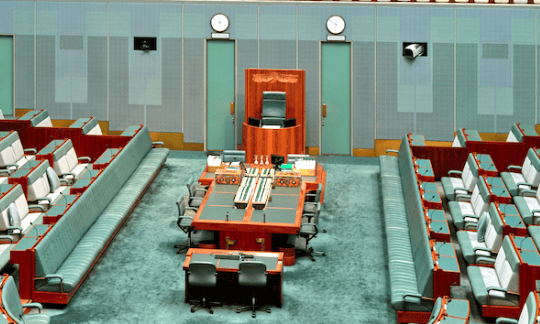
He rose and walked to his own bench. The great chair behind him, which has outlived a long line of occupants, now had none.
Datuk Seri Dr Ronald Kiandee, the Member for Beluran and himself a Deputy Speaker for ten years, asked the question any schoolchild in the gallery might have asked. In most parliaments it answers itself. One simply looks up.
“Who is the Speaker now?”1*Penyata Rasmi Dewan Rakyat*, Parlimen Kelima Belas, Penggal Kelima, Mesyuarat Ketiga, Bil 61, 16 November 2026, p 38. The official text is marked “naskhah belum disemak” (unrevised). All translations from the Malay are mine. Datuk Seri Kiandee was a Deputy Speaker from 2008 to 2018.
“I am also the Speaker,” came the reply.
King Lear asked a darker version of the same question: “Who is it that can tell me who I am?”2William Shakespeare, *King Lear*, Act 1, scene 4. Only the Fool replied.
The Dewan Rakyat got a confident answer. That was the trouble.
A man may hold two offices. Physics allows him one seat at a time. The Standing Orders, it turns out, had never thought it necessary to say so.
SIXTEEN MINUTES ON A MONDAY MORNING
What the record shows
Datuk Seri Kiandee offered to sit in the Chair himself for ten minutes. He reminded the House that the Standing Orders let the presiding officer hand the Chair to any member.
The Deputy Speaker declined. He had checked the rules, he said. Nothing forbade him to speak from his seat.
Then came the line that will outlive the budget it was spoken in. A dramatist would envy it. Datuk Seri Kiandee said he was meant to be addressing the Chair. The reply, in English, was this:
“I am talking to myself, to the Minister.”3*Penyata Rasmi*, 16 November 2026, p 39.
Three parts in that sentence: the member, the Chair and the Minister. Two people to play them.
Asked once more to appoint someone, he said he chose to appoint no one. He began his speech by announcing that he stood as Member for Cameron Highlands and, at the same moment, presided over the sitting. He opened his questions to the Minister by addressing “Pengerusi” — the Chairman. That is to say, himself.4*Penyata Rasmi*, 16 November 2026, p 40.
The quiet rescue
Towards the end of the speech, the Hansard records a short stage direction. The other Deputy Speaker, Puan Alice Lau Kiong Yieng, had taken the Chair.
The record does not say who asked her. The House, it seems, had answered Datuk Seri Kiandee’s question for itself, quietly, the way a family moves a vase before anyone knocks it over.5*Penyata Rasmi*, 16 November 2026, p 40. *Malaysiakini* (16 November 2026) also reports that Puan Lau briefly took the Chair. The Hansard records the opening of the speech with the Chair empty. Some accounts in circulation, including a transcript prepared from the video, omit the handover altogether.
When he had finished, he announced that he would now sit again as Chairman, and walked back up to the dais. Almost at once, the point of order came. Dato’ Ngeh Koo Ham (Beruas) put the real question in one sentence. If the Deputy Speaker debates and presides at once, who decides whether he has kept the rules?6*Penyata Rasmi*, 16 November 2026, p 41.
The ruling on that question came from the Deputy Speaker himself. Of all the people in the chamber, he was the one person who could not give it.
THE QUESTION THE ESSAY ANSWERS
Let us be clear about what is not in doubt.
A Deputy Speaker is an elected member. The voters of Cameron Highlands did not elect a presiding officer; they elected a representative. A presiding officer who may never speak for his constituents leaves them, in one sense, unrepresented. That is a real cost, and the Deputy Speaker’s case deserves to be put at its best. His concern on Monday, roads for rural communities, was an honourable one.
The Malays have a proverb for a cruel choice: *ditelan mati emak, diluah mati bapa* (swallow it and the mother dies; spit it out and the father dies). It describes a dilemma with no exit. This one had an exit. It was marked Standing Order 7(3).
So the question is not whether he may speak. Many parliaments find a way to let him.
The question is narrower and sharper.
Can one person hold the Chair and the floor at the same instant, and then rule on whether he was right to do so?
WHAT THE STANDING ORDERS SAY
A rule book built for two people
The Dewan Rakyat makes its own rules.7Federal Constitution, art 62(1). The Standing Orders are made under it.
Standing Order 7 sets up the Chair. The Speaker presides; in his absence a Deputy Speaker. At any time during a sitting, the Speaker may ask a member to take the Chair temporarily, and that member then holds his powers. In the Committee of Supply, the person presiding takes the Chair as Chairman.8Standing Orders of the Dewan Rakyat, SO 7(1)–(5). I have read the English text of the fourteenth printing (June 2018), published by the Commonwealth Parliamentary Association; its latest dated amendment marker is of 7 April 2016. A draft amendment to SO 7(3) has since been proposed; I have not confirmed whether it was adopted. Nothing in the argument turns on it.
Notice the machinery. Paragraph (3) exists for one purpose: so that the presiding officer can leave the Chair without leaving it empty.
Then read the rules of debate. A member who wishes to speak must rise in his place and address his observations to the Chair (SO 35). When the Chair speaks, the House must be silent so that it may be heard (SO 42). The Chair enforces order, and its decision on a point of order is final unless the House reviews it on a substantive motion (SO 43).9Standing Orders of the Dewan Rakyat, SO 35, 42 and 43.
Every one of these rules assumes two people.
One speaks. The other is spoken to.
One may be called to order.
The other does the calling.
A speech addressed to oneself is not a breach of Standing Order 35. It is the rule performed as a monologue.
The vote that proves the point
There is a tell-tale detail, and it sits in the Constitution itself. The person presiding casts a vote only to avoid a tie, “but shall not vote in any other case”. Standing Order 45(1) repeats the rule.10Federal Constitution, art 62(3); Standing Orders of the Dewan Rakyat, SO 45(1).
There is a second. When the House counts its quorum of 26, the Chair is not counted. The rule has said so, in terms, since 1959.11Standing Orders of the Dewan Ra’ayat 1959, SO 13(1), read in the 1959 printing on the Parliament’s repository; the same words appear in SO 13(1) of the 2018 printing: the quorum “shall consist of twenty-six members excluding the Chair”.
So the Chair does not vote with the members, and is not even counted among them. For quorum purposes, the presiding officer is not quite in the room. The rule-makers took the trouble to keep the Chair out of the contest at the moment of decision. It would be strange to read the same rules as letting the Chair into the contest at the moment of argument.
The three rules relied on
The Deputy Speaker cited three Standing Orders. Each, read in its own words, points the other way.12*Penyata Rasmi*, 16 November 2026, pp 38 and 42–43.
Standing Order 100
This gives the Speaker a residuary power over matters the rules do not expressly cover. But the direction he gives must be “not inconsistent with these Orders”.13Standing Orders of the Dewan Rakyat, SO 100.
Silence is not permission. The rules say nothing about a Speaker who presides by telephone from the canteen, or rules on points of order from the car park. They did not need to. Some things go without saying until somebody does them. A direction that leaves no Chair to address is inconsistent with Standing Orders 7, 35, 42 and 43, and so falls outside Standing Order 100.
And there is a second answer. Where a specific rule speaks to this very situation, a general power cannot supply a different solution. Standing Order 7(3) speaks to this one. It tells a presiding officer exactly what to do when he must leave the Chair.
The old rule book was blunter still. In 1959, Standing Order 100 sent the House, wherever its own rules were silent, to the practice of the House of Commons.14Standing Orders of the Dewan Ra’ayat 1959, SO 100, read in the 1959 printing on the Parliament’s repository; the copy carries marginal amendments substituting the present wording. I have not traced the date of the substitution. The words have gone. The silence they once filled is the same silence the Deputy Speaker now relied on.
Standing Order 99A
This says that a failure to comply with the Standing Orders does not nullify the proceedings or any decision reached.
It is a cure, not a licence. A rule that forgives a failure presupposes there was one. To cite it in one’s own defence is less an argument than a plea in mitigation.
It is the umbrella that proves it was raining.
Standing Order 99
This makes the presiding officer’s interpretation final, subject to a substantive motion. It is the strongest of the three, and the most troubling.
Here, the officer interpreting the rules was ruling on the propriety of his own conduct, minutes after the event, against members who objected to it. It had the finality of a homework mark the pupil awards himself: perfectly final, and not much use to the teacher.
THE REFEREE WHO TAKES THE PENALTY
Picture a football referee who, at a penalty, hands his whistle to nobody, places the ball, and takes the kick himself.
Then he trots back, picks up the whistle, and rules that the goal stands. Protesting players are told to sit down. Anyone unhappy may write to the league. The video assistant referee, consulted, turns out to be him as well.
Nobody need doubt his honesty. The goal may even have been good.
The trouble is that no one can tell, because the only person who could say so was the one who kicked it.
That is the oldest rule in public law, and it is older than any Standing Order.
No one may be a judge in his own cause.
Lord Hewart CJ gave it its most quoted form in 1923. He quashed a conviction because the deputy clerk, whose firm acted against the defendant in a civil claim over the same accident, had retired with the justices. It was of fundamental importance, he said, that justice should not only be done, but should manifestly and undoubtedly be seen to be done.15*R v Sussex Justices, ex p McCarthy* [1924] 1 KB 256, 259 (KBD), read in the scanned report.
A Chair is not a court. But the Speaker’s authority rests on the same thing a judge’s rests on: the House’s belief that the referee is not also a player.
Dato’ Ngeh’s question goes to exactly that point. Watch what followed. The objection was to the Chair’s own conduct, and the Chair’s own powers were turned against it. Standing Order 42, which makes a member sit when the Chair rises, was invoked to seat the objector. Persist, he was told, and a charge would follow.16*Penyata Rasmi*, 16 November 2026, pp 42–44.
None of this was beyond the Chair’s powers. That is precisely the difficulty. The powers were real; the person using them was the one under challenge.
The House went on to quarrel about whether he had called the Deputy Speaker a dictator.
The word did what strong words always do in a debating chamber. It drew all the fire.17*Penyata Rasmi*, 16 November 2026, pp 43–46. Tuan Mohd Kurniawan Naim Moktar (Kinabatangan) raised SO 36(6) on imputations of improper motive; the Deputy Speaker chose not to take the matter further. The question was left standing in the corner, where it remains.
HOW OTHER PARLIAMENTS ANSWER IT
The common-law world draws the line in different places. It never draws it where the Dewan Rakyat found itself on Monday.
Westminster: silence
At Westminster, the Speaker takes no part in debate, either in the House or in committee. The senior Deputy Speaker, the Chairman of Ways and Means, follows the same tradition of abstaining from party controversy, and by convention does not vote.18*Erskine May’s Treatise on the Law, Privileges, Proceedings and Usage of Parliament* (25th edn, 2019), para 4.34, read online at erskinemay.parliament.uk. For the Speaker, *House of Representatives Practice* (7th edn), ch 6, n 103, citing *Erskine May* (24th edn), p 61.
It was not always so, and the exception proves the rule. On 24 May 1813, Speaker Charles Abbot rose in a Committee of the whole House to oppose the clause of Grattan’s Bill that would have let Roman Catholics sit in Parliament. He spoke from the floor. The Chairman, not he, presided. The clause fell by 251 votes to 247, and the Bill was abandoned that night.19HC Deb 24 May 1813, vol 26, read on the UK Parliament’s Hansard site: the Speaker “arose and addressed the Committee”; the clause was negatived 251 to 247, and the Chairman was then directed to leave the chair.
Four votes, and a Speaker’s voice among them. Even in 1813, when Speakers still aired their opinions in public, nobody thought one could air them from the Chair.
The tradition is old. On 4 January 1642 Charles I entered the Commons to seize five members and asked Speaker Lenthall where they were. Lenthall, on his knees, replied that he had neither eyes to see nor tongue to speak in that place, but as the House was pleased to direct him.20UK Parliament, “The arrest of the five Members”, Living Heritage, parliament.uk, giving the words as “I have neither eyes to see nor tongue to speak in this place but as this house is pleased to direct me whose servant I am here”. Sir Simonds D’Ewes’s journal reports the same reply in indirect speech.
The tongue of the Chair belongs to the House. It may be lent, but only with someone left minding the Chair.
Westminster pays for that silence in advance, like a club subscription. The Speaker leaves his party; the Deputy Speakers keep theirs but withdraw from an active political role.21UK Parliament, “Commons Deputy Speakers”, parliament.uk. Our Deputy Speakers do neither. They remain party members with constituencies to serve, which makes the temptation sharper here, and the handover more necessary, not less.
That rule is set down in the great work of a House of Commons clerk. Thomas Erskine May published his *Treatise* in 1844, while still a young assistant in the Commons library, and rose to be Clerk of the House; the book has outlived every Speaker who has quoted it. Its twenty-fifth edition is free online — start with paragraph 4.34, and the Dewan Rakyat’s own Standing Orders read differently afterwards.
Canberra: a door, properly hinged
Australia found a gentler answer. Its Speaker, who stays out of debate in the House, may speak for his electorate in the Federation Chamber, the House’s second debating room, where the Deputy Speaker holds the Chair.22Parliamentary Education Office (Australia), “If the Speaker wishes to raise an issue concerning their electorate, how is this done?”, peo.gov.au; Department of the House of Representatives, Infosheet 16, “The Federation Chamber”, aph.gov.au. The Office notes that it is a rarity for a Speaker to be on his feet there.
The constituents keep their voice. The Chair keeps its occupant.
Washington: hand over first
Even in the United States, where the Speaker is a party general and nobody pretends otherwise, the practice is plain. The general hands over the Chair before marching onto the floor.23*Constitution, Jefferson’s Manual and Rules of the House of Representatives*, 115th Congress, § 358 and the annotation to it.
New Delhi: written into the Constitution
India has drawn the line in its Constitution. When the House debates a resolution to remove the Speaker, the Speaker may speak and vote like any member. But he “shall not, though he is present, preside”.24Constitution of India, art 96(1) and (2), read at constitutionofindia.net. The same article confines him to a first-instance vote and takes away his casting vote in those proceedings.
Present, entitled to speak, and still not in the Chair. The drafters in New Delhi settled in one clause what took the Dewan Rakyat sixteen minutes to dispute.
Four systems. Different views on whether a presiding officer should speak at all. One rule common to them all: never both at once.
Kuala Lumpur, 2021
Our own House knows the answer too. On 15 September 2021, Speaker Azhar Harun left the Chair mid-sitting and asked Datuk Seri Azalina Othman Said to take it, under Standing Order 7(3).25*Malaysia Now*, *Malay Mail* and *The Malaysian Insight*, all 15 September 2021. I have relied on the press reports and have not read the Hansard of that day.
The House cares who occupies the Chair. It is unlikely to be satisfied with no one.
It took a sentence. Datuk Seri Kiandee offered the same sentence on Monday, and offered himself with it.
A STEP TAKEN BEFORE
There is a human thread in the record, and it explains how such things happen.
On 31 October 2023, during the Works Ministry’s winding up, the Deputy Speaker put a final question to the Minister from the Chair. It came, he said, from the Member for Cameron Highlands, and concerned projects serving Orang Asli communities in the interior.26*Penyata Rasmi Dewan Rakyat*, 31 October 2023, p 67.
One member called out “konflik” — conflict — and the House laughed. The Minister answered courteously, and the sitting moved on.27*Penyata Rasmi Dewan Rakyat*, 31 October 2023, pp 65 and 67. The call came from Titiwangsa as the Deputy Speaker announced that a question from the Member for Cameron Highlands would follow.
It was a small thing. Someone noticed; nobody pressed it.
Conventions seldom die by a single blow. They are nibbled. Each small liberty becomes the precedent for the next, and Monday was the next.
WHAT THE LAW IS SILENT ON, AND WHAT SHOULD BE DONE
The silences
The Standing Orders do not say, in terms, that the Chair may never be empty. Nor do they say whether a presiding officer may debate. Those are real silences, and the Deputy Speaker was entitled to notice them.
There is a second silence, more serious. Article 63(1) of the Constitution forbids any court to question the validity of proceedings in Parliament.28Federal Constitution, art 63(1). No judge can help here. The House is the only forum.
The Dewan Rakyat makes the nation’s laws. It may fairly be expected to keep its own.
Three things to distinguish
The existing law: the Standing Orders provide a Chair, a machinery for keeping it filled, and rules of debate that require someone in it.
The permissible interpretation: Standing Order 100 cannot authorise a practice that empties the Chair, because that practice is inconsistent with the Orders it serves. On this reading, what happened on Monday was an irregularity, saved from nullity by Standing Order 99A — and no more.
The proposed reform: a new paragraph in Standing Order 7, short enough to read aloud.
A draft for the Standing Orders Committee
“The Chair shall not be left vacant while the House or a Committee of the whole House is sitting. A person presiding who wishes to speak in debate shall first ask another to take the Chair under paragraph (3), and shall not rule on any point of order arising from his own speech.”
A Speaker’s ruling under Standing Order 99 could do the same work sooner. Datuk Seri Dr Zaliha Mustafa, chairing the Backbenchers Club, asked for exactly that guidance on Monday.29*Penyata Rasmi*, 16 November 2026, p 46. And the ruling itself invited the remedy: a substantive motion under Standing Orders 43 and 99. For the young practitioner, that is the lesson of finality. A final ruling is not a correct one; it is merely one that only the House can now undo.
And if the House wishes to protect constituents whose member sits in the Chair, it may borrow Canberra’s door: a fixed slot in which a presiding officer may speak for his constituency from the floor, while someone else presides.
THE ANSWER
The Deputy Speaker did not say it was no anomaly. He said something wiser: that when an anomaly happens, the House learns from it.30*Penyata Rasmi*, 16 November 2026, p 46.
Then let it learn. It is a cheap lesson, as constitutional lessons go: one sentence in the Standing Orders, and no one hurt.
Can a Deputy Speaker leave the Chair and debate as the Member for his constituency? Yes — once someone else is sitting in it.
Can he debate and preside at the same time? No. The Standing Orders assume two people, the common-law world insists on two people, and the oldest rule of fairness requires two people.
Can he then rule on whether he was right? That is the one question to which every answer is wrong, because it is the question he cannot be asked.
“Who is the Speaker now?” deserves a plain reply.
Whoever is in the Chair.
Never whoever is taking the penalty.
∞§∞
This is for general information only, not legal or technical advice. Obtain independent legal advice where needed.
Thanks to KN Geetha, TP Vaani, JN Lheela and Lydia Jaynthi of GK Legal, andNeon Wang of Unsplash for the image.
Claude assisted with drafting; Perplexity Pro fact-checked. The views and any errors are the author’s.
© GK Ganesan Kasinathan. All rights reserved. All site content is protected by copyright. No reproduction or use without prior written permission: gk@gkganesan.com.