A businessman pays RM10 million and 26 charges vanish. When should the State take the money, and when should it explain itself?
Read More

A businessman pays RM10 million and 26 charges vanish. When should the State take the money, and when should it explain itself?
Read More
Bacon said judges are lions under the throne. George Seah read the sentence and crossed out three words.
Read More
He was mistaken for an interpreter, a hotel manager, an ugly judge, and a corpse. Then the scoreboard got it wrong too.
Read More
He lost the case three to two in 1988. The Federal Court handed it to him in 2024, long after he was gone.
Read More
He declared Malaysia's law secular, then spent the rest of his life obeying his own judgment — in pencil. Why the pencil, do you think?
Read More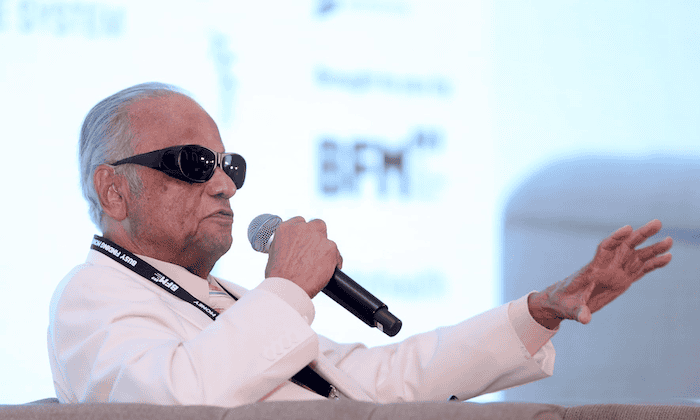
Bacon said judges are lions under the throne. Mahadev Shankar made them tigers, and meant it.
Read More
He told a convicted Menteri Besar he had betrayed his Sovereign Ruler. Eight years later, he became one.
Read More
A two-hour submission, one raised hand, and forty minutes: how a Federal Court judge quietly rewrote Malaysian law.
Read More
Mortmain — the dead hand. England buried the last of it in 1960. Malaysia still carries a fragment, and nobody has explained why.
Read More
Thirty ringgit turns five mortal trustees into a body corporate that never dies — and escapes the Companies Act entirely.
Read More