How Much Longer Must India and Malaysia Cling to an 1872 Law of Guarantees?
Malaysia and India still let a spoken word cost you your house. Guarantee law has always adapted — so why is theirs frozen in 1872?
The Law That Learned to Walk
Across the Commonwealth, the law of guarantees kept growing — through judges who let it adapt. Yet India and Malaysia still carry the frozen statute of 1872. Here is why it must change.
I. A cup of tea, and a ruined man
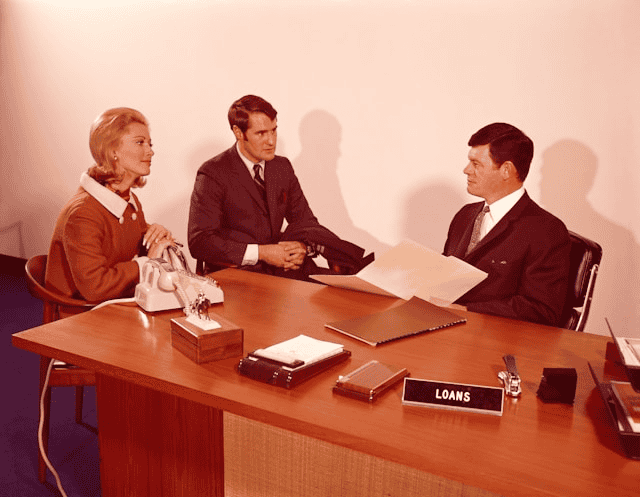
Picture Encik Rahim. A good man, a trusting one.
An old friend needs a loan.
Over warm teh tarik he asks a small favour: “Just tell the bank you’ll back me. Nothing on paper.”
Rahim nods.
Friends are friends.
Three years later the friend is gone, and so is the money.
The bank produces a clerk who “remembers” the promise.
A judge believes him.
Rahim’s house is sold.
Here is the first irony. To sell that house, Rahim would have needed a signed contract.1 Dealings in land in Peninsular Malaysia require writing and registration: National Land Code 1965 (Act 56 of 1965). To lose it as a guarantor, he needed only to open his mouth.2 Contracts Act 1950 (Act 136), ss 77–100 (indemnity, guarantee and suretyship); none imposes a general writing requirement. That is Malaysian law, alive in 2026.
To see how strange this is, we must travel back. A long way back.
II. Older than any statute
The guarantee is among the oldest ideas mankind ever wrote down. Long before banks, there were sureties.
The scriptures are thick with them.
In Genesis, Judah stands surety for his brother Benjamin: “I will be surety for him.”3 Genesis 43:9 (King James Version); and see Genesis 44:32. Proverbs, wiser and more nervous, warns again and again against the practice — “he that is surety for a stranger shall smart for it.”4 Proverbs 11:15; and see Proverbs 6:1–5, 17:18 and 22:26–27.
The Laws of Manu, in classical India, already sorted sureties into three kinds: for a man’s appearance, for his honesty, and for payment — a taxonomy sharper than our section 79.5 Manusmṛti (Laws of Manu), ch VIII, distinguishing sureties for appearance, for honesty and for payment; and see Kauṭilya, Arthaśāstra.
In China, no bargain of weight was struck without the bao ren, the guarantor-witness who staked his own name on another’s word.6 On the bao ren (保人), the guarantor-witness of Chinese customary and imperial contract practice, recognised in the Tang and Qing codes.
Classical Islamic law refined the field into kafalah, ḍamān and rahn — suretyship, guarantee and pledge — a vocabulary Malaysian Islamic finance still uses today.7 Kafālah (suretyship), ḍamān (guarantee) and rahn (pledge) in classical Islamic law; kafalah is recognised in Malaysia through the Shariah Advisory Council of Bank Negara Malaysia under the Central Bank of Malaysia Act 2009 and the Islamic Financial Services Act 2013.
Then comes the quiet thunderclap.
The longest verse in the longest chapter of the Qur’an, the ayat al-dayn, commands that when believers take on a debt, they “reduce it to writing,” and call witnesses.8 Qur’an, Sūrah al-Baqarah (2:282), the āyat al-dayn or “verse of debt” — the longest verse in the Qur’an — enjoining that debts be written down and witnessed; and 2:283, on pledge (rahn) where no scribe is available. Fourteen centuries ago, revelation asked for the very thing our statute still will not: a debt in writing.
Our law permits an oral guarantee that scripture, classical India, and old Babylon would each have thought reckless.
III. How the common law learned to promise
The English reached wisdom more slowly, and far more interestingly.
For centuries their law had two blunt tools.
The action of debt recovered a fixed sum — but a defendant could escape by “wager of law,” rounding up eleven neighbours to swear he owed nothing.
The action of covenant enforced promises, but only if sealed in wax.
The ordinary spoken bargain fell between them, almost invisible.
So the judges built a new road.
Out of the law of wrongs they grew assumpsit — “he undertook.”
In Slade’s Case in 1602 they took the decisive step: wherever a debt was owed, a promise to pay it would be implied, and assumpsit would lie.9 Slade’s Case (1602) 4 Co Rep 92b — indebitatus assumpsit lies for a debt, the promise to pay being implied. On debt, covenant and wager of law generally, see A W B Simpson, A History of the Common Law of Contract (OUP, 1975).
The living law had grown a limb to grip the informal bargain.
Every new freedom breeds a new abuse.
Once a spoken promise could bind, Restoration England filled with professional perjurers, swearing for a fee that you had promised to answer for another’s debt.
Parliament, exhausted, passed the Statute of Frauds in 1677, and for guarantees drew a bright line: no action unless the promise is in writing and signed.10 Statute of Frauds 1677 (29 Car II c 3), s 4; and see Actionstrength Ltd v International Glass Engineering IN.GL.EN SpA [2003] UKHL 17; [2003] 2 AC 541 (estoppel cannot defeat the writing requirement).
The common law expanded to admit the oral promise, then corrected itself to require writing. It moved.
IV. Two creatures, and the lawyer’s cunning
Here the law grew subtle, and the subtlety still matters to Rahim.
A guarantee is a shadow. It is secondary: it lives and dies with the debt it stands behind. If the main debt vanishes, so does the guarantor’s liability.11 The surety’s liability is generally co-extensive with, and accessory to, the principal debtor’s: Indian Contract Act 1872, ss 128, 133–139; Contracts Act 1950, ss 81, 86–92.
An indemnity is a different animal altogether. It is primary — a free-standing promise to make good a loss, which can survive even when the underlying deal collapses.12 On the guarantee (secondary) / indemnity (primary) distinction, see Yeoman Credit Ltd v Latter [1961] 1 WLR 828; Sunbird Plaza Pty Ltd v Maloney (1988) 166 CLR 245.
That single distinction has done remarkable work.
The writing rule of 1677 fastened onto guarantees but not, generally, onto indemnities — so for three centuries lawyers have fought over which label a document truly wears, the courts looking past the heading to the substance beneath.13 The substance-over-label rule: the court looks to the substance of the obligation, not the heading. See Sunbird Plaza (above); and J O’Donovan & J Phillips, The Modern Contract of Guarantee (Sweet & Maxwell).
And the indemnity, once a humble promise to reimburse a loss, has grown into the master-key of modern deal-making: it now allocates tax risk, environmental risk, third-party claims and the very costs of litigation, in share sales, construction contracts and finance documents across the Commonwealth.14 On the modern indemnity as an instrument of commercial risk-allocation — tax, environmental and third-party risk, and enforcement costs, in share sales, construction and finance — see the discussion in Vossloh Aktiengesellschaft v Alpha Trains (UK) Ltd [2010] EWHC 2443 (Ch) (a decision of the Chancery Division, per Sir William Blackburne).
The cunning shows in the drafting.
Lenders now demand a combined “guarantee and indemnity” — belt and braces — so that if the guarantee fails through some defect in the main debt, the indemnity stands as an independent promise to pay.15 The combined “guarantee and indemnity,” so drafted that the indemnity survives as a primary promise if the guarantee fails; standard lending practice across the Commonwealth.
The law did not stumble into this.
It designed it.
V. The law that kept inventing
Nor did the judges ever stop inventing. Watch what equity built while no one was looking.
It fashioned the equity of redemption, so a borrower who paid late did not forfeit his land forever. It decided, in 1783, that merely depositing one’s title deeds with a lender created a mortgage.16 Russel v Russel (1783) 1 Bro CC 269 — deposit of title deeds creates an equitable mortgage.
And in the age of the railways it conjured the most elegant security of all — the floating charge, which fixes on no single asset but hovers over a company’s whole shifting stock, rising and settling with the business until it “crystallises.” Lord Macnaghten called it “ambulatory and shifting” — a security that walks.17 Illingworth v Houldsworth [1904] AC 355, 358 (Lord Macnaghten), on the floating charge as “ambulatory and shifting”; and see Re Panama, New Zealand and Australian Royal Mail Co (1870) LR 5 Ch App 318.
Later came retention of title, the Romalpa clause, born in 1976 to meet the anxieties of modern trade credit.18 Aluminium Industrie Vaassen BV v Romalpa Aluminium Ltd [1976] 1 WLR 676.
Most of this architecture is younger than the motorcar.
The common law grew it because commerce asked and the judges answered.
VI. The whole Commonwealth kept walking
And here is the point that ought to shame us. Everywhere the common law took root, its judges kept this law limber.
In England, the courts still refine the guarantee-indemnity line for modern finance.19 E.g. Vossloh AG v Alpha Trains (UK) Ltd [2010] EWHC 2443 (Ch); and the on-demand bond cases, Edward Owen Engineering Ltd v Barclays Bank International Ltd [1978] QB 159.
In Australia, they enforce the autonomous on-demand bond with rigour, yet bend to protect the vulnerable spouse who guarantees a husband’s venture — the Amadio and Garcia conscience.20 Autonomous bonds: Wood Hall Ltd v Pipeline Authority (1979) 141 CLR 443; and in Malaysia Esso Petroleum Malaysia Inc v Kago Petroleum Sdn Bhd [1995] 1 MLJ 149 (FC). Protective scrutiny: Commercial Bank of Australia Ltd v Amadio (1983) 151 CLR 447; Garcia v National Australia Bank Ltd (1998) 194 CLR 395; Yerkey v Jones (1939) 63 CLR 649.
Singapore, intensely commercial, keeps pace with English doctrine.21 See e.g. Habibullah Mohamed Yousuff v Indian Bank [1999] 3 SLR(R) 650; PT Jaya Sumpiles Indonesia v Kristle Trading Ltd [2009] 4 SLR(R) 689.
Even India — which codified this law in the very Act of 1872 that we inherited — did not let the text freeze its judges: in Gajanan Moreshwar, the courts held that an indemnity-holder need not wait to be ruined before seeking relief, moving beyond the literal words of the code.22 Gajanan Moreshwar Parelkar v Moreshwar Madan Mantri AIR 1942 Bom 302 — indemnity-holder entitled to be indemnified before actual payment once liability is absolute; a judicial advance beyond the literal terms of ss 124–125 of the Indian Contract Act 1872.
Read that again. India took the 1872 code and let its courts grow it.
Malaysia took the same code — and set it in concrete.
VII. The law that stopped
For our guarantee law sits in the Contracts Act 1950, a faithful copy of that Indian Act of 1872,23 Indian Contract Act 1872 (Act IX of 1872), ss 124–147; the Malaysian provisions descend from it through the pre-Merdeka contract legislation of the Malay States and Straits Settlements. and it has not grown a single joint in one hundred and fifty-four years.
Section 79 still declares, as under Queen Victoria, that a guarantee “may be either oral or written.”24 Contracts Act 1950, s 79: “A guarantee may be either oral or written.” Cf. Indian Contract Act 1872, s 126. The rules on discharge and securities remain the prose of 1872,25 Contracts Act 1950, ss 86–99; and see Holme v Brunskill (1878) 3 QBD 495 (discharge by variation), reflected but not modernised. while the commerce they govern has been rebuilt three times over.
Everyone else’s judges kept walking. Our statute was placed in a glass case.
VIII. Why Parliament will not save us
“Then amend it,” you say. It sounds simple. It is not.
Parliament is a busy and reluctant surgeon, with a nation to run and crises to answer.
The quiet law of guarantees, which ruins men privately and one at a time, never reaches the top of the pile.
So, decade after decade, nothing happens.
The statute cannot mend itself, and no one finds the time.
It has survived a century and a half not because it is good, but because inertia outlasts reform.
If a statute is to keep pace with commerce, it must be built to keep pace without Parliament’s constant attention.
IX. A statute with joints
This is the real lesson — and the case for following Australia’s living model, then bettering it. We should not swap one rigid code for another. We should draft a statute that can move: a law with joints.
Technology-neutral bones — say, once and for all, that “writing” includes electronic form and “signature” includes electronic signature, so the Act never ages merely because the tools of commerce change.26 Cf. Electronic Transactions Act 1999 (Cth); and, in Malaysia, the Electronic Commerce Act 2006 and Digital Signature Act 1997, whose technology-neutral technique should be carried into the guarantee statute itself.
Principles the courts can grow — legislate broad standards of good faith, unconscionability and protection of the vulnerable guarantor, and leave the judges room to develop them, exactly as they grew the floating charge.27 As statutory unconscionability is policed in Australia (Australian Securities and Investments Commission Act 2001 (Cth), s 12CB), leaving content to judicial development.
Codes that update themselves — let the fine detail, the warning form and the disclosure list, live in regulation and an industry code a regulator can revise, without troubling Parliament.
A duty to look again — a mandatory review every ten years, so the statute is made to walk on a timetable, and never again sleeps for a century.
X. The ambulatory law
The guarantee has walked through every civilisation that ever kept accounts — through scripture, through Manu and the Qur’an, through the slow genius of the English judges, and through the courts of India, Australia and Singapore that keep it supple to this day.
It has always known how to adapt.
Only in our statute book did it lie down.
We do not need a perfect law. Perfection ages worst of all.
We need a living one — a statute with joints, that can bend toward a commerce we cannot yet see.
Give the law back its legs. Let it walk into the next hundred years, as it always has — instead of being carried, stiff and Victorian, for another hundred and fifty-four.
∞§∞
This article is written for a general readership and does not constitute technical or legal advice. It is an argument for a law that can move — written for the citizen who may one day be asked, over something warm and sweet, to “just say yes.” Readers with legal questions are encouraged to seek independent legal advice.
The author thanks KN Geetha, TP Vaani, JN Lheela, and Lydia Jaynthi at GK Legal. Our gratitude to Getty Images of Unsplash for the image.
Claude, Anthropic’s AI, smoothed the drafting; Perplexity Pro checked the facts. The argument, the views, and the errors remain the author’s.
@Copyright reserved.
All content on this site, including but not limited to text, compilation, graphics, documents, and layouts, is the intellectual property of GK Ganesan Kasinathan and is protected by local and international copyright laws. Any use shall be invalid unless written permission is obtained by writing to gk@gkganesan.com.