
Why Are Court Judgments So Long?
One judgment was ninety-four per cent copy-paste. How the keyboard killed judicial thought — and how to revive it.
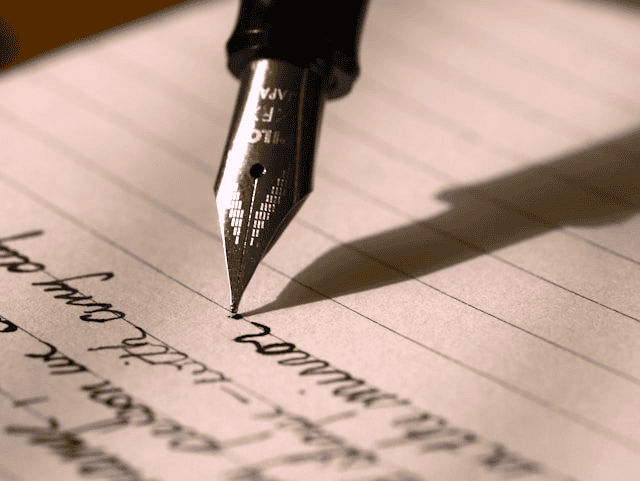
De Clamore et Calamo — of the overfed judgment, the idle keyboard, and the death of the folded foolscap.
The modern judgment is not written.
It is manufactured.
It is poured out by the gallon, and it arrives not as a reasoned decision but as a kind of industrial effluent — vast, warm, and of uncertain provenance.
On writing letters, Blaise Pascal famously said: “I have made this letter longer than usual because I have not had time to make it shorter.” 1“Je n’ai fait cette lettre-ci plus longue que parce que je n’ai pas eu le loisir de la faire plus courte.” Lettre XVI of the Lettres provinciales (1657)
Winston Churchill’s reminder to civil servants during WWII is even more telling: “This Treasury paper, by its very length, defends itself against the risk of being read.”2Richard M. Langworth (ed), Churchill by Himself (PublicAffairs, 2008)
Churchill’s irascible and repeated comments to civil servants is instructive.3In his War Cabinet minute “Brevity” of 9 August 1940, Winston Churchill asked that reports be shorter overall; that they set out the main points in a series of short, crisp paragraphs; that detailed analysis, complicated factors and statistics be set out in appendices; that on many occasions a brief aide‑mémoire of headings should replace a full‑dress report; that “woolly phrases” and officialese padding be eliminated or replaced by single, expressive words, including conversational ones; and that this discipline of concise reporting should save time and “prove an aid to clearer thinking”, a standard he later reaffirmed in 1951 when he complained that official papers were again “too long and too diffuse” and observed, “In 1940 I called for brevity. Evidently I must do it again.”: gist.github+
Our courts received this warning not as counsel but as commission.
A wartime quip has been promoted into a constitutional principle.
I. The Age of the Quill
It was not always so. There was a sterner age.
An age of scratch, blot, and restraint.
Ink was expensive.
Quills were absurd instruments, forever demanding sharpening and occasional forgiveness.
Writing was hard. And because it was hard, it was done chiefly in the head.
A sentence had first to survive private inquiry before it was permitted the public disgrace of paper.
Thought preceded inscription.
Judgment preceded judgment-writing.
That world kept a second lost discipline: the oral trial of prose.
A judgment was spoken before it was written. It was tried in the mouth. Tested by the ear.
If it limped, it was altered.
If it clanged, it was cut.
A sentence had to live in the air before it was permitted to die in ink.
And it had the folded foolscap.
The old judicial assistant — a creature of terrifying efficiency, tweed-clad, and possessing vanishingly little sentiment — took a single sheet and folded it strictly lengthwise.
On one side: the facts, the issues, the rival arguments, set out with brutal, beautiful brevity.
On the other: the judge’s reasons.
That was all.
Space was law.
Margin was discipline.
A judge given half a sheet for his reasoning was forced to think.
The foolscap did what character occasionally failed to do.
Then came the keyboard — that infernal harpsichord of legal decay.
With it came speed.
With speed, abundance.
With abundance, flab.
The fingers now bypass the mind, the throat, and the ear altogether, and proceed straight to the screen, where rubbish acquires dignity merely by occupying twelve-point type.
Forests die so that judgments may become unreadable.
II. The Menagerie
Against that vanished order, set the modern zoo.
The species are numerous.
Their breeding has been alarmingly successful.
Consider, first, the Stenographer — the copyist in robes. In 2013, the English Court of Appeal met him in Crinion v IG Markets Ltd.4Crinion v IG Markets Ltd [2013] EWCA Civ 587. The Court of Appeal found that the trial judgment reproduced, almost entirely verbatim, the winning counsel’s closing submissions; the figure of ninety-four per cent was computed on appeal. The appeal nonetheless failed — the copying, however deplorable, did not by itself vitiate the decision.
The judgment below looked impressive. It looked thorough. There was one difficulty. Some ninety-four per cent of it had been lifted, word for word, from the winning counsel’s closing submissions.
The judge had not written a judgment.
He had pressed Control-C, then Control-V.
The Court of Appeal condemned the practice, with exquisite restraint, as “thoroughly bad practice”. That is judicial politeness for intellectual abdication.
His close cousin is the Quotation Glutton.
He cannot state a proposition in his own words because he has ceased to believe in his own words. He quotes by the yard. Block quotation is laid upon block quotation like railway sleepers across a jurisprudential swamp. Better judges are summoned from the dead to do his work for him. The reader emerges with the dim sensation of an afternoon spent trapped in a second-hand anthology.
Then the Exhumer, with his apprentice, the Novice Historian.
They cannot decide a modest Petaling Jaya tenancy dispute without excavating the entire cemetery of imperial precedent. They drag Magna Carta into a fender-bender on the Federal Highway. They cite Bracton to settle a parking fine. They mistake background for reasoning. They believe that with a long enough run-up, even a trivial conclusion will look profound.
The Diarist is not historical but autobiographical.
He records everything. The judgment becomes the travel journal of the litigation. We learn who attended case management on 14 March. Who failed to attend on 22 April. Which bundle was renumbered. Which junior counsel rose at 11.43 a.m. wearing a look of controlled alarm. Nothing is too trivial for immortality — except the actual reason for the decision.
The Thesaurus Abuser loves synonyms because he mistrusts precision.
A contract is not void. It is void, null, vacuous, nugatory, inefficacious, spent, and reduced to legal compost. He does not write to clarify. He writes to create the appearance of mass. His sentences travel with excessive luggage.
Finally, the Architectural Optimist — the builder of castles in the air.
He begins with the conclusion. He likes the conclusion. He is comforted by it. He then builds upward, downward, and outward until a whole fortress of language surrounds the answer he had from the start. Evidence is arranged as decoration. Principle is painted on afterwards, rather as one paints windows onto a blank wall. That is not reasoning. It is upholstery over instinct.
These are not comic types only.
They are public dangers in ceremonial dress.
A result without reasons is force.
Reasons without order are camouflage.
III. A Comfortable Myth
How did we get here? Begin by burying a comfortable myth: that “foreign law is our enemy”.
It is not. It is our inheritance.
Our Penal Code came from India. So did our law of contract, bailment, guarantees, and indemnities, carried across the Indian Ocean in the leather satchels of colonial administrators with admirable filing habits.5The Penal Code (Act 574) descends from the Indian Penal Code 1860; the Contracts Act 1950 (Act 136), including its provisions on bailment, guarantees, and indemnities, from the Indian Contract Act 1872.
Indian judges have spent a century and a half wrestling those provisions against every conceivable factual disaster. To reject their guidance now would be to burn down a fully furnished house because one dislikes the curtains.
Australian law stands in the same position for our land law. We imported the Torrens system wholesale and built the National Land Code upon it.6The National Land Code (Revised 2020) (Act 828) adopts the Torrens system of registered title, drawn from the Australian model.
And English law was wired into our system by deliberate legislative design: sections 3 and 5 of the Civil Law Act direct our courts to apply English common law in specified domains.7Civil Law Act 1956 (Act 67), ss 3 and 5.
English cases are not gate-crashers at a Malaysian party. They are invited guests. The question was never whether they should attend. The question is what we do with them once they arrive.
Here, I am afraid, we reach the scene of the crime.
Too often, foreign authority is treated as ready-made wallpaper.
A handsome paragraph from the House of Lords is admired, then installed directly into the Malaysian judgment, followed by equally imposing slabs from India and Australia. The Canadian Supreme Court confronted the same disease in Cojocaru, where the trial judge had copied 321 of his 368 paragraphs from one side’s submissions.8Cojocaru v British Columbia Women’s Hospital and Health Centre 2013 SCC 30, [2013] 2 SCR 357; the trial judgment is Cojocaru (Guardian ad Litem) v British Columbia Women’s Hospital 2009 BCSC 494. The Supreme Court held that even copying on this scale did not, by itself, rebut the presumption of judicial integrity — a conclusion that will comfort the Stenographer rather more than it should.
Cojocaru and Crinion together form a Commonwealth indictment.
We would do well to read it — all of it, not merely the passages we intend to paste.
IV. The Remedy
There is a better way. It requires effort.
That, historically, is why it has proven unpopular.
Professor Bryan Garner has campaigned for decades against the dreaded “whether”.9Bryan A Garner, The Winning Brief (3rd edn, Oxford University Press 2014), on the “deep issue”.
He pleads for the “deep issue”.
Not “whether the defendant breached the contract” — a question as bloodless as a blank cheque.
Rather: “Can a builder who abandons a half-built house, after being paid in full, demand an extension of time under a force majeure clause?”
One sentence. It tells us who the players are, what they did, and precisely what the law must decide.
It forces the judge to explain the law, not merely announce the winner.
When a judge applies a line of foreign cases, the discipline is identical.
State the governing principle in ten to twenty words of the judge’s own prose — not borrowed, not pasted, distilled.
State the exceptions with equal brevity, and exclude them with precision.
A judge who cannot state a principle in his own words has not understood it. He has merely located it.
Then comes the most essential task of all, and the one most catastrophically avoided.
The judge must confront the contested evidence.
Not list it.
Not narrate it with the patient neutrality of a reporter recounting a dull Wednesday afternoon.
Engage it.
Say why one account was believed and the other was not.
Point to the corroboration.
Make a finding.
Apply the distilled principle to those facts, and reach a conclusion that follows with the inevitability of a well-made syllogism.
Too many modern judgments skip this step entirely.
They recite photocopied principles like a sermon faintly heard in an empty church.
They narrate the facts at operatic length.
Then, on the final page, they announce the winner — as though the decision arrived by revelation rather than by reason.
The citizen who reads such a judgment (God bless the citizen who tries) cannot trace the path. The route is lost to him.
He sees only the destination.
That is not law.
That is a lottery with better stationery.
V. The Mental Foolscap
The remedy, in the end, is not procedural. It is mental.
We cannot restore the quill. We can restore the discipline.
Write in the head first.
Try the sentence in the mouth.
Hear where it limps.
Then, and only then, commit it to paper.
Counsel are not innocent bystanders.
Written submissions arrive bloated with quotation, bereft of principle, sprawling across sixty pages that a busy judge reasonably declines to synthesise.
If counsel will not think, the judge will paste.
If the judge pastes, the judgment is not a judgment.
It is a collage.
So recreate the foolscap mentally.
Half a page for the facts.
Half a page for the governing principle, in the court’s own words.
One page to apply that principle to the contested facts.
Every further page must fight for its life.
It must explain, or it must go.
Until that discipline returns, Churchill’s axiom holds.
The length of the document will defend it, admirably, against the risk of its being read.
And justice will remain buried somewhere on page forty-seven — unread, unloved, and entirely surrounded by footnotes.
∞§∞
This article is written for a general readership and does not constitute technical or legal advice. Readers with legal questions are encouraged to seek independent legal advice.
The author thanks KN Geetha, TP Vaani, JN Lheela, and Lydia Jaynthi at GK Legal. Our gratitude to Aaron Burden of Unsplash for the image.
Claude, Anthropic’s AI, smoothed the drafting; Perplexity Pro checked the facts. The argument, the views, and the errors remain the author’s.
@Copyright reserved.
All content on this site, including but not limited to text, compilation, graphics, documents, and layouts, is the intellectual property of GK Ganesan Kasinathan and is protected by local and international copyright laws. Any use shall be invalid unless written permission is obtained by writing to gk@gkganesan.com.