Does compulsory motor insurance protect every accident victim? [Part-1/2: Employee exception]
Compulsory motor insurance has a quiet exception — and injured employees often fall through it. Should we change the law?
[The first of two connected essays on who the law protects when a vehicle causes injury — and why protection so often turns on a fact the victim never knew. [Part-2 is here].
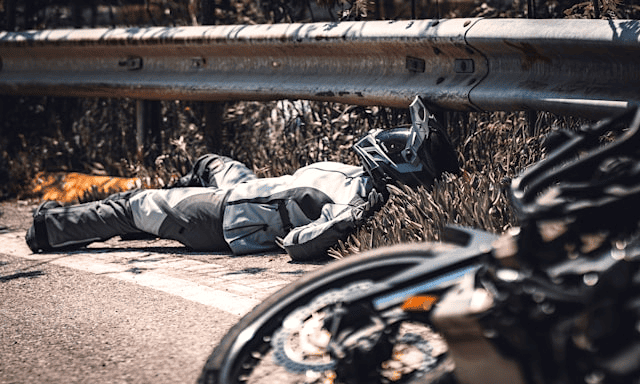
Picture, for a moment, a single accident. A lorry and a motorcycle meet at a junction. When the noise stops, several people are hurt — and here the law does something strange. It sorts them, protecting some and abandoning others. To follow how, we must first meet the people in the scene.
The Main Actors
Call the motor insurer, A.
A is the paymaster. When a court enters judgment, it is A who must find the money, or who will try, under section 96(3) of the Road Transport Act 1987,1Road Transport Act 1987 (Act 333), s 96(3), the sole route by which an insurer may resist satisfying a third party’s judgment: by seeking a declaration under that subsection that it is entitled to avoid the policy. See Chen Boon Kwee v Berjaya Sompo Insurance Bhd [2025] 2 CLJ 169 (FC), confirming that no separate recovery action is required, and that s 96(3) is the insurer’s only avenue of challenge. to show that it need not.
A, the insurer, has insured a lorry. Its owner is O.
At the wheel is D, the authorised driver — perhaps O himself, perhaps an employee, perhaps a friend lent the keys for the afternoon.
Riding with them is K, the ‘attendant’ (or a ‘kelindan,’ as he is known in Malaysia): K is employed by O.
Beside K sits E2, another of O’s employees.
There is also E3, who works not for O, but for D.
On the motorcycle is P, a pillion rider; and in an oncoming car, another passenger — call that one P1.
Somewhere in this scene is the victim, V. This and the next article are all about V.
V is not a separate person.
V is a role.
Depending on how the vehicles meet, V may turn out to be D, or K, or E2, or E3, or P, or P1. The law asks one question, over and over, of whichever of them is hurt: when this person is the one injured, must A pay?
The floor, and the holes in it
Start with the general rule, because it is generous.
Section 91(1)(b) requires the policy to cover death or bodily injury to any person caused by the use of the vehicle.2Act 333, s 91(1)(b). The predecessor was s 75(1)(b) of the Road Traffic Ordinance 1958, itself modelled on the Road Traffic Act 1930 (UK), s 36(1)(b).
Read those two words again. “Any person”.
You might think every victim is covered, and that there would be little more to say: you would be misled
But the section carries ‘provisos’, and the provisos cut holes in the protective floor, and these ‘holes’ have caused untold misery to victims, and all sorts of headaches for the courts.
Proviso (aa) lets the policy decline to cover a person injured while in the employment of the insured, hurt in the course of that employment.3Act 333, s 91(1)(b), proviso (aa). Cf the parallel exclusion in the Road Traffic Act 1930 (UK), s 36(1), proviso (i), the direct ancestor of the Malaysian wording. The idea is old, and practical enough. That risk belongs to workmen’s compensation and the employer’s own liability, not to the motor policy.
Proviso (bb) lets the policy decline to cover passengers — but not all of them. It withholds the exemption from two kinds. A passenger carried for hire or reward is covered. So is a passenger carried by reason of, or in pursuance of, a contract of employment. The passenger who is merely a passenger — the friend, the spouse, the guest along for the ride — is not, unless the owner has paid extra for it.4Act 333, s 91(1)(b), proviso (bb). Passenger cover (“legal liability to passengers”) is therefore not part of the compulsory minimum, and must be purchased separately by endorsement at additional premium: see Allianz General Insurance Co (Malaysia) Bhd v Mohd Shahrizam bin Lazim [2025] 2 AMR 699 (HC), and Motor Insurers’ Bureau of Singapore v Pacific & Orient Insurance Co Bhd [2024] 9 MLJ 691 (HC), the latter canvassing Parliament’s intention not to mandate passenger cover.
Hold those two provisos in mind, and the cast sorts itself.
Working through the scene
K and E2, O’s employees hurt in O’s service, fall into the hole cut by proviso (aa). On O’s cover, A need not pay them, unless O bought more than the bare minimum.
But pause on K, because K carries a hidden point. The Act’s own definition of “passenger,” in section 2, says that an attendant required by law to be carried on a goods vehicle is not a passenger at all.5Act 333, s 2, definition of “passenger,” which excludes, among others, (a) the driver, conductor, or ticket inspector on a public service vehicle acting in pursuance of his duties; and (b) any attendant required by law to be carried on a goods vehicle. This exclusion is analytically distinct from, and may be pleaded in the alternative to, the employment provisos: an attendant within limb (b) is not a “passenger” at all, so proviso (bb) is never engaged as against him. If K is such an attendant, proviso (bb) — which speaks only of passengers — never even reaches him. He is a third party under the main limb, plain and simple. It might be thought that every lorry attendant enjoys this shelter. That is not so. The definition turns on the words required by law, and not every kelindan is. Where those words bite, though, they open a cleaner road to recovery than any argument about employment — a point worth pleading in the alternative.
P1, in the oncoming car, looks like a passenger, and the word “passenger” makes one reach for proviso (bb). Resist the reflex. P1 was never carried in A’s vehicle. P1 sat in the other one. From A’s standpoint, P1 is no passenger at all, but a stranger on the road — a third party in the fullest sense — caught by the main limb, not the provisos. The provisos speak only to those the insured vehicle carries. They say nothing about whom it hits.6The provisos qualify only the cover the policy owes to those carried in the insured vehicle. A person injured by that vehicle while travelling in another is a third party under the main limb of s 91(1)(b), and neither proviso has any application to his claim: see Pacific & Orient Insurance Co Bhd v Kamacheh a/p Karuppen [2015] (CA), holding that liability under s 91(1)(b) extends to injury “arising out of the use” of the insured vehicle — a phrase wider than “caused by.” Cf Government Insurance Office (NSW) v Green & Lloyd Pty Ltd (1966) 114 CLR 437 (HCA). Nothing confuses the beginner faster than treating every passenger alike, regardless of which vehicle bore him.
P, the pillion rider, sits closer to the edge. Astride the insured motorcycle, P is carried by it, and so proviso (bb) is in play: was P paying, was P travelling for work, or was P merely a friend on the back?
But P, if injured by another vehicle, is a third party to that other vehicle’s insurer, just as P1 was. The pillion rider, in short, may wear two hats at once — passenger to one insurer, third party to another.
Which hat matters depends entirely on which insurer is being asked to pay.
The fact the victim never knew
Notice what decides these cases.
Not the gravity of the injury.
Not the innocence of the victim.
It is a set of dry facts about relationships — who employed whom, who was carried in which vehicle, whether a premium was paid for an add-on the passenger never saw.
A widow may recover, or fail to recover, depending on whether, years before, a lorry owner ticked a box on a form.
That is the quiet injustice sitting inside proviso (bb), and it is worth naming plainly.
A floor with holes, or a floor without
Malaysia is not alone in building a scheme like this. It is increasingly alone in keeping the holes.
England once had provisos just like ours; the Road Traffic Act 1930 is the common ancestor.7Road Traffic Act 1930 (UK), s 36. The Malaysian and Singaporean provisions descend from this common source, which accounts for the shared architecture of a broad main limb qualified by employment and passenger provisos.
But England filled the passenger hole. Passenger cover there is now compulsory, and the injured passenger no longer depends on whether the owner bought an extra.8The passenger exception was progressively removed in the United Kingdom; passenger cover is now compulsory under the Road Traffic Act 1988 (UK), s 145, giving effect, in its later form, to the EU Motor Insurance Directives. Malaysia’s own Federal Court has itself noted the point: the United Kingdom has repealed the equivalent of proviso (bb): Malaysian Motor Insurance Pool v Tirumeniyar a/l Singara Veloo [2019] 10 CLJ 731 (FC).
Singapore went the same way, and simply struck the exclusion out.9The Motor Vehicles (Third-Party Risks and Compensation) Act 1960 (Singapore), as currently in force, carries no exclusion for ordinary passengers at all: s 4(4) excludes only injury to a person employed by the insured in the course of that employment (and, since the Platform Workers Act 2024 took effect on 1 January 2025, certain platform workers), and s 5, headed “Exclusion of liability in respect of passengers to be of no effect,” voids any agreement purporting to restrict liability to a person carried in the insured vehicle.
Australia went further still, its state schemes sweeping most road-accident victims into compulsory, often no-fault, cover.10Compulsory third-party (CTP) schemes in Australia are State-based, and now largely statutory and, in several States, no-fault or hybrid: see eg the Motor Accident Injuries Act 2017 (NSW) and the Transport Accident Act 1986 (Vic). The passenger/employee distinction that governs Malaysian cover is, in these schemes, largely displaced by the breadth of statutory entitlement.
New Zealand went furthest of all. Its accident compensation scheme dissolved the question entirely, compensating injury without asking who was a passenger and who was not.11The Accident Compensation Act 2001 (NZ) bars most common-law claims for personal injury and substitutes a universal no-fault compensation scheme. The question “was the victim a passenger?”, central in Malaysia, does not arise: the scheme compensates the injury, not the relationship.
Malaysia’s floor still has its holes.
The passenger who is merely a passenger still falls through, unprotected, unless someone thought to lay a board across the gap beforehand.
Whether that is the right policy for a country with among the highest road-fatality rates in the region is a question the reader may fairly ask.
For now, the first lesson is simply this.
Before you ask whether an insurer must pay, ask which class the victim occupies.
Everything follows from that.
A second question waits in the companion essay to this one.
Suppose the victim’s class is favourable, and the driver’s cover should answer.
Can the insurer still write its way out, by the wording of its own clause?
∞§∞
[Part-2 is here].
This article is written for a general readership and does not constitute technical or legal advice. Readers with legal questions are encouraged to seek independent legal advice.
The author thanks KN Geetha, TP Vaani, JN Lheela, and Lydia Jaynthi at GK Legal.
Our gratitude to Mehmet Talha Onuk of Unsplash for the image.
Claude, Anthropic’s AI, smoothed the drafting; Perplexity Pro checked the facts. The argument, the views, and the errors remain the author’s.
@Copyright reserved. All content on this site, including but not limited to text, compilation, graphics, documents, and layouts, is the intellectual property of GK Ganesan Kasinathan and is protected by local and international copyright laws.
Any use shall be invalid unless written permission is obtained by writing to gk@gkganesan.com.