Are Our Courts Places of Peace, or of Fear?
In recent years I have appeared in several trial courts: Kuala Lumpur, Shah Alam, Kota Bharu, Kuala Terengganu, and Johore Bharu. My work requires me to appear regularly before the Court of Appeal and the Federal Court. I am happy to report that Malaysian judges are courteous, professional–and to use an old English word, “proper”. It was not always this way: several times in my career, I have come across really bad situations. Happily, the bench has changed.
Yet, a new Singaporean four-year study counts the cost — in fear, depression, and lawyers who simply leave.
What does an old ideal, a court of peace and courtesy, still ask of the bench today?
A young lawyer rises to her feet. The bundle is heavy. The night before was short. She has prepared for weeks, and she believes in the work.
Then the first question comes. Except it is not a question. It is a rebuke — sharp, public, and personal. She sits down smaller than she stood.
Most days are not like this. Most judges are courteous. Many are kind. A few are quietly protective of the young. But the bad days leave a mark, and the youngest carry it longest.
The old ideal
The old courtroom had a settled picture of itself. The bench listened. A trial judge, or a panel on appeal, interrupted rarely — and when they did, it was to clear a nagging doubt, not to wound.
They had been litigators once. They remembered the dry mouth and the racing heart, and knew that good arguments arrive at different speeds. The wiser course was usually to wait.
Indulge me a short procession — for the best of them were often the gentlest.
Lord Atkin, who built the modern law of negligence upon a decomposed snail in a bottle of ginger beer, was as gentle on the bench as he was bold in the law — proof that courtesy and courage keep good company. Lord Sumption, who wrote a multi-volume history of the Hundred Years’ War in what passed for his spare time, thought oral argument belonged to the advocate, and disciplined himself to let counsel run. And across the Atlantic, Justice Clarence Thomas made silence a kind of eloquence, once going the better part of a decade without a single question from the bench — turning reticence into a form of respect.
Legal lore tells of a judge who kept a small card on the bench, turned to face himself. It read, simply: “Shut up.” One trusts he obeyed it.
The same temperament travels. Singapore had Chao Hick Tin and Choo Han Teck, courteous to a fault; Michael Lunn carried the common-law manners from Hong Kong to Brunei’s Court of Appeal; and India’s former Chief Justice, Sanjiv Khanna, kept his voice low, if he ever spoke at all, in a jurisdiction not always famous for the habit.
And at home, the gallery is rich. Tan Sri Harun Hashim, who heard the explosive 1988 UMNO case, was remembered for an unshakeable calm; he rarely raised his voice, and let counsel ventilate their case in full. Tan Sri Chong Siew Fai, the “gentleman” of the Borneo bench, was famous for his patience with younger lawyers and his faith in a harmonious Bench and Bar. Datuk Seri George Seah, a former Supreme Court Judge, and Datuk Mohd Hishamudin Yunus heard the gravest questions of liberty with a quiet, courteous dignity that let advocates think aloud without fear. So too Edgar Joseph Jr, and Mahadev Shankar— cut, every one, from the same cloth.
A single principle runs through these lives. They corrected the argument, not the advocate. Firmness was expected. Cruelty was not.
This was never mere nostalgia. It was a discipline. Francis Bacon put it plainly four centuries ago: ‘An over-speaking judge is no well-tuned cymbal.’1Francis Bacon, ‘Of Judicature’ in Essays (1625). Patience, he thought, was part of justice itself.
The old canon went further still. Judges were told to be courteous to counsel, and gentlest of all to the young and inexperienced. The point was never softness. It was that authority, calmly held, persuades far more than authority displayed. A court is not a stage; it is where a citizen’s rights are weighed.
None of these were soft men. Several were the most formidable intellects of their age. They had simply learned that fear is a poor instrument of justice, and courtesy a sharper one. Which leaves the question this essay must now face. What became of the ideal?
A study that named the thing
Singapore has just put numbers to the whisper. The Law Society of Singapore commissioned a four-year study into why lawyers leave practice.2The Law Society of Singapore and Anthro, Legal Profession Sustainability Study (2026). It surveyed 855 lawyers and interviewed former judges, academics, and those who had walked away.3‘Why Singapore lawyers don’t last beyond courtship phase’ South China Morning Post (24 June 2026).
Workload featured. So did pay. But the sharpest passages were about the courts. Lawyers described being scolded, ridiculed, and humiliated from the bench.4‘SG lawyers quitting over bullying, court pressures, landmark study finds’ Asian Legal Business (June 2026). One called the treatment dehumanising, and an open secret.
The figures are sobering. Around a third reported moderate or severe anxiety; nearly a fifth, severe depression.5‘Workplace culture and mental health are driving lawyers out of Singapore’s legal profession, study finds’ Human Resources Online (24 June 2026). One senior lawyer asked to move a hearing that clashed with the birth of her child. The court declined.6‘Lawyers describe suicidal thoughts, court humiliation and denied medical accommodation in LawSoc sustainability study’ The Online Citizen (23 June 2026).
And there was a quiet, damning detail. There was no safe way to report a judge without risking one’s career.7The Online Citizen (n 6). The timelines that pressed hardest were built in the 1990s, to clear a backlog long since cleared. The habit outlived the need.
The response, to its credit, was gracious. The Chief Justice said courtrooms must remain places of “dignity, professionalism and mutual respect”.8Asian Legal Business (n 4). A joint committee of Bench and Bar was formed at once. That is how a mature system answers an uncomfortable mirror.
Not a Singapore problem
And it is not Singapore’s trouble alone. The same research, jurisdiction after jurisdiction, tells the same uncomfortable story.
In Australia, a 2018 survey of the New South Wales Bar found that sixty-six per cent of barristers had experienced judicial bullying.9‘Judicial bullying: the view from the bar’ (Judicial Commission of New South Wales). A Victorian survey put it at fifty-nine per cent, higher still for women.10Judicial Commission of Victoria, Judicial Bullying (2023). In New Zealand, a survey of the criminal Bar found that nearly nine in ten lawyers had seen or suffered bullying or harassment — and that judges led the list of offenders.11‘Judges worst offenders in law harassment survey’ Radio New Zealand (24 March 2018). Most never complained; they doubted it would change anything.
In England and Wales, the Bar Council’s 2023 survey was blunter still: of the barristers who reported bullying, the most frequent source — more than half — was a member of the judiciary.12General Council of the Bar, Barristers’ Working Lives 2023 (Bar Council 2024). An independent review followed in 2025, and the Lady Chief Justice accepted, to her credit, that the senior judiciary would neither excuse nor minimise it.13Independent Review of Bullying, Harassment and Sexual Harassment at the Bar (Bar Council 2025). And a global survey by the International Bar Association — some seven thousand lawyers across more than a hundred countries — reached the same verdict.14International Bar Association, Us Too? Bullying and Sexual Harassment in the Legal Profession (2019).
The behaviour is wearily familiar. Shouting. Sarcasm. Belittling. Interruption dressed up as inquiry. Justice Michael Kirby noticed the cruelest twist of all: the harm runs downhill. A judge under strain bruises the senior counsel; the senior, in turn, bruises the junior.15‘Judicial stress and judicial bullying’ (Judicial Commission of New South Wales). Women, minorities, and the young are struck hardest. They have the least power to complain, and the most to lose by trying.
But notice what each jurisdiction did next. Singapore formed its joint committee. New Zealand built a confidential channel to raise concerns with the head of the bench. Victoria issued a guideline on judicial bullying. England ordered its review. A mirror, once held up, is hard to put down.
Firmness is not the enemy
Let us be fair to the bench. A judge is entitled to be firm. He may cut short a hopeless point. She may insist on proper preparation. No system could survive if every private difficulty trumped the public’s right to timely justice.
The line, though, is not hard to see. Firmness corrects the argument; bullying wounds the person. One clarifies; the other frightens. The Australians use an objective test: would a reasonable observer call the conduct belittling, humiliating, or intimidating? If so, the line is crossed. And when it is, the public loses too. A frightened advocate argues worse, and the citizen she represents is the quieter casualty.
And the standard is already written down. The Bangalore Principles — to which Malaysia subscribes — require a judge to be “patient, dignified and courteous” to lawyers and litigants alike.16The Bangalore Principles of Judicial Conduct 2002, value 6.6. They do not ask a judge to suffer time-wasting or abuse of process; defending the court’s time is entirely proper.17United Nations Office on Drugs and Crime, Commentary on the Bangalore Principles of Judicial Conduct (2007). But the same commentary is blunt about the other side. Unjustified reprimands, cruel jokes, and sarcasm corrode the very dignity of the court.18UNODC, Commentary (n 15) para 215.
Bringing it home
Malaysia is not outside this conversation. Our Judges’ Code of Ethics 2009 already sets standards of conduct and a path for complaint.19Judges’ Code of Ethics 2009 (Malaysia). When Lord Clarke once addressed Malaysian judges, he reminded both sides of a simple truth. Courtesy is not a relic, nor a sign of weak advocacy. It is the mechanism by which hard people do hard work without harming one another.20Lord Clarke of Stone-cum-Ebony, ‘Ethics and Civil Procedure: Malaysian Judges’ (address, Kuala Lumpur, 2011).
I write with gratitude, not grievance. Most judges I have appeared before were patient; some were generous. I have watched a judge steady a nervous junior under an aggressive opponent, then thank her for good work while ruling against her. That is the old ideal, alive. But ideals are not self-keeping. They must be guarded — in every list, on every tired afternoon.
What would help
A few things would help, and none of them is radical. Train for temperament. A judge fresh from the adversarial Bar needs formation in listening, not only in law. The instinct to win must give way to the duty to weigh.
Build a safe channel. A lawyer should be able to raise a concern without earning the label “difficult”. Independence and confidentiality make honesty possible. A complaint is not an insult to the bench; it is a gift to it.
And let the Bar mind its own house. The senior who once suffered under a harsh judge need not pass the harshness down. He can mentor instead. He can, with respect, hold his ground when a line is crossed. Courage, exercised with tact, steadies everyone.
My late friend lent his name to this register, and to a phrase I keep returning to: Non nobis, Domine. Not unto us.21GK Ganesan, ‘The Peter Mooney I Knew’ (gkg.legal). It belongs in a courtroom as much as in a prayer. The law is not a theatre for temper. It is a service, owed to strangers.
Get that right, and the court becomes what it was always meant to be. A place of peace and courtesy. A place where rigour and kindness sit together — and where even the most junior advocate may rise, and not be afraid.
∞§∞
This article is written for a general readership and does not constitute technical or legal advice. Readers with legal questions are encouraged to seek independent legal advice.
The author thanks KN Geetha, TP Vaani, JN Lheela, and Lydia Jaynthi at GK Legal.
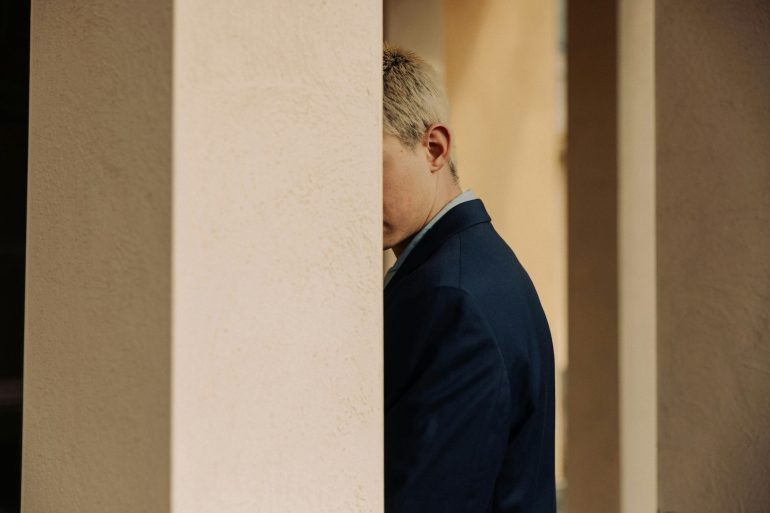
Our gratitude to Natalia Blauth of Unsplash for the image.
Claude, Anthropic’s AI, smoothed the drafting; Perplexity Pro checked the facts. The argument, the views, and the errors remain the author’s.
@Copyright reserved.
All content on this site, including but not limited to text, compilation, graphics, documents, and layouts, is the intellectual property of GK Ganesan Kasinathan and is protected by local and international copyright laws. Any use shall be invalid unless written permission is obtained by writing to gk@gkganesan.com.