
Do We Teach Young Lawyers a Spine and a Conscience — or Just Hand Out Certificates?
Are we asking the right questions about legal training?
Malaysia wants to retire the CLP — but the exam, and the training, were never the real danger.
It is what we fail to teach.
We have learned to certify lawyers.
We have forgotten how to form them.
This is a note on what the law is for — and on the young woman who must carry it.
She arrives on her first morning in a gown that does not yet fit.
Around her: marble, Latin, the portraits of the dead. The Bar she has entered is very old, and carries its traditions like heirlooms — the oath, the etiquette, the silk, the quiet rules nobody writes down.
She has read the cases.
She has passed the papers.
She arrives full of hope and uncertainty, as she should.
What she does not yet know is what the law will ask of her. It will ask a great deal.
It will ask her to sit alone, late, with a thousand pages of other people’s misery. To find the single fact that saves a client, buried on page eight hundred and fourteen. To stand before a hostile judge and not flinch. To tell a powerful man, courteously, that he is wrong. To lose, and come back the next morning, and begin again. None of this is on the syllabus.
We are good at the first part. We test the mind. We certify the skill. The conscience we leave to chance.
The thing we no longer teach
Nearly twenty years ago the Carnegie Foundation looked closely at how lawyers are made. It found three apprenticeships. One of the mind. One of the craft. One of identity and purpose. Thinking, doing, and being.1William M Sullivan and others, <em>Educating Lawyers: Preparation for the Profession of Law</em> (Carnegie Foundation for the Advancement of Teaching / Jossey-Bass 2007). The first, the academy teaches superbly. The second, unevenly. The third — the formation of a conscience — it scarcely teaches at all.2Sullivan and others, <em>Educating Lawyers</em> (2007).
There is worse. Carnegie found that in the very first year, students are quietly taught to set their sense of justice aside. To keep compassion out of the analysis.3Sullivan and others, <em>Educating Lawyers</em> (2007). We take the precise instinct that drew the young woman to the law, and we train it out of her. Then we are surprised when the profession drifts toward trade.
This is not a Malaysian failing. It is an old, worldwide unease. In 1906 Roscoe Pound told the American Bar that the law produced craftsmen, not servants of justice.4Roscoe Pound, ‘The Causes of Popular Dissatisfaction with the Administration of Justice’ (Address to the American Bar Association, 1906). In 1933 Jerome Frank asked why there was no clinical law school, since no one learns law from books alone.5Jerome Frank, ‘Why Not a Clinical Lawyer-School?’ (1933) 81 University of Pennsylvania Law Review 907. In 1993 Anthony Kronman mourned the passing of the lawyer-statesman — the practical wisdom commerce had driven out.6Anthony T Kronman, <em>The Lost Lawyer: Failing Ideals of the Legal Profession</em> (Harvard University Press 1993). A century of soul-searching returns to one complaint. We are excellent at the head. We are careless of the heart.
What Aristotle and Socrates already knew
So how is the third thing taught? Not by lecture.
Aristotle answered this long ago. We do not become just by reading about justice. We become just by doing just acts, over and over, until the doing hardens into habit, and the habit into character.7Aristotle, <em>Nicomachean Ethics</em>, Book II (virtue acquired through habituation). Courage is no different. It is not a module. It is a muscle. It is built in the small hours, on small matters, under someone who will not let you cut the corner.
Socrates taught the other half. The examined life. The discipline of asking the hard question of oneself, especially when the answer is inconvenient.8Plato, <em>Apology</em> (the trial and defence of Socrates). He paid for that discipline with his life, and chose the hemlock over the lie. A lawyer who cannot cross-examine her own case will never honestly serve her client’s.
Taught by lives, not textbooks
The young woman will not learn this from a casebook. She will learn it from lives. Let me offer five.
Atkin. In 1941, with the country at war, the House of Lords allowed a man to be locked up on the Home Secretary’s mere say-so. Four judges agreed. One did not. Lord Atkin said that even amid the clash of arms, the laws are not silent.9<em>Liversidge v Anderson</em> [1942] AC 206 (HL), Lord Atkin dissenting. He warned of judges who make themselves more executive-minded than the executive. For this he was shunned by his brethren, and, it is said, never quite recovered. Decades later the same House quietly admitted he had been right all along.10<em>Inland Revenue Commissioners v Rossminster Ltd</em> [1980] AC 952 (HL) 1011 (Lord Diplock), acknowledging Lord Atkin’s dissent to have been right. That is the cost of courage. And its vindication.
Dixon. Australia’s greatest judge gave the profession four words: a strict and complete legalism.11Sir Owen Dixon, address on taking the oath of office as Chief Justice of the High Court of Australia (1952), in <em>Jesting Pilate and Other Papers and Addresses</em> (Law Book Co 1965). Not coldness — discipline. The refusal to dress a private preference as the law. The long, unglamorous fidelity to reasoning over result. That too is a virtue, and it is caught by example, never by slogan.
Palkhivala. When Mrs Gandhi declared the Emergency and jailed her opponents, Nani Palkhivala was holding her brief. He returned it.12<em>Kesavananda Bharati v State of Kerala</em> (1973) 4 SCC 225; AIR 1973 SC 1461. He had already persuaded India’s Supreme Court that even a sovereign Parliament may not destroy the basic structure of the Constitution. They called him the keeper of the nation’s conscience. A judge who watched him argue said that, in the end, it was no longer Nani who spoke. Independence is not a paragraph in a code of conduct. It is a decision, taken alone, often at a price.
Neuberger. In our own day, Lord Neuberger has said the plainest of things. That the courts have no higher function than protecting citizens from the abuses and excesses of the executive.13Lord Neuberger, ‘Justice in an Age of Austerity’ (JUSTICE Tom Sargant Memorial Lecture, 15 October 2013). That access to justice is practical, not hypothetical — that where law is affordable only to the rich, a country does not really have the rule of law.14Lord Neuberger, Address to the Australian Bar Association Biennial Conference, London (3 July 2017). And that a judgment an intelligent layman cannot follow has failed in its duty.15Lord Neuberger, ‘No Judgment — No Justice’ (First Annual BAILII Lecture, 20 November 2012). Clarity is not decoration. It is justice made visible.
Raja Aziz Addruse. And, last, one of our own. When the Government moved against Tun Salleh Abas, the Lord President, in the judicial crisis of 1988, it was Raja Aziz Addruse who led the defence before the tribunal.16Malaysian Bar, ‘In Memoriam: Yang Mulia Raja Aziz Addruse’ (12 July 2011); and the author’s own appreciation of him on gkg.legal and the GKtv Law channel. He led the Malaysian Bar three times — the first ever to do so — through its bleakest years. He took up the presidency in 1988 only because the Bar’s Vice-President, Peter Mooney, stood aside for him — one man stepping back so another could stand firm.17On Peter Mooney standing aside in 1988, see the tributes to Raja Aziz Addruse in the Malaysian Bar archive; and the author’s own essay, ‘The Peter Mooney I Knew’ (gkg.legal).
He took the clients nobody else would touch: detainees, dissidents, the despised, Chin Peng among them, often for no fee, so that those who could not afford the courts still had a voice within them.
‘Ungku’, they called him; the ‘conscience of the Bar’.
A warrior of conscience, and the name is exact.
He spoke against power long before it was fashionable, and asked nothing for himself.
That is the spine — forged here, at home. And that is what we should teach.
These five did not do the same work. One dissented, one disciplined, one defied, one explained, one defended. But they shared one quality no syllabus can bottle: each stood where it was uncomfortable to stand, and did not move.
So how do you put it into her?
Which returns us to the real question: how do you inculcate any of this?
Not by adding a module. You pass on character the way every craft has — by apprenticeship to a master who has it. She must sit beside a senior who returns the brief he ought to return, and watch him do it. She must draft, and have it bled red by someone who cares. She must carry a real file, for a real person, whose liberty is real. She must see courtesy extended to an opponent who has not earned it — courtesy, not fear. She must be handed the unwanted case, the unpopular client, and find it is not the lowest work of the Bar but its highest. The cab-rank principle is not a quaint inconvenience. It is the moral architecture of the profession, hiding inside a rule about taxis.
Much of it happens in the dull hours. Character is rarely forged in one dramatic stand. It is forged in the long, tedious, lonely labour that nobody sees — the chronology checked at midnight, the authority read for the ninth time, the paragraph rewritten until it is honest. The lawyer who learns to endure that labour without cutting corners becomes someone who can be trusted. The one who dodges it does not. No examination tests it. Only the doing.
Picture her first real test. A senior leans across and suggests she simply leave an awkward document out of the bundle. Nobody will notice. The client will be pleased. No paper she ever sat prepared her for this. Either she has watched someone refuse such a thing — politely, plainly, heedless of the cost — and can refuse in turn; or she has not, and she folds. Independence is learned exactly as courage is: by seeing it done, then doing it.
This is why pupillage matters more than any examination, and must be made more serious, not less. Observed advocacy. Supervised drafting. Real responsibility, early, under real eyes. Masters chosen because they are fit to form a lawyer, not merely free to take one. Legal aid and pro bono restored as duties of the calling, not gestures of a good month. You cannot teach a young lawyer to defend the poor in a profession that has quietly stopped doing it.
Two warnings worth naming
There is a danger in reform itself. A longer, harder, costlier road to the Bar can shut out the very person we should most want on it — the hawker’s brilliant daughter, the clerk’s clever son. A reform that protects the public by pricing out the poor betrays the cause it serves. The nation must pay for the path, or it will narrow it.
And a new shadow falls across all of it. The lonely hours I described — the poring, the drafting, the fact buried on page eight hundred and fourteen — are exactly the hours a machine now offers to spare her. Convenient. Also perilous. Those were never wasted hours. They were the forge. Take them away, and we may raise lawyers who have never once been alone with a hard problem — until the day the problem is theirs alone, in open court, with a life in the balance.
The honest answer
So: are we doing the right things? In part. We are right to move from a single examination toward genuine formation. We are wrong to speak of it as plumbing — competencies, modules, credit hours — when it is the making of a conscience.
The measure of a legal education is not whether it produces safe lawyers.
It is whether it produces brave ones.
The classroom can shape the mind.
Only the office, the court, the cause, and the master can shape the lawyer.
Aristotle knew it. Socrates knew it.
Atkin, Dixon, Palkhivala, Neuberger and Raja Aziz Addruse lived it.
The young woman in the ill-fitting gown is watching to see whether we still believe it.
The profession she has joined exists, above every other reason, for one: to make justice reach the poor, the oppressed and the frightened, who have no other friend.
Teach her that, and we will have taught her everything.
Forget it, and no examination on earth will save us.
∞§∞
This article is written for a general readership and does not constitute technical or legal advice. Readers with legal questions are encouraged to seek independent legal advice.
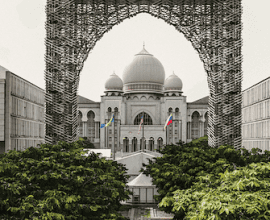
The author thanks KN Geetha, TP Vaani, JN Lheela, and Lydia Jaynthi at GK Legal. Our gratitude to U Lo of Unsplash for the image.
Claude, Anthropic’s AI, smoothed the drafting; Perplexity Pro checked the facts. The argument, the views, and the errors remain the author’s.
@Copyright reserved.
All content on this site, including but not limited to text, compilation, graphics, documents, and layouts, is the intellectual property of GK Ganesan Kasinathan and is protected by local and international copyright laws. Any use shall be invalid unless written permission is obtained by writing to gk@gkganesan.com.