
Why should an innocent passenger pay for the driver’s fault? [Part-2]
She cannot drive. She did not buy the tyres. Yet an insurer says she should pay her father’s ninety per cent. The law, and four jurisdictions, say otherwise.
[Part-2/2-Innocent passenger and apportionment. Part-1 is here].
We saw the tragic scene in Part-1. We now move to consider the legal confusion that arises from this, and how to overcome them.
Of everyone in the car, only the three-year-old survived.
At the time of the accident, she could not drive.
She chose no tyre.
She set no speed.
She was, in the most ordinary sense, a passenger.
The argument is a familiar one. Reduce her own damages by ninety per cent, by exploiting the father’s share of the blame. Treat her as his heir, as if she carries his negligence. The answer is short:iIt is unpleaded, and it is unarguable.
The argument loses. It loses everywhere it is tried. This essay sets out why it is wrong, why it keeps coming back, and what to do when it does.
The ground it covers is the practitioner’s: joint and several liability among tortfeasors, the pleading points and the set-off trap, Malaysia’s awkward insurance architecture under the Road Transport Act 1987, the apportionment that fixes contribution between the wrongdoers, and what four common law jurisdictions make of the whole affair.
The leading authority that an innocent passenger recovers in full from a defendant found liable at any percentage remains the Supreme Court decision in Malaysian National Insurance v Lim Tiok [1997] 2 MLJ 165 and the Court of Appeal decision in Muhamad Jafri Jantan & Ors v Zainal Md Rais [2005] 1 CLJ 694; [2005] 2 MLJ 318 (Court of Appeal),1 Muhamad Jafri Jantan & Ors v Zainal Md Rais [2005] 1 CLJ 694; [2005] 2 MLJ 318, Court of Appeal. read with Fadzil Harun v Mohd Azrul Md Ariffin & Anor [2015] 2 CLJ 525,2 Fadzil Harun v Mohd Azrul Md Ariffin & Anor [2015] 2 CLJ 525 (CA). The defendant’s remedy against a joint tortfeasor is contribution, not a reduction of the passenger’s award. and the old root, Oliver v Birmingham & Midland Motor Omnibus Co Ltd [1933] 1 KB 35.3 Oliver v Birmingham & Midland Motor Omnibus Co Ltd [1933] 1 KB 35. A passenger should not pay for the driver’s fault.
I. THE RATIONALE
The rule rests on a plain idea.
A passenger does not steer. She has no hand on the wheel and no say over the bald tyre. Her presence in the seat does not make her a party to the driver’s choices. She is a bystander who happens to be inside.
Put a child of three in that seat and the idea becomes irresistible. In Jafri Jantan the pillion rider recovered the whole of her damages, though her own rider was at fault.4 Muhamad Jafri Jantan & Ors v Zainal Md Rais [2005] 1 CLJ 694, headnote [1]: the second plaintiff was an innocent passenger and entitled to damages on a 100% basis; a pillion rider could not be vicariously liable for the rider’s contributory negligence. Our child stands stronger. She is not a watchful adult who might have spoken up. She is an infant who could do nothing at all.
The mechanism of full recovery is joint and several liability. Two wrongdoers cause one loss; each owes the whole.5 Civil Law Act 1956 (Act 67), s 10. The claimant may sue and recover in full, any one tortfeasor, for the entire loss. That defendant then has its own recourse, contribution under s 10(1)(c), against the other. The claimant need not chase every wrongdoer or split her claim into shares. She sues the insurer of the bus and its owner and driver, recovers in full, and the insurer of the bus goes looking for the father’s estate. That search happens out of her sight, and crucially, takes nothing from her.
The structure suits Malaysian roads. Too often, the victim faces a dead driver, an empty estate, or no insurance at all.
Joint and several liability, backed by compulsory cover, means a victim who can find one solvent, insured wrongdoer is made whole, and not fobbed off with a fraction.
II. THE ARITHMETIC APPLIED
The split is fixed: father ninety, bus ten. What does that do to the child’s personal claim?
Nothing that helps the insurer. The bus driver was negligent. He drove too fast, kept no lookout, and did nothing to avoid the collision. Ten per cent is enough. The innocent passenger rule does not ask the bus to carry most of the blame. It asks only that the bus carry some, and that the bus be insured. Ten per cent against an insured bus driver is enough to fix the whole loss on the insurer of the bus, on ordinary joint and several principles, leaving it to recover the rest by contribution.
Apply the 90:10 split straight to the child’s damages, and you pay her a tenth. That is a legal mistake. It treats an apportionment between drivers as a meter for the passenger’s loss. A court that catches the error corrects it. The child takes the whole from the insurer of the bus. The insurer of the bus then recovers ninety percent from the estate under section 10(1)(c).
The vicarious-heir argument fails on its own terms. 6 See Damai Cheras Sdn Bhd & Anor v Poothapillai Krishnamoorthy [1998] 1 MLJ 639 She is not her father. She did not cause the accident. Her legal person is her own. That she may inherit some modest remnant of his estate does not pour his liability into her.
III. THE INSURANCE ARCHITECTURE
Here doctrine meets the awkward shape of the Road Transport Act 1987, and the practitioner must mind the gap.
Section 91(1)(b) requires every owner to insure against death or bodily injury to any person from the use of the vehicle.7 Road Transport Act 1987 (Act 333), s 91(1)(b). Compulsory third-party cover. But the proviso, paragraph (bb), carves out passengers. The policy need not cover injury to a passenger unless that passenger is carried for hire or reward, or under a contract of employment.8 Road Transport Act 1987, s 91(1)(b) proviso (bb). Passenger cover, or legal liability to passengers, is not compulsory. A separate endorsement at extra premium is needed: confirmed in Allianz General Insurance Company (Malaysia) Berhad v Mohd Shahrizam bin Lazim & 3 Ors [2025] 2 AMR 699 (High Court), decided 7 April 2025.
So passenger cover in Malaysia is optional. It comes by a separate endorsement, at extra premium. The standard policy does not include it. The High Court confirmed as much in Allianz General Insurance Company (Malaysia) Berhad v Mohd Shahrizam bin Lazim & 3 Ors [2025] 2 AMR 699, in April 2025, where an insurer was held free to exclude liability to a passenger who was not carried for hire or reward.
Now apply it. The child was a passenger in her father’s car, not in the bus. Against the insurer of the bus she is a third party, not a passenger. Her claim runs under the third-party limb of section 91(1)(b), and the passenger exception does not touch it. She was never in the bus.
The gap bites elsewhere. It bites when the injured passenger sues the insurer of the very car she sat in. If that car carries no passenger endorsement, the insurer need not pay, and the owner must find the money himself. This is precisely why the child sues the bus. It is also why a claimant’s first task is to learn, early, which vehicle carries what.
Section 96(1) closes the loop. Once the child has judgment against the bus driver, the insurer of the bus must satisfy it in respect of third-party risks.9 Road Transport Act 1987, s 96(1). The insurer must satisfy a judgment against the insured in respect of third-party risks. In Johannes Koplan v Aw Chen [1970] 1 MLJ 220 the Federal Court held that compulsory insurance makes insurers directly liable to satisfy judgments against the insured; the driver is the nominal defendant, but the insurer is the party the award truly reaches. The negligent driver is the name on the writ. The insurer is the party the award reaches. It cannot shelter behind the father’s greater fault to keep its purse shut.
Where a driver is uninsured or untraced, the Motor Insurers’ Bureau stands as the payer of last resort.10 The MIB Agreement under the Road Transport Act framework. Relevant only if the insurer of the bus voids its policy. Practitioners should secure an early acknowledgment of cover and, if it is disputed, seek a declaration before trial. On our facts the bus driver is insured, so the Bureau waits in the wings. Still, secure an acknowledgment of cover early, and if it is contested, seek a declaration before trial rather than after.
IV. CONTRIBUTION AND SET-OFF AFTER PAYOUT
Once the insurer of the bus has paid, section 10(1)(c) lets it recover from the father’s estate in the 90:10 ratio.11 Civil Law Act 1956, s 10(1)(c). The contribution is “just and equitable having regard to the extent of [the tortfeasor’s] responsibility for the damage.” The 90% finding supplies the ratio. The estate may be worth little. The man died in the crash, leaving children and, in all likelihood, modest means. That difficulty is the insurer’s to bear, not the infant’s. It is an underwriting risk, priced into a premium, not a burden for a three-year-old.
Can the child be made to contribute, or face a set-off? No, and for reasons that stack.
She is not a tortfeasor; contribution under section 10 runs only between those liable for the same damage. Her inheritance carries assets, not her father’s debts; his creditors, the insurer among them, rank against his estate, not against his children. The vicarious-negligence argument has no home in either tort or succession. And set-off needs a cross-claim against the very person sued; the insurer’s claim lies against the estate, not the child. To reduce her damages by set-off is to net her loss against a debt she does not owe.
V. THE COMMON LAW, BRIEFLY
The United Kingdom makes third-party motor cover compulsory, and, unlike Malaysia, extends it to passengers, a legacy of the European motor directives.12 Road Traffic Act 1988 (UK), Part VI, s 143 onwards; Law Reform (Contributory Negligence) Act 1945; Civil Liability (Contribution) Act 1978. English courts have never imputed a driver’s negligence to an innocent passenger. An English passenger is covered whichever car she sits in. Malaysia’s opt-in endorsement leaves a hole the United Kingdom long ago filled. Reform here is overdue.
Australia’s compulsory third-party schemes pay every victim, passengers included, and sort contribution between insurers behind the scenes. Australian courts are especially careful with child passengers, declining to load a parent’s fault onto a child.
India calls it composite negligence. In September 2024, in Sushma v Nitin Ganapati Rangole, the Supreme Court held that the contributory negligence of a driver cannot be vicariously attached to passengers so as to reduce their compensation, or that of their heirs.13 Sushma v Nitin Ganapati Rangole (2024) INSC 706; Civil Appeal No 10648 of 2024, judgment dated 19 September 2024, para 19. Available at https://api.sci.gov.in/supremecourt/2021/30014/30014_2021_14_1501_55860_Judgement_19-Sep-2024.pdf The truck owner and his insurer were held jointly and severally liable for the whole.
Four jurisdictions, one rule. No common law court reduces an innocent passenger’s claim by the fault of the driver beside her. The insurer who tries it here is in poor company, which is to say, none.
VI. WHAT MIGHT BE MENDED
The weak joint in the Malaysian frame is the optional passenger cover under section 91(1)(b) proviso (bb). A passenger hurt in an uninsured-for-passengers car may be thrown back on a dead or penniless owner. Making passenger cover compulsory, as the United Kingdom has, would close the gap.
The courts can help too, by keeping three things separate on the page: apportionment, which is between defendants; contributory negligence, which bites when the claimant is at fault; and full recovery, which is what an innocent passenger gets. Clarity in the judgment starves the bad argument of its oxygen.
VII. PRACTICAL NOTES
For the claimant’s side. In the first week, find out which vehicle carries third-party cover, which carries passenger cover, and where the child fits.
Plead the personal and dependency claims apart.
Meet the apportionment argument head-on with Jafri Jantan, Fadzil Harun, Oliver and Sushma.
Refuse the ten-per-cent settlement, and put the refusal in writing.
For the defence and insurers. Honour the full payout once any negligence is found.
File the Order 16 notice the day the writ is served, or counterclaim for contribution where the estate is already a party.
Leave the child out of it.
Pleading vicarious negligence against an infant invites the costs it deserves.
For the bench. Say it once, plainly: the apportionment is between the defendants and does not touch the passenger’s entitlement.
Keep the two axes apart.
Name the cover in play, third-party or passenger, and the section that governs.
One paragraph of order spares the next court the same tired contest.
She was three.
She lived.
The least the law can do is not bill her for surviving.
∞§∞
This article is written for a general readership and does not constitute technical or legal advice. Readers with legal questions are encouraged to seek independent legal advice.
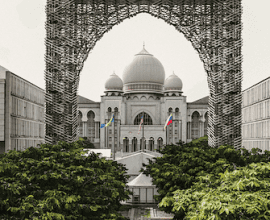
The author thanks KN Geetha, TP Vaani, JN Lheela, and Lydia Jaynthi at GK Legal. Our gratitude to Getty Images of Unsplash for the image.
Claude, Anthropic’s AI, smoothed the drafting; Perplexity Pro checked the facts. The argument, the views, and the errors remain the author’s.
@Copyright reserved.
All content on this site, including but not limited to text, compilation, graphics, documents, and layouts, is the intellectual property of GK Ganesan Kasinathan and is protected by local and international copyright laws. Any use shall be invalid unless written permission is obtained by writing to gk@gkganesan.com.