Can Malaysia stop its own ports being used to dodge American tariffs?
Malaysia has the laws to stop tariff-dodging — but one crucial piece is missing.
A customs officer in Port Klang opens a container. The papers say the goods are Malaysian. The label agrees. Everything is in order, which is precisely the problem, because in matters of trade, the paperwork is always in order.
The art of circumvention is not forgery. It is plausibility.
This is the small drama now sitting underneath a very large quarrel between Kuala Lumpur and Washington, and it is worth understanding before anyone reaches for outrage.
First, what has not happened
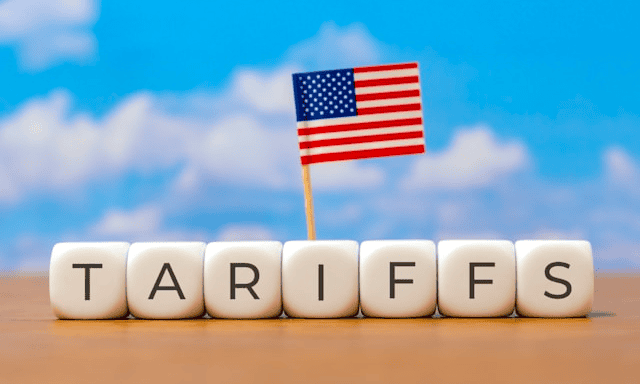
The United States has not imposed a final tariff on Malaysian goods. The figure everyone repeats — ten per cent — is a proposal.
On 2 June 2026, the Office of the United States Trade Representative published its findings under an investigation into forced labour and proposed an additional ten per cent duty on goods from fourteen trading partners, Malaysia among them. Written comments close on 6 July. A hearing follows the next day. Malaysia’s own Ministry of Trade has been careful to say that no final determination has been made.
So the correct tense, for now, is the conditional. We are not being punished. We are being assessed. That distinction matters because a country being assessed still has time to improve its answer.
Datuk Seri Johari Abdul Ghani, who carries the brief, has been refreshingly honest about the shape of the thing. The present ten per cent, he explained, is a temporary measure — a hundred-and-fifty-day surcharge that expires on 24 July 2026. The final rate will turn on negotiation. Malaysia’s exposure, he said, rests on two matters only: market access and forced labour. Environmental and subsidy complaints do not apply to us.
And the forced-labour worry, he was at pains to add, arises not from Malaysian factories but from imported inputs sourced from third countries with limited verification — over which, in his phrase, the Government has “limited powers.”
It is that last phrase that deserves examination, because it is both true and misleading at once.1https://www.klsescreener.com/v2/news/view/1732265/malaysia-039-s-us-tariff-outlook-improves-as-rate-could-fall-to-10pct-from-19pct-johari-ghani
The American ladder
To understand the threat, one must watch the ladder the Americans have been climbing, rung by rung, since their own courts knocked away the first one.
On 20 February 2026, the United States Supreme Court held, six to three, that the President had no power under the International Emergency Economic Powers Act to impose tariffs at all.
The power to tax, the Chief Justice reminded everyone, belongs to Congress. A statute permitting the President to “regulate importation” does not quietly hand him the keys to the Treasury.
The sweeping “reciprocal” tariffs of 2025 fell.
This was, for Malaysia, a strange sort of good news with a sting in its tail. The Agreement on Reciprocal Trade — signed with great ceremony in October 2025, never ratified — had been built on that very architecture. When the architecture collapsed, the agreement collapsed with it. It is, as the minister put it, null and void.
One does not mourn a treaty one never brought into force. But one notices that the ground has shifted.
Washington did not pause. Within hours, it reached for Section 122 of the Trade Act of 1974 — a balance-of-payments provision permitting a temporary surcharge of up to fifteen per cent for no more than a hundred and fifty days. That is the ten per cent now in force, and that is the clock ticking towards late July.
When it runs out, the President needs a new ladder. He has already found it: Section 301, which allows the United States to investigate and punish foreign practices it considers unreasonable. Two such investigations were opened against Malaysia in March 2026 — one into manufacturing overcapacity, one into forced labour. The forced-labour finding of 2 June is the fruit of the second.
None of this is lawless. It is, if anything, almost pedantically lawful. The Americans are doing what lawyers do when one argument fails: they find another statute. A nation that wishes to answer them must understand that it is not facing a tantrum. It is facing a brief.
What Malaysia actually has
Here, the public conversation goes badly wrong because it assumes Malaysia is defenceless. It is not.
Since 6 May 2025, the Ministry of Investment, Trade and Industry (MITI) alone has issued the certificates of origin that accompany goods bound for America. The chambers of commerce, which once handed them out, no longer do. The reason was candidly stated at the time: to stop Malaysia being used as a corridor through which goods from elsewhere — read, principally, one large neighbour to the north — acquire a Malaysian costume before slipping past an American tariff wall.
The trade has a name for this. It calls it origin-washing. Malaysia decided it would rather not be the laundry.
The rules behind those certificates are not generous to the launderer. To be called Malaysian, a good must be made here, or transformed here enough to change its tariff classification, or carry at least a quarter of its value in local content. The ministry has hinted it may raise that threshold. Good.
Behind the certificate stands the Customs Act 1967, and it has teeth. A false declaration of origin or value is an offence under section 133, carrying a fine up to half a million ringgit and seven years’ imprisonment. Evasion of duty under section 135 is heavier still — up to twenty times the duty evaded, and prison besides.
The Strategic Trade Act 2010 adds a further reach, allowing the ministry to control even unlisted goods passing through Malaysia in transit; it was used, only last year, to put advanced computer chips under a notification regime, precisely to stop Malaysia becoming a side-door around American export controls.
So when a minister says the Government has “limited powers,” he is being modest to the point of inaccuracy. Over its own ports, its own documents, its own exporters, Malaysia’s powers are considerable, and recently enlarged.
What is limited is something less flattering to admit: not the power, but the proving. Tracing an input to its true source, auditing a value claim, catching the consignment quietly repacked in a free zone where customs rarely looks — these are matters of intelligence and manpower, not of the statute book. A certificate issued without an audit behind it is merely fraud on official letterhead.
The one thing we do not have
And now the genuinely awkward part, which honesty requires.
Malaysia has no law allowing it to stop a good at the border because it was made with forced labour. There is no Malaysian equivalent of the American provision under which Washington has, for years, blocked shipments from offending factories anywhere in the world.
We criminalise forced labour inside our own workplaces — section 90B of the Employment Act now does that. We ratified the international protocol against it. We have action plans, and committees, and the usual furniture of good intentions. But not one of these stops a tainted import at the dock. That is the gap the Americans have put their finger on, and it is a real one.
The irony is exquisite, and ought to be sat with rather than waved away. It was Malaysia that felt the lash of exactly this kind of law. American customs blocked our glove makers and our palm oil producers over forced-labour findings, and held the goods until the companies repaid tens of millions in withheld wages to the workers they had wronged. We know the instrument intimately. We have bled from it. We simply never built one of our own.
There is a lesson there, and it is not a comfortable one for a trading nation that likes to think of itself as a victim of larger powers. The complaint is not that Malaysian workers are enslaved. The complaint is that Malaysia waves through, without inspection, goods that may have been made by someone else’s slaves, and then exports them wearing our flag.
Put that way, the American grievance stops sounding like bullying and starts sounding like a question we should have asked ourselves first.
The answer, and to whom it is addressed
So what should be done, in the weeks that remain before the assessment hardens into a verdict?
Three things, in ascending order of difficulty. Make submissions in Washington before the comment period closes — not pleading, but documentary, setting out what the law already does and what is being built. Treat the certificate of origin as a matter of prosecution rather than paperwork, and let one well-publicised conviction do the work of a hundred assurances. And then, at last, legislate the missing piece: a power to detain goods reasonably suspected of forced-labour content, with a fair path for the honest trader to clear his name.
That single statute would do more than any diplomatic note, because it would change Malaysia’s posture from that of a respondent explaining itself to that of a peer enforcing the same standard.
There is a message in all this for the other side of the table, and it should be stated without heat. Malaysia is not a jurisdiction of innocents to be lectured, nor of fools to be frightened. It reads the statutes — American ones included — rather more closely than the lecturers assume. It understands that Section 122 expires, that Section 301 is the successor argument, that a Supreme Court ruling has narrowed the very ground the lecturers are standing on.
A country that grasps not only the law but the policy under which the law is operating is not a country to be hurried. It is a country to be negotiated with.
What the customs officer is really holding
The customs officer, in the end, is the whole story in miniature.
He stands at the door with the label in one hand.
The question is not whether he has the authority to open the container. He has.
The question is whether anyone has given him the time, the training, and the law to read what is actually inside.
Malaysia is not powerless. Nor is it yet prepared.
It has the foundation of a house, and mistakes it for the house.
The work now is to finish building, quietly and well, before the weather turns — and to remember that the surest answer to the charge that one’s doors are open to abuse is not to protest one’s honour, but to be seen, plainly and on the record, bolting the door.
∞§∞
This article is written for a general readership and does not constitute technical or legal advice. Readers with legal questions are encouraged to seek independent legal advice.
The author thanks KN Geetha, TP Vaani, JN Lheela, and Lydia Jaynthi at GK Legal. For the image, we thank Getty Images at Unsplash.
Claude, Anthropic’s AI, smoothed the drafting; Perplexity Pro checked the facts. Advocate, editor and sceptic together made one essay better than any could alone. The argument, the views, and the errors remain the author’s.
@Copyright reserved.
All content on this site, including but not limited to text, compilation, graphics, documents, and layouts, is the intellectual property of GK Ganesan Kasinathan and is protected by local and international copyright laws. Any use shall be invalid unless written permission is obtained by writing to gk@gkganesan.com.