Can Your Temple Own the Land It Stands On? [Part 1/5]
A man wants to give land to the temple he has worshipped at for forty years. One sentence stops him.
Begin with the plainest transaction in the law.
A owns a piece of land. Beside it stands the temple where he has worshipped for forty years. He is old. His children live abroad and have no interest in the place. He would like the temple to have the land.
No money changes hands. No mortgage. No dispute. No forger anywhere in sight. He goes to a solicitor expecting the whole thing to take a fortnight.
The temple is properly run. It has a constitution, a committee, audited accounts, and a bank account. Years ago it did the responsible thing and incorporated itself — as a company limited by guarantee, which is what such bodies are advised to do.
And that is precisely where the difficulty begins.
The sentence
Here is the whole of it.
“A company limited by guarantee shall not hold land unless a licence has been obtained from the Minister.”1Companies Act 2016 (Act 777), s 45(4).
Twenty-one words. Each of three choices in them matters.
It says licence. Not consent, not registration, not notification. A licence is a permission that somebody in authority may grant or refuse, on whatever conditions he thinks fit.2Companies Act 2016, s 45(5) (“the Minister may prescribe regulations or impose any conditions as he thinks fit”); and see s 614 (general power to impose terms and conditions).
It says hold, not buy. So it is not a rule about the moment of purchase. It is a rule about a state of affairs, and it applies just as much to land the body has quietly held for thirty years.
And it says nothing at all about money. A’s gift is caught exactly as a sale at full market price would be. Generosity is no defence.
The loop
Now watch the Act close around a religious body.
Elsewhere in the same section, Parliament has provided that a company formed to promote religion must be a company limited by guarantee.3Companies Act 2016, s 45(1)(e). It may take no other form. A separate section forbids that form to have a share capital.4Companies Act 2016, s 12.
So the statute does three things in sequence. It tells a religious body which corporate form to take. It strips that form of share capital. And it then forbids that same form to hold land without the Minister’s leave.
The only door the Act leaves open for a religious company leads into a room where it may not hold land.
What changed in 2016
There was a predecessor. The Companies Act 1965 had its own restriction, and comparing the two is instructive — because two of the three changes made matters worse, and one made them better.
The old rule turned on purpose, not corporate form. Any company formed to promote religion, or art, or science, without a view to profit, needed the Minister’s licence before it could buy land.5Companies Act 1965 (Act 125), s 19(2). But — and this is the point — the 1965 Act never told a religious body which form to take. It could incorporate as an ordinary company limited by shares if it wished. The 2016 Act narrowed the net, and then herded the fish into it.
The old prohibition was on acquiring land. The new one is on holding it. Buying is an event. Holding is a condition that continues every day. The 1965 Act controlled quantity through the licence — the Minister could empower a company to hold lands in such quantity as he thought fit — but the bar itself fell at the moment of purchase. The 2016 bar reaches backwards over land already in hand.
But the third change runs the other way, and it is worth more to a congregation than the other two are worth against it. Under the old Act, a body refused a licence could appeal to the Yang di-Pertuan Agong — and the Act then declared the decision final, and not to be questioned in any court.6Companies Act 1965, s 19(4) (appeal) and s 19(5) (finality). That appeal is gone. So is the clause that shut the courts out. A refusal today is an ordinary administrative decision, and an ordinary administrative decision can be challenged before a judge.
Nobody seems to have noticed. It is the most useful thing in the section.
And if nobody asks?
Suppose the land is transferred, the title registered, and no licence was ever sought. What then?
The section forbids. It does not, in terms, undo anything. It does not say the transfer is void. Parliament knows how to attach a consequence when it wants one: where registration is obtained by forgery, or by means of an insufficient or void instrument, the National Land Code provides in terms that the title shall not be indefeasible.7National Land Code (Act 828, Revised 2020), s 340(2)(b). Section 45(4) provides nothing of the kind.
What the Companies Act supplies is a fine of up to fifty thousand ringgit for a body corporate.8Companies Act 2016, s 588(2)(b). And no one may prosecute for it without the written consent of the Public Prosecutor.9Companies Act 2016, s 589(1).
My own view — and it is a view, because so far as I can discover nobody has litigated it — is that the prohibition bites on the holding, so the cure is forward-looking. Get the licence, or part with the land. It is not an invitation to unpick a registered title years afterwards, and a court asked to do so would want a great deal of persuading.
But no congregation should have to find out.
The dead hand
Why does the rule exist at all?
Restrictions of this kind are very old, and their name is beautiful. Mortmain — mortua manus, the dead hand. The medieval fear was that land given to a monastery or a guild would never come out again. Corporations do not die, do not marry, and do not leave heirs. Land that went into the dead hand stayed there, and the whole apparatus of feudal dues that depended on death and inheritance simply stopped working.
That was the mischief. It was a real one, in 1279.10Statute of Mortmain 1279 (7 Edw 1).
England repealed the last of the mortmain statutes in 1960.11Mortmain and Charitable Uses Acts repealed by the Charities Act 1960 (UK).
We kept ours. The sentence at the top of this essay is a fossil of a policy abandoned sixty-six years ago in the country that invented it. We shall come back to that.
The way out
None of this means A’s temple must go without his land.
It means the company is the wrong holder. And there is another way — much older than company law, and untouched by it — in which land may be held by people, for a purpose, forever. English judges have protected exactly that arrangement for four hundred years, and one of them, in 1891, put the whole of it into a single sentence that we still use.
The section quoted above speaks to companies. It says nothing whatever about trustees.
That is the next essay [Part-2 of 5] — along with the one decision, made in the drafting room in about ninety seconds, that determines whether the arrangement holds or falls apart.
You can viewPart 2, Part 3, Part 4, and Part 5 here.
∞§∞
This article is written for a general readership and does not constitute technical or legal advice. Readers with legal questions are encouraged to seek independent legal advice.
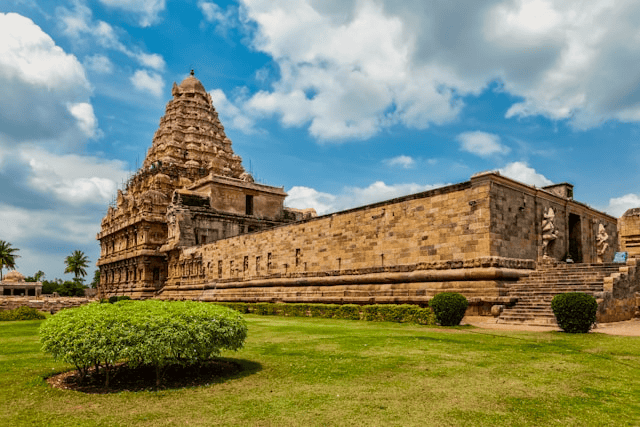
The author thanks KN Geetha, TP Vaani, JN Lheela, and Lydia Jaynthi at GK Legal. Our gratitude to Getty Images of Unsplash for the image.
Claude, Anthropic’s AI, smoothed the drafting; Perplexity Pro checked the facts. The argument, the views, and the errors remain the author’s.
@Copyright reserved.
All content on this site, including but not limited to text, compilation, graphics, documents, and layouts, is the intellectual property of GK Ganesan Kasinathan and is protected by local and international copyright laws. Any use shall be invalid unless written permission is obtained by writing to gk@gkganesan.com.