
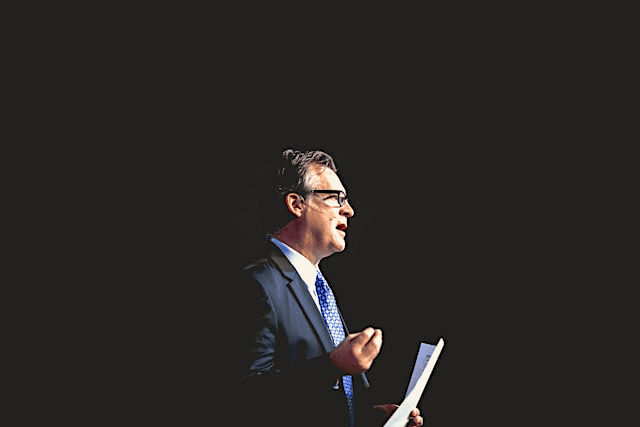
Why Won’t the Lawyer Sit Down?
There is a disease at the Bar. The sufferer opens his mouth. He cannot stop.
Loquacia forensis — a clinical study of the garrulous advocate, and whether he can be cured.
There is a disease at the Bar.
It is not rare.
It is not new.
It has no Latin name, though it deserves one.
The symptoms are simple.
The sufferer opens his mouth.
He cannot stop.
We shall call the condition loquacia forensis. We shall not pretend it has a cure.
We shall only describe it — with the clinical detachment one brings to a post-mortem, which, in many ways, is what it is.
I. The Affliction
The garrulous advocate was not always thus.
He began as a promising junior.
He could spot an issue.
He could frame a sentence.
He had, or appeared to have, something approaching a point.
Then something happened.
Perhaps he won a case on a long speech.
Perhaps a silk praised his thoroughness.
Perhaps no one ever told him firmly to sit down.
He now believes that length is rigour.
That volume is force.
That a judge, given enough words, must eventually yield — if only from exhaustion.
He is not entirely wrong about the exhaustion.
Understand: he is not dishonest.
He is not lazy.
He has read the bundle, the authorities, the practice directions, the commentary on the practice directions, and a 2003 article about the commentary.
The problem is that he intends to share all of it.
In court.
At length.
He arrives with a trolley. This is never a good sign.
The trolley announces, before a word is spoken, that opposing counsel should cancel dinner and the judge should reconsider his vocation.
His speaking note runs to forty-seven pages.
It is cross-referenced to his written submissions, which are cross-referenced to four volumes of authorities, none paginated consistently.
He does not know this yet.
He will discover it at page 31.
II. His Day in Court
He clears his throat. “My Lord, this is a case about…”
So far, so good. The court leans in. It will not be brief.
“…a case about a great many things, if I may, My Lord, take Your Lordship through a little background, because context is everything, and Your Lordship will appreciate, once I have traversed the factual matrix, why this background is indispensable to the central question, which I propose to come to in due course — but first, if I may, just very briefly, the history.”
The judge writes something.
It is not a note on the facts.
It is a calculation of how many days remain in the term.
At half past four, the bench indicates it has heard enough. “My Lord,” he says, “I have just one more short point.”
There are five more points. None are short.
“One more short point” is the forensic equivalent of “just around the corner”, offered as directions by a man who is lost.
Given in good faith. Bearing no relation to the facts on the ground.
The bench will attempt to help. This is a trap.
“Mr Counsel,” says the judge, “is your point not simply this — that the contract was never validly executed?”
A normal advocate says, “Yes, My Lord, precisely,” and sits down in triumph.
The garrulous advocate says, “My Lord, that is certainly one way of putting it, and I am grateful — but if I may take Your Lordship back to paragraph 14, because I would not want Your Lordship to think my point is merely about execution, since there are four further dimensions…”
The judge has stopped writing.
He is staring into the middle distance. He is thinking about a farm.
III. His Written Submissions
His oral performance at least enjoys the excuse of pressure.
Some people talk too much when nervous.
His written submissions enjoy no such excuse.
They were prepared in silence.
Over weeks. By a team. With access to a delete key.
They are still 300 pages long.
The index alone runs to eight pages.
The “Introduction” is twenty-two, which is not an introduction but a short monograph.
The “Submissions on Law” reproduces every relevant passage from every relevant case — and several irrelevant ones, included to prove that counsel owns a Westlaw subscription.
The principle distilled from twenty authorities appears, if at all, in two lines at the foot of page 211.
Judges have begged, in print, for this to stop.
In Seahawk China Dynamic Fund, the Eastern Caribbean court met opening and closing submissions of 239 and 244 pages in a case it considered, with restraint, relatively simple, and urged counsel to exercise more discipline.1Seahawk China Dynamic Fund (Eastern Caribbean Supreme Court, Commercial Division, British Virgin Islands). The full citation is to be verified before publication.
The garrulous advocate read that judgment.
He filed it in his bundle.
He cited it in his next submission.
At length.
IV. A Brief Bestiary
The Post-Trial Paralegal files a closing submission longer than a thriller.
It does not analyse the evidence; it reproduces it. Question and answer, question and answer, for pages. The judge was present at the trial. He does not need a replay. He needs a path.
The Interlocutory Napoleon treats every case-management hiccup as his Waterloo.
A summons to amend a pleading yields seventy pages on the philosophy of pleadings, complete with a history of Order 18. Courts have begun responding with stopwatches.
The Non-Stop Objector greets every question with an objection — leading, hearsay, relevance, speculation, often all four at once.
He believes he is protecting the record. He is protecting his client from ever looking believable.
The Ventriloquist performs whenever the other side speaks: whispering to juniors, passing notes, occasionally chuckling.
He is convinced that the one person who need not hear the argument is himself.
Full-of-Himself cites himself freely. “I argued that apex case,” he volunteers. “In my last matter before the Federal Court…”
His submissions are less about the rule of law than about the legend of himself.
And at the far pole stands the Anti-Brevity Minimalist, whose entire oral argument is: “We rely on our written submissions. Those are our submissions.”
Brevity without content is not a virtue.
It is abdication.
V. How We Bred Him
The Garrulous Advocate did not fall from the sky clutching a seventy-page skeleton in one hand and a 300-page chronology in the other.
We bred him.
We praised him.
We paid him by the hour.
The first cause is fear.
He does not look afraid; he looks prepared.
But beneath the paper lies one paralysing terror: the missed point.
What if he loses, and someone — client, senior partner, insurer, the ghost of a former pupil master — points at the gap and asks, “Why didn’t you argue that?” So he argues everything. The point. The alternative.
The alternative to the alternative. A point he does not believe, argued around for three pages so that nobody notices he does not believe it.
The second cause is convenience. Research was once expensive: a library, a ladder, longhand notes. Today every paragraph can be pasted and every authority annexed in an afternoon. Garner says good writing is good thinking made visible.2Bryan A Garner, The Winning Brief (3rd edn, Oxford University Press 2014).
The modern submission proves the converse: the absence of thinking, made voluminous in PDF.
Why distil twenty cases into one clean proposition when you can paste all twenty and let the judge distil?
The judge does not regard this as generosity.
He regards it as delegation — counsel delegating his job to the bench, without notice, without consent, and without a fee.
The third cause is the lost craft of writing in the head.
F.E. Smith read a four-foot brief overnight and wrote a one-sentence opinion.
The case settled for a record sum.3The anecdote is preserved in Frederick, second Earl of Birkenhead, F.E.: The Life of F.E. Smith, First Earl of Birkenhead (1959).
Palkhivala’s arguments were famous for their brevity, and depth.
These were not accidents of personality.
They were the fruit of a discipline since replaced by fear, copy-and-paste, and word count.
The old masters argued aloud — to themselves, to juniors, to a pupil who had learned to look attentive while thinking about lunch — and only when the structure held in the air did they write it down.
Today’s submissions read like what they are: first drafts typed straight from the cortex, never once spoken aloud.
The fourth cause is the most uncomfortable. The judges let it happen. They complained. They gave speeches. They issued practice notes urging concision.
And then, the next morning, they sat down and read the 300-page submission.
Counsel are rational actors.
They produce exactly as much as the system tolerates without punishment.
For years, the system tolerated rather a lot.
That is changing.
India’s Supreme Court now caps written notes at a handful of pages and asks counsel to declare their oral time in advance.4Directions of the Supreme Court of India capping written submissions in Constitution Bench matters and requiring advance estimates of oral argument. The precise order is to be verified before publication.
The English Court of Appeal caps skeleton arguments at twenty-five pages.5Practice Direction 52C, para 31 (England and Wales).
Page limits are multiplying across the Commonwealth.
The Bar is adjusting — painfully, like a man who has eaten enormous meals for twenty years and is now handed, with some ceremony, a salad.
VI. The Sixty-Second Test
A written submission has one purpose.
Not to demonstrate industry.
Not to prove the research complete.
Not to give the client something impressive to photograph.
Its purpose is to make it as easy as possible for a tired judge to see why your client should win.
Justice Applegarth put the standard plainly:
Within sixty seconds of picking up the document, the judge should know the context, the issues, and the core argument.6Justice Peter Applegarth of the Supreme Court of Queensland, writing extra-judicially on written advocacy. .
Sixty seconds. Not sixty pages.
A good submission therefore does four things.
It sets the scene briefly.
It frames the real issue in plain words.
It states the governing principle in counsel’s own language — not in a block quotation from a 1971 House of Lords judgment.
And it applies the principle to the facts and asks for a precise order.
Everything else is garnish.
Most modern submissions are ninety per cent garnish.
VII. The Knowledge of When to Stop
None of this is complicated.
All of it is difficult, because it requires confidence.
It takes confidence to leave a point out.
To hand the judge three pages instead of thirty.
To make the argument in twenty minutes and sit down, trusting that a right argument, clearly made, is enough.
No court has ever decided against a party because counsel stopped on time.
The garrulous advocate does not trust his argument, so he buries it in reinforcements.
The great advocate trusts his, and lets it stand alone, in plain language, in open court. F.E. Smith wrote one sentence and won.
The garrulous advocate writes three hundred pages and loses.
The difference is not talent, nor effort, nor intelligence.
It is the knowledge of when to stop.
The author does not expect the garrulous advocate to read this essay.
If he does, he will almost certainly cite it — at considerable length — in his next submission.
∞§∞
This article is written for a general readership and does not constitute technical or legal advice. Readers with legal questions are encouraged to seek independent legal advice.
The author thanks KN Geetha, TP Vaani, JN Lheela, and Lydia Jaynthi at GK Legal. Our gratitude to Zach Lucero of Unsplash for the image.
Claude, Anthropic’s AI, smoothed the drafting; Perplexity Pro checked the facts. The argument, the views, and the errors remain the author’s.
@Copyright reserved.
All content on this site, including but not limited to text, compilation, graphics, documents, and layouts, is the intellectual property of GK Ganesan Kasinathan and is protected by local and international copyright laws. Any use shall be invalid unless written permission is obtained by writing to gk@gkganesan.com.