In a comprehensive motor policy, can your insurer limit what it owes for its own wrong?
Her car was towed away on a Tuesday. Nine months later came a letter: total loss, nothing more. But her insurer had done more than insure. It took the car.
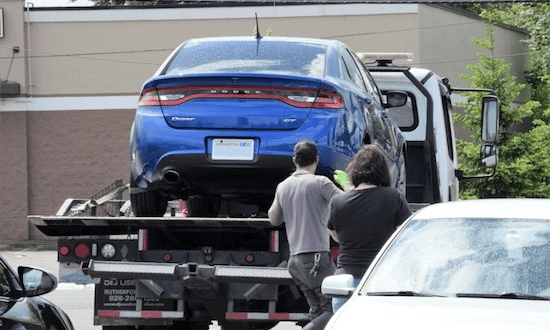
Aminah’s car is towed away on a Tuesday.
It had met a lorry at a junction outside Ipoh. Nobody was hurt. The car was not so lucky.
Her insurer’s panel workshop sends a tow truck. A man hands her a form. She signs it, because that is what one does.
Then nothing.
Weeks pass, then months. Her calls reach a recorded voice. When at last she traces the car, it sits in a salvage yard three hundred kilometres away.
Nobody asked her.
Nobody told her.
Nine months on, a letter arrives.
“The car is a total loss”, it says.
“The sum insured is RM60,000”, and that is all the policy allows.
“Take or leave it”.
Aminah has a question.
Her insurer did not merely insure her car.
It took it.
Her policy says the insurer will pay no more than RM60,000 for loss of or damage to the car.
That clause was written for accidents.
So, put plainly: can an insurer use a clause limiting what it pays for an accident to limit what it owes for its own wrong, done after the accident?
Aminah is an imaginary figure. Her story frames a question of principle; it is not an account of any real dispute, and nothing here comments on any case before the courts.
THE PRICE OF A PROMISE
What a sum insured is
Begin with the policy itself.
A sum insured is a price tag on a promise. The insurer says: “if an accident wrecks your car, I will pay what it was worth, up to this figure.” The premium is calculated on that risk, and on that risk alone.
Some clauses ‘limit liability’ for breaking a promise.
Others simply say what was promised.
A sum insured is the second kind.
It measures the promise.
It says nothing about wrongs the insurer may commit later, with its own hands, or through its agents.
That is the first answer to Aminah, and in a sense the whole of it.
But insurers do not concede so easily, so let us follow the argument further.
THE LAW DEMANDS CLEAR WORDS
A valuable right is not lost by accident
In July this year, the Supreme Court of the United Kingdom restated an old rule with fresh force. Parties are not taken to give up valuable rights unless their contract says so clearly. The more valuable the right, the clearer the words must be.1Orion Shipping and Trading LLC v Great Asia Maritime Ltd (The Lila Lisbon) [2026] UKSC 23; [2026] 4 All ER 641, [76]–[80], per Lord Hamblen and Lord Burrows, with whom the other Justices agreed; drawing on Triple Point Technology Inc v PTT Public Co Ltd [2021] UKSC 29; [2021] AC 1148, [106], and MUR Shipping BV v RTI Ltd [2024] UKSC 18; [2025] AC 675, [44].
The rule is older than that court. In 1980 the House of Lords abolished the doctrine that a “fundamental breach” automatically defeats an exemption clause. Yet Lord Wilberforce kept a guard at the gate: to escape the consequences of one’s own wrongdoing, clear words are necessary.2Photo Production Ltd v Securicor Transport Ltd [1980] AC 827, 846, per Lord Wilberforce; approved in The Lila Lisbon at [76].
In that case the words were there. The guards’ contract began “under no circumstances” and named any act or default by any employee. That is what clear words look like.
Aminah’s right to sue for her car is among the most valuable the common law gives. The tort of conversion protects ownership itself. It is a deliberate act, inconsistent with the owner’s rights, that shuts her out of the use and possession of her goods.3Kuwait Airways Corp v Iraqi Airways Co (Nos 4 and 5) [2002] 2 AC 883 (HL), where the House described the basic features of the tort in these three terms.
Search the policy for words that surrender that right. There are none.
“Sum insured: RM60,000” is a figure, not a ‘waiver.’
The deliberate wrong
English judges have disagreed, politely, over how hard the rule bites when the wrong is deliberate.
In 2009 a deputy judge found a strong presumption against reading an exemption clause to cover a party’s own deliberate breach. One of his reasons should make every insurer pause. Between commercial parties, he said, such clauses exist to share insurable risk. A party’s own deliberate wrongdoing is precisely the risk that cannot be insured.4Internet Broadcasting Corp Ltd v MAR LLC [2009] EWHC 844 (Ch); [2010] 1 All ER (Comm) 112, [33], principles (2), (4) and (6).
In 2021 another judge took the opposite view. There is ‘no presumption’, he held, only ‘ordinary construction’, and a limit is ‘more readily accepted than a total exclusion’.5Mott MacDonald Ltd v Trant Engineering Ltd [2021] EWHC 754 (TCC), [65].
Malaysia has taken the sterner road.
In Minmetals, a shipping carrier handed a cargo of timber to a buyer who did not hold the bills of lading. The carrier then relied on a clause in its contract limiting how much it would have to pay. The Court of Appeal refused to let the carrier rely on that clause. A limit on liability, the court said, ought not to be available to a party in fundamental breach of its clear obligations.6Minmetals South-East Asia Corp Pte Ltd v Nakhoda Logistics Sdn Bhd [2019] 3 CLJ 198 (CA), [72]–[73].
Read literally, that sentence revives the very rule the House of Lords buried in 1980. The better view is narrower. It is the ‘clear-words rule’, spoken with feeling. Either way, an insurer that takes a car it does not own will find no shelter under a figure in its schedule.
A bicycle and a mink stole
This reasoning has deep roots, and they grow from one judge.
In 1959 the Privy Council heard an appeal about bicycles shipped to Singapore and released without the bill of lading. The shipping company’s agents admitted they knew they were doing what they should not. For the Board, Lord Denning held that no court could let so fundamental a breach pass under the cloak of a general exemption clause.7Sze Hai Tong Bank Ltd v Rambler Cycle Co Ltd [1959] MLJ 200; [1959] 1 LNS 95 (PC).
Six years later, in the Court of Appeal, he met a mink stole.
A furrier had sent a customer’s fur to cleaners. An employee of the cleaners stole it. The cleaners said the theft was not their act. Lord Denning disagreed. A bailee for reward who entrusts the care of goods to another, he held, cannot get rid of his responsibility by delegating it. If the servant steals, the master answers.8Morris v CW Martin & Sons Ltd [1966] 1 QB 716 (CA), 728–729.
A bicycle and a fur. One judge, one idea: whoever holds another’s property cannot turn the owner’s trust into his own shield.
Lord Denning wrote law in English that sounded like common sense, and he is still read for it wherever the common law is taught. A young practitioner with a bailment brief next week will find the whole doctrine at pages 728 and 729 of Morris, in fewer words than his own skeleton argument.
WHEN THE WRONG IS DONE BY ANOTHER’S HAND
The insurer answers for its nominee
Aminah’s car was not taken by the insurer’s managing director. A workshop towed it, and a yard parked it.
That does not help the insurer.
Once it took the car into its control, the insurer became a bailee. Morris says it cannot shed that duty by handing the car to someone else. And in Sze Hai Tong, the agents’ deliberate disregard was treated as the act of the company itself.
There is a simpler point still. The insurer will rely on the workshop’s assessment as its own decision that the car is a ‘total loss.’ It cannot then disown the same workshop’s removal of the car as the act of a stranger. One act, one principal.
The workshop cannot borrow the insurer’s limit
What of the workshop or the yard? Can they say that they, too, need pay no more than the RM60,000 in the policy?
They cannot. They are strangers to the policy, and a stranger takes no benefit from a contract to which he is not party. Malaysia has no statute like England’s Contracts (Rights of Third Parties) Act 1999 to change that. Only a carefully drawn clause, extending the protection to agents and contractors by name, could do it.
One caution, in fairness to the insurer. Where an owner consents to her goods being passed on, on terms, she may be bound by those terms.9The Pioneer Container [1994] 2 AC 324 (PC), approving Lord Denning in Morris at 729. So the form Aminah signed matters. But consent to a tow is not consent to nine months of silence, three hundred kilometres away.
WHAT AMINAH MAY RECOVER
Candour requires a word on money.
Conversion values goods as they were when taken. Aminah’s car was already a wreck, so its value in that state may be modest.
The larger loss lies elsewhere. Nine months without a car. The cost of getting about. The money she could not use. These are the natural and direct consequences of being deprived of her goods, and the law of conversion compensates them.10Kuwait Airways, above, where the House allowed the costs flowing from the deprivation, including substitute aircraft and loss of profit.
None of these was priced into her premium. None is touched by the sum insured. She should recover the indemnity under the policy and her losses in tort, though never the same loss twice.
THE MALAYSIAN DIFFERENCE
Why the common law matters more here
The Supreme Court made one further remark that deserves a Malaysian reader’s attention. The insistence on ‘clear words’, it said, may also have protected weaker parties against unfair terms. In England that work is now done by Parliament, through the Unfair Contract Terms Act 1977 and the Consumer Rights Act 2015.11The Lila Lisbon, above, [81].
Malaysia has no Unfair Contract Terms Act. Part IIIA of the Consumer Protection Act 1999, added in 2010, deals with unfair terms. Commentators still debate whether it reaches financial contracts, insurance among them.12See Naemah Amin, “Protecting Consumers against Unfair Contract Terms in Malaysia: The Consumer Protection (Amendment) Act 2010” [2013] 1 MLJ lxxxix; and the later study “Navigating Unfair Contract Terms: Drawing Insights from Australia in Addressing the Legal Conundrum in Malaysia”, which notes continuing doubt over the Act’s application to financial contracts. No Malaysian appellate decision on the point was found.
So in Malaysia, the protective work of the common law has not been handed to anyone. It remains with the courts, fully alive.
It helps to keep three things apart.
The law as it stands
Clear words are needed to take away a valuable right. A stranger to a contract cannot use its limits. A bailee answers for those to whom it entrusts the goods.
A permissible reading
A sum insured defines the promise. It does not limit liability for separate wrongs. Minmetals is best read as the clear-words rule at full strength. An insurer’s own deliberate wrong falls outside any general limit.
Reform
An unfair-terms regime that plainly reaches insurance, or a claims-handling standard with a remedy that bites, is for Parliament or Bank Negara Malaysia, not the courts.
THE PRINCIPLE, STATED
Six propositions, then, for the practitioner and the student.
(1). A sum insured defines what the insurer promised.
(2). It is not a limit on liability for anything else.
(3). A clause limits liability in tort only if its words clearly reach both that tort and that loss.
(4). Where the wrong is the insurer’s own deliberate act, the clearest words of all are needed. A general limit will not do.
(5). An insurer answers for the workshop or yard it chooses. The workshop or yard cannot borrow the insurer’s limit.
(6). Damages for conversion are measured by the law of tort, not by the schedule of the policy.
Shylock, refusing a surgeon at the trial, had a short answer: “’Tis not in the bond.”13William Shakespeare, The Merchant of Venice, Act IV, scene i.
An insurer reaching for its policy to answer for a car it took should expect the same reply.
The sum insured answers for the accident.
For what came after, the insurer must answer itself.
∞§∞
This is for general information only, not legal or technical advice. Obtain independent legal advice where needed.
Thanks to KN Geetha, TP Vaani, JN Lheela and Lydia Jaynthi of GK Legal, and fr0ggy5, @fr0ggy5 of Unsplash for the image.
Claude assisted with drafting; Perplexity Pro fact-checked. The views and any errors are the author’s.
© GK Ganesan Kasinathan. All rights reserved. All site content is protected by copyright. No reproduction or use without prior written permission: gk@gkganesan.com.