
NS MB: Whose confidence counts: the party’s or the member’s? [32/NS]
Thatcher won her party’s vote and lost her job. In Seremban, whose vote really counts?
CAN YOU WIN THE VOTE AND LOSE THE JOB?
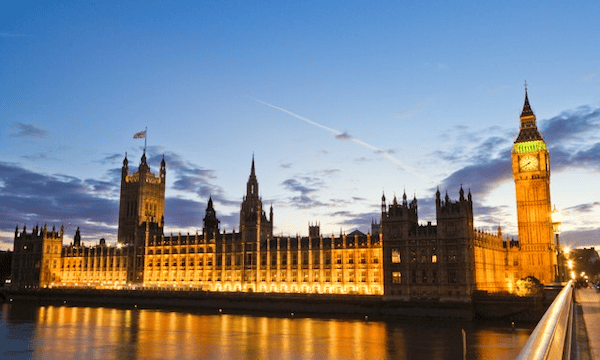
London, Tuesday 20 November 1990. Margaret Thatcher had been Prime Minister for eleven years.
That evening, her party’s Members of Parliament voted on whether she should stay as their leader. She won: 204 votes to Michael Heseltine’s 152.1John Major Archive, “Conservative Leadership Results, November 1990”: https://johnmajorarchive.org.uk/1990/11/27/conservative-leadership-results-november-1990/
It was not enough. The party’s rules asked for more than a win. They asked for a lead of fifteen per cent. Hers fell four votes short.2The Daily Telegraph, “How past Tory leaders were undermined by members of own party” (17 November 2018).
Two days later, she said she would go. Six days after that, she was gone.3Margaret Thatcher Foundation, “MT’s private files for 1990 – (8) the fall”: https://www.margaretthatcher.org/1990CAC8; History.com, “Margaret Thatcher resigns” (22 November 1990).
Here is the strange part. On the very afternoon she announced it, she defended her government in the House of Commons against a motion of no confidence. The government won.4HC Deb 22 November 1990, vol 181, c 420 (the Prime Minister would “lead for the Government against the motion”); “Confidence in Her Majesty’s Government”, HC Deb 22 November 1990, vol 181.
So the House still trusted her government. Her party no longer trusted her enough.
She won by fifty-two, and lost by four.
Remember that number. Numbers in this story matter more than the people who announce them.
ONE LETTER, TWO ACCOUNTS
Seremban, November 2026.
On 16 November, the Secretary-General of Barisan Nasional announced that the Menteri Besar, Ismail Lasim, had resigned. BN had received, he said, a copy of a resignation letter dated that day and addressed to the Ruler.5Free Malaysia Today, “Ismail perlu buktikan sokongan majoriti Adun” (20 November 2026).
On 20 November, Ismail gave a different account. He had neither sent the letter, he said, nor agreed to its being sent.6Bernama, “Ismail Lasim To Remain As Negeri Sembilan MB On Tuanku Muhriz’s Decree” (20 November 2026); The Edge Malaysia (20 November 2026).
The palace said the letter’s authenticity had not been confirmed.7Free Malaysia Today, “Umno berdepan tekanan elak kemelut Ismail bawa DUN bubar” (21 November 2026). It also set a test. He must show that he still has the support of a majority of the members of the Assembly, and he must submit a list of Exco members.8Free Malaysia Today, “Negeri Sembilan palace tells Ismail to prove he commands majority support” (20 November 2026); Bernama (20 November 2026).
That same afternoon, seven assemblymen were reported to have signed letters of undertaking to serve in his Exco. Their swearing-in is expected on Sunday 22 November. Four of the seven, it is reported, belong to the party that announced his resignation.9New Straits Times, “Seven new Negri Sembilan Exco members expected to be appointed” (20 November 2026), citing an unnamed source; Berita Harian (20 November 2026).
There is the puzzle. A party has spoken one way. Some of its own members appear to be walking the other.
Which account of the letter is right? This essay does not say. It takes no view on the letter, on the throne, or on who should lead the state.
It asks a smaller and more useful question. When a party and its own members disagree, whose voice does the Constitution hear?
WHERE IS THE PARTY IN THE CONSTITUTION?
Open the Laws of the Constitution of Negeri Sembilan 1959 at Article XXXVIII. This is the Article that makes a Menteri Besar, and unmakes him.
At the start, the Ruler appoints a member who is likely to command “the confidence of the majority of the members of the Assembly”.10Laws of the Constitution of Negeri Sembilan 1959 (2008 Reprint), Art XXXVIII(2)(a).
At the end, if he “ceases to command the confidence of the majority of the members”, he must tender the Executive Council’s resignation, unless the Assembly is dissolved at his request.11Ibid, Art XXXVIII(4). See 31/NS.
Members, members, members. The Article does not mention a ‘party’ at all.
It is as if the Constitution has never been introduced to one.
That is not an accident. Malaya’s constitutions were written in the Westminster mould, and Westminster law knows members, not parties. Parties live outside the text of the Constitution, in custom and convention.
One of the men who wrote ours knew that better than anyone. Sir Ivor Jennings sat on the Reid Commission, which drafted the Federal Constitution of 1957.12Report of the Federation of Malaya Constitutional Commission 1957 (Colonial No 330), list of members: Lord Reid, Sir Ivor Jennings, Sir William McKell, Mr B Malik and Mr Justice Abdul Hamid. He had already written the classic account of how British cabinets really work.
His Cabinet Government (first published in 1936; third edition, 1959) is still the clearest map of the unwritten rules that this Article quietly takes for granted. It sits in most law libraries, and it is worth an evening.13W Ivor Jennings, Cabinet Government (Cambridge University Press, 1936; 3rd edn, 1959).
THEN WHY DID THATCHER GO?
Because Britain runs on two clocks.
The law’s clock asks one question: can this person command the House? Thatcher could. She had just proved it.
The party’s clock asks another: is this person still our leader? On that clock, her time ran out.
Picture a railway station with two clocks on the wall. Most days they agree, and nobody looks twice. Then one morning they part company, and every passenger must decide which train to catch. In November 1990, Britain’s two clocks parted, and the party’s clock won the morning.
When a party changes its leader, convention does the rest. The old leader resigns as Prime Minister, and the Crown sends for the new one. No statute required Thatcher to leave. Her party moved, and the custom followed.
Australia showed how fast this can be. On 24 June 2010, Kevin Rudd faced a challenge from his own party room. He resigned rather than contest it. Julia Gillard was sworn in as Prime Minister the same day.14Parliamentary Library (Australia), “Rudd redux: victory and defeat” (Research Paper, 2013–14): https://www.aph.gov.au/About_Parliament/Parliamentary_Departments/Parliamentary_Library/pubs/rp/rp1314/RuddRedux
A country changed its leader without an election, without a vote in Parliament, and without a court.
So it looks as if, in both countries, the party decided. But look again.
A PARTY SPEAKS ONLY THROUGH ITS MEMBERS
Who voted Thatcher out? Not “the Conservative Party”. Some three hundred and seventy members of Parliament did, each in a secret ballot.
Who removed Rudd? His caucus: the Labor members of Parliament, one by one.
In each case, the party had no voice of its own. It had only the voices of its members.
But surely, a plain man may ask, the party won those seats? Partly. The ballot paper carries the party’s symbol, and voters choose it. Yet it also carries a person’s name, and it is the person who takes the oath, sits in the chamber and casts the vote.
The party lends the colours. The member wears them, and answers for them.
Malaysian law says the same thing in its own way.
In Sarawak in 1966, the Governor dismissed his Chief Minister on a letter signed by members of the Council Negri. The High Court held that, under that constitution, a loss of confidence had to be shown by a vote in the Council.15Stephen Kalong Ningkan v Tun Abang Haji Openg & Tawi Sli [1966] 2 MLJ 187 (HC, Kuching), holding (1). See 31/NS.
In 2010, the Federal Court took a wider view for Perak. Confidence may be judged outside the chamber, it held, if the evidence is “properly established”.16Dato’ Seri Ir Hj Mohammad Nizar bin Jamaluddin v Dato’ Seri Dr Zambry bin Abdul Kadir [2010] 2 MLJ 285 (FC) at [48] and [56]. The evidence was about members.
And in February 2020, the Yang di-Pertuan Agong interviewed all 222 members of the Dewan Rakyat, one at a time.17Malay Mail, “In unprecedented move, Agong to interview each MP to determine who commands majority” (25 February 2020).
No one interviewed a party. Parties do not attend audiences. They send members.
So, under Article XXXVIII, a party’s announcement is not proof of confidence by itself. It counts only so far as its members make it true, with their names or their votes.
CAN A PARTY PUNISH A MEMBER WHO DISAGREES?
This is where the newer law comes in.
In 2022, Parliament added Article 49A to the Federal Constitution, the “anti-hopping” rule. A member loses his seat if he resigns from his party, or stops being a member of it. But he keeps his seat if he is expelled.18Federal Constitution, Art 49A(1)(a) and (2)(c), inserted by the Constitution (Amendment) (No 3) Act 2022 (Act A1663).
Negeri Sembilan followed. On 17 October 2022, its Assembly unanimously amended the state Constitution, to bring its own rule into line with the federal one.19Bernama, “DUN N.Sembilan lulus Enakmen Anti Lompat Parti, Tanah Adat” (17 October 2022); Penyata Dewan Undangan Negeri Sembilan, 17 October 2022, Kertas Dewan Bil 8/2022.
Notice the shape of it.
The law punishes the jump, not the push.
A member who walks out of his party loses his seat. A member who is thrown out keeps it. The rule was built to stop members leaving their parties.
It was not built to make them obey.
In January 2026, the Federal Court decided a related question. Who decides that a seat has become vacant under Article 49A? The Speaker, said the majority, and his decision is not for the courts. One judge dissented.20Malay Mail, “Federal Court dismisses Bersatu’s bid to challenge Speaker’s decision on four Sabah MPs’ seats” (9 January 2026).
Is the majority right? It follows a long Malaysian habit of keeping courts out of a House’s own business. The dissent sees the cost: a seat may be settled by one officer, with no appeal. Both points have force.
But for our question, the ruling is narrower than it looks.
It is about seats. It says nothing about who governs.
Whether a party’s own rules can treat a member as having left is a further question. It has not been settled here, and this essay leaves it there.
WHAT HAPPENS NEXT?
If the Exco is sworn in on Sunday, the palace’s second condition will be met. The first, the majority, remains.
A letter of undertaking is a promise to serve. It is not a vote of confidence, as 31/NS explained.
The surest test is still the floor of the Assembly. In Negeri Sembilan, the next sitting carries the 2027 budget. That vote will count every member, by name.
THE ANSWER
Whose confidence counts: the party’s or the member’s?
The members’.
The confidence of each member of the Assembly, and no one else’s.
A party may choose its leader.
It may expel a member, and it may make announcements.
But the Constitution measures confidence in members, and a party’s word moves no Menteri Besar until its members carry it, by their signatures or their votes.
In London, in 1990, the number that mattered was four.
In Seremban, it is nineteen: a majority of thirty-six.
No party can supply that number.
Only the members of the Negeri Sembilan Legislative Assembly can.
Edmund Burke told the electors of Bristol, in 1774, what a member owes them: “not his industry only, but his judgment”.21Edmund Burke, Speech to the Electors of Bristol, 3 November 1774.
Two hundred and fifty years later, the Constitution of Negeri Sembilan still agrees with him.
∞§∞
This is for general information only, not legal or technical advice. Obtain independent legal advice where needed.
Thanks to KN Geetha, TP Vaani, JN Lheela and Lydia Jaynthi of GK Legal, and Michael D Beckwith of Unsplash for the image.
Claude assisted with drafting; Perplexity Pro fact-checked. The views and any errors are the author’s.
© GK Ganesan Kasinathan. All rights reserved. All site content is protected by copyright. No reproduction or use without prior written permission: gk@gkganesan.com.