
Must Malaysia’s intellectuals speak up when power bends the law?
A philosopher once excused a murder. A chancellor once called a deer a horse. What does Malaysia ask of its thinkers?
In February 1967, a young linguist at MIT wrote a sentence so plain it looked harmless.
“It is the responsibility of intellectuals to speak the truth and to expose lies.”1Noam Chomsky, “The Responsibility of Intellectuals”, The New York Review of Books, 23 February 1967; reprinted in American Power and the New Mandarins (Pantheon, 1969). https://chomsky.info/19670223/
He conceded that it might look like a truism.2A truism is a statement so obviously true that it seems hardly worth saying. Chomsky’s point was that this one is seldom acted on.
Truisms are like seat belts. Everyone agrees with them, and almost nobody wears them until the crash.
The crash, in 1967, was Vietnam, and clever men were writing its excuses.
The educated, Chomsky said, have time, training and a microphone.
Most people have a mortgage. So the educated owe more.
Does that debt fall on Malaysia’s educated: the professor, the economist, the doctor, the journalist, the scholar of any faith, the lawyer?
And if it does, how does an honest mind tell the truth about the three Rs (race, religion and royalty), and still be home in time for dinner?
In Britain the three Rs are reading, writing and arithmetic. Malaysia’s three Rs are harder to pass.
Most Malaysians think the law on the three Rs is a wall. It is not quite. Parliament built a gate into it, and hardly anyone has noticed.
We shall come to the gate. First, the people who walked past it, and the few who walked through.
AN OLD NAME FOR AN OLD BETRAYAL
In 1927 the French writer Julien Benda gave the problem its name: La Trahison des Clercs, The Treason of the Intellectuals.3Julien Benda, La Trahison des Clercs (Grasset, 1927); English translation by Richard Aldington, The Betrayal of the Intellectuals (1928).
Clerc is French for a clerk, and once for a cleric: the learned man who could read when most could not. Benda used it for everyone who lives by the mind, and so shall I. In this essay a clerc is a term of art: the professor, the judge, the doctor, the journalist, the scholar of any faith.
Their ancient job was to guard truths that belong to everyone.
Benda found they had changed employers.
The new masters were race, nation and party.
They paid better, and asked fewer questions.
The thing is best met, as the ancients met it, in a room, with power watching.
WHAT THE ANCIENTS KNEW
Athens, 404 BC: the man who went home
A junta, the Thirty, ruled the city by murder.
They summoned five citizens to a round hall and ordered them to fetch a man, Leon of Salamis, to be put to death. Plato says the Thirty did this often, to implicate as many people as they could in their crimes.4Plato, Apology 32c–d; see also Xenophon, Hellenica II.3.39.
Four of the five went to Salamis. The fifth, Socrates, went home.
The first lesson: a tyranny does not need everyone’s help. It needs everyone’s fingerprints.
But mark what Socrates did not do. He did not warn Leon. He did not protest in the square. He went home, presumably to supper.
Leon was collected by the other four and put to death on schedule.
Going home kept the philosopher’s hands clean. It did nothing for Leon’s neck. A clean conscience, it turns out, is a very private luxury.
China, 207 BC: the deer that became a horse
Two centuries later, and a continent away, the Qin chancellor Zhao Gao had a subtler test.
He led a deer into court and presented it to the young Second Emperor as a fine horse. The emperor laughed and asked the ministers. Some kept silent. Some, seeing which way the wind blew, said horse. A few said deer.
The Grand Historian, Sima Qian, records that Zhao Gao quietly had the deer men brought before the law.5Sima Qian, Shiji (Records of the Grand Historian), “Basic Annals of Qin Shi Huang”.
China still says zhǐ lù wéi mǎ: to point at a deer and call it a horse.
The second lesson: power does not merely ask clever men to lie. It asks them to lie in public, so that everyone can see who is willing.
Rome, AD 59: the philosopher’s letter
The third lesson is the most uncomfortable, because the clerc was brilliant.
In AD 59 the emperor Nero had his mother, Agrippina, murdered. The Senate needed an explanation.
It received a letter, in elegant Latin, explaining that she had plotted against her son and, when found out, had taken her own life. The author of that letter, Tacitus tells us, was Seneca: Stoic philosopher, celebrated moralist, the emperor’s own tutor. Rome, he says, blamed not Nero, who was past criticism, but Seneca, who had written the confession in the language of a defence.6Tacitus, Annals XIV.10–11.
Six years later, Nero ordered Seneca to die. Elegance, it turns out, is not a pension.
THE MODERN HEIRS
Berlin, 1934
Seneca had heirs. On 30 June 1934, Hitler had his rivals shot without trial.
A month later Carl Schmitt, Germany’s most admired public lawyer, published “The Führer Protects the Law” in the journal he edited.7Carl Schmitt, “Der Führer schützt das Recht”, Deutsche Juristen-Zeitung, 1 August 1934; see Detlev Vagts, “Carl Schmitt’s Ultimate Emergency: The Night of the Long Knives” (2012) 87 The Germanic Review 203.
He wrote after the shooting had stopped, which is when such scholarship is safest. A fool who praises a murder is merely a fool. A professor who does it becomes a precedent.
Karachi, 1958
Seneca’s pen found a subtler hand in a judge’s robe.
In 1958 Pakistan’s constitution was set aside, and the Supreme Court had to say whether that was lawful.
Chief Justice Muhammad Munir reached for the Austrian jurist Hans Kelsen. On Kelsen’s theory, he reasoned, a successful revolution is itself a way of making law.8The State v Dosso PLD 1958 SC 533.
Kelsen had written a description. Munir read it as a recipe.
A theory is a map. Munir treated it as a permit, and later generals found the permit still valid, like a season ticket. In 1977 the same court upheld another takeover, on the ground of “state necessity”.9Begum Nusrat Bhutto v Chief of Army Staff (Supreme Court of Pakistan, 1977).
Necessity, it turned out, was remarkably frequent.
New Delhi, 1976
Socrates had heirs too.
During India’s Emergency, the Supreme Court was asked whether a detained man could go to court to enforce even his right to life. In ADM Jabalpur v Shivkant Shukla, four of five judges said no.10Additional District Magistrate, Jabalpur v Shivkant Shukla AIR 1976 SC 1207.
His liberty was perfectly safe, they reasoned, in the hands of the government that had locked him up.
Justice H R Khanna dissented, alone. He knew precisely what he was doing. In his judgment he borrowed the words of Charles Evans Hughes, Chief Justice of the United States: a dissent is “an appeal to the brooding spirit of the law, to the intelligence of a future day”.11Additional District Magistrate, Jabalpur v Shivkant Shukla AIR 1976 SC 1207 (28 April 1976), Khanna J dissenting, quoting Charles Evans Hughes, The Supreme Court of the United States (Columbia University Press, 1928).
The present day replied promptly. In January 1977 a judge junior to him was made Chief Justice, and Khanna resigned the same day.12“Why an SC judge’s dissent 43 years ago is relevant to Kashmir clampdown today”, ThePrint (2019). Being right, in an Emergency, is a career-limiting move.
His name now travels with Lord Atkin’s, who also stood alone in wartime, in Liversidge v Anderson.13Liversidge v Anderson [1942] AC 206 (HL).
Start with the Khanna dissent: lay it beside the majority, and you will see what courage looks like when it is typed.
The future day took forty-one years to arrive. On 24 August 2017, nine judges in Puttaswamy held privacy to be a fundamental right and declared that ADM Jabalpur “must be and is accordingly overruled”.14Justice KS Puttaswamy (Retd) v Union of India AIR 2017 SC 4161, Chandrachud J (for himself and three others; Nariman and Kaul JJ concurring on the point).
The leading opinion was written by Justice D Y Chandrachud. Among the four judges he overruled was his own father.
Most sons settle such differences at the dinner table. This one did it in the law reports, and nobody thought it rude.
Socrates went home in silence. Khanna went home having put the truth on the record, where it waited for the court to catch up.
That is the difference between a clean conscience and a useful one.
POLAND: THE PARTY, AND THE PARTING
The clercs who won
Anne Applebaum, an American-born historian who became a Polish citizen in 2013, tells the modern story that shows all three lessons at once.15“Applebaum’s Cundill Prize”, Culture.pl (2013). https://culture.pl/en/article/applebaums-cundill-prize; Anne Applebaum, Twilight of Democracy: The Seductive Lure of Authoritarianism (Doubleday, 2020).
For four decades after the war, Poland was ruled by communists who took their orders, and their sense of humour, from Moscow. In 1980 workers, priests and intellectuals formed an unlikely alliance: Solidarity.16“Poland Forms Non-Communist Government”, EBSCO Research Starters. The regime replied with martial law.
Poland’s intellectuals were the clercs Benda had prayed for. They printed underground, went to prison, and came out still printing.
By 1989 the regime was broke and tired. It agreed at a Round Table to a partly free election, which it expected to win. On 4 June 1989, Solidarity swept almost every seat it was allowed to contest.17Institute of National Remembrance (IPN), “The elections of 4 June 1989”. https://ipn.gov.pl/en/news/4206
It may be the only revolution in history won by turnout.
The party
On the last night of 1999, Applebaum and her husband, Radosław Sikorski, then a minister in the centre-right government, gave a housewarming party at a manor house they had rebuilt from ruins.18Rachel Cooke, interview with Anne Applebaum, The Guardian, 13 July 2020. The guests quarrelled about plenty, but not about democracy, the rule of law, or the road west.
The evening, one reviewer reports, ended with celebratory pistol shots.19“Party like it’s 1999”, The Economist (2020). Polish hospitality is nothing if not thorough.
The lie, and the parting
In 2010 a plane carrying President Lech Kaczyński and much of the governing class crashed at Smolensk, in Russia. Ninety-six people died.
His party, Law and Justice, led by his twin brother, spent years hinting it was no accident.
Applebaum calls it the “medium-size lie”: not large enough to need a Gulag, but large enough to sort the faithful from the rest.
It was Zhao Gao’s deer, in a European suit.
In 2015 the Law and Justice party won a majority on under 40 per cent of the vote, turned on the constitutional court, and filled the courts and civil service with loyalists.20Anne Applebaum, “Poland launders a conspiracy theory into official truth”, Gulf News (syndicated), 2016.
Some of the 1999 guests went with it. The godmother of one of Applebaum’s children became an adviser to the party.21Brian Bethune, “The real reason authoritarian populism is on the rise”, Maclean’s (2020).
State television was run by Jacek Kurski, once a brave anti-communist. His brother was deputy editor of the great liberal daily, Gazeta Wyborcza.22Review of Twilight of Democracy, New Eastern Europe, 16 November 2020. One brother defended a free press; the other ran its opposite. Christmas lunch must have been lively.
Applebaum’s explanation is not ideology. It is disappointment, resentment, and the ordinary hunger for a seat at the table. They were educated, travelled, multilingual: clercs.
The lawyers’ share, and the ending she could not write
On 15 July 2021 the Court of Justice of the European Union held that Poland’s new disciplinary system for judges broke European law: the disciplinary chamber lacked independence and could be used to lean on judges.23Commission v Poland (Case C-791/19) EU:C:2021:596, Grand Chamber, 15 July 2021. Somebody drafted those statutes. Somebody defended them, with footnotes.
Yet Poland never became a dictatorship. The elections kept running. On 15 October 2023, on a record turnout of 74.4 per cent, the voters removed the Law and Justice party.24Aleks Szczerbiak, “Why did the opposition win the Polish election?”, UI Brief No 8 (Swedish Institute of International Affairs, 2023). The new government inherited more than 2,000 judges appointed through a process its critics call unconstitutional.25Rob Schmitz, NPR, December 2023.
Governments can be voted out. Clercs are merely voted around.
AND HERE AT HOME?
The menu readers
Malaysia has no Schmitt, and should not apply for one. But it knows Munir’s temptation, and it is not confined to lawyers.
It is the ‘expert’, of whatever discipline, who reads the Constitution, the statistics or the scriptures as a hungry man reads a menu: looking only for what he already wants, then serving it as truth, garnished with titles.
The fault is never the faith, the race, or the Ruler, each honoured in the Constitution itself.
The fault is the method: the answer first, the Article afterwards.
Malaysia has its Socrateses too, in the weaker sense. They refuse to fetch Leon. They also refuse to mention him.
You know them. The professor whose courage begins on the day his pension is secured. The columnist who is fearless in the WhatsApp group and silent in print. The learned man who agrees with every word of your criticism, privately, over teh tarik, and asks you not to quote him.
They have gone home. They would like to be congratulated on it.
The test is plain. Show me the words. Article 4(1) makes the Constitution the supreme law of the Federation.26Federal Constitution, art 4(1).
This week a former judge wrote that the King brings balance to the Constitution. That is a defensible view, and the text supports it: some amendments need the consent of the Conference of Rulers.27Federal Constitution, art 159(5). The test is the same for admirer and critic. Praise built on the text will stand. Praise built on sentiment, like criticism built on sentiment, is not law. It is weather.
A duty older than law
For most intellectuals, the law imposes no duty to speak. It imposes a great many duties to keep quiet.
One profession is the exception. The Legal Profession Act 1976 tells the Malaysian Bar to “uphold the cause of justice”, “uninfluenced by fear or favour”.28Legal Profession Act 1976, s 42(1)(a).
A Bar can be no braver than its members, any more than a choir can sing louder than its singers.
For everyone else, the duty is Socrates’ duty. No statute wrote it, and no statute can repeal it.
A gate in the fence
The Sedition Act 1948 fences speech about any Ruler or Government.29Sedition Act 1948, ss 3(1)(a) and 4(1).
Yet section 3(2) builds a gate: words are not seditious by reason only that they tend to show a Ruler “has been misled or mistaken in any of his measures”, or point out errors in the Government or the Constitution.30Sedition Act 1948, s 3(2)(a) and (b).
Read the whole of section 3(2), and the gate has more doors. It also shelters pointing out errors in legislation and the administration of justice, with a view to remedying them; persuading people to seek change by lawful means; and pointing out, with a view to removing them, things that breed ill will between races.31Sedition Act 1948, s 3(2)(b) and (c).
That last door matters most to the three Rs. The law does not forbid a scholar to name what divides us. It protects him when he names it in order to heal it.
Parliament also fenced the gate, and honesty requires us to say so. The Act forbids questioning the matters protected by Part III and Articles 152, 153 and 181 of the Constitution: citizenship, the national language, the special position of the Malays and the natives of Sabah and Sarawak, and the sovereignty of the Rulers.32Sedition Act 1948, s 3(1)(f), and the exceptions written into s 3(2)(b) and (c).
Yet even that fence has a hinge. The exception does not reach criticism “in relation to the implementation” of those provisions.33Sedition Act 1948, s 3(2)(b). On the plain words, the better view is this: you may not question whether those rights exist, but you may point out, with a view to remedying it, that they are being badly carried out.
The Federal Court has leaned on this very gate. Upholding the Act in 2015, it said the offence was not a total prohibition, because it is subject to the exceptions in section 3(2).34Public Prosecutor v Azmi Sharom [2015] 8 CLJ 921 (FC), [43]–[44].
The gate, in other words, is what keeps the wall lawful. A wall that is lawful only because it has a gate can hardly complain when people use it.
The gate is narrow, and the river below it has crocodiles.
Every Malaysian child knows how Sang Kancil crossed such a river. He did not fight the crocodiles, and he did not swim. He announced a census, lined them up from bank to bank, and hopped across their backs, counting aloud, satu, dua, tiga, until he stood dry on the far side.
The crocodiles, one imagines, are still counting.
Parliament hung that gate. It is meant to be used.
HOW, THEN, SHALL AN HONEST MIND SPEAK?
Aim at the method, not the people
Never a race, a faith or a Ruler. The quarry is the bent argument, and it is in season all year.
Quote the text
Put the words beside the expert’s reading, and say nothing. The gap will speak for you.
Answer the argument, not the man
Courtesy is the sharpest blade in the drawer, and it leaves no fingerprints.
Use the gate, and tell the story from elsewhere
Sang Kancil has shown how. Aesop wrote about foxes and grapes, and no fox ever filed a police report.
THE LAST WORD
One reform is worth asking for: a gate wide and plain enough that an honest scholar need not consult a criminal lawyer before he consults the Constitution.
Shakespeare, in his sixty-sixth sonnet, counted among the world’s sorrows “art made tongue-tied by authority”.
Every age offers its clercs the same menu: write Seneca’s letter; say “horse”; go quietly home; or say “deer”, aloud, and on the record.
The first three are popular. They come with tenure, titles and a seat at the table. The fourth comes with crocodiles.
Silence, after all, is also an opinion. It is simply the one that power likes best.
∞§∞
Acknowledgement
My thanks, first, to Mr UK Menon, retired professor of law, whose reading of the draft gave its Malaysian heart more room; and to my friend Ravanthran Applasamy, whose conversations sharpened this essay.
∞§∞
This is for general information only, not legal or technical advice. Obtain independent legal advice where needed.
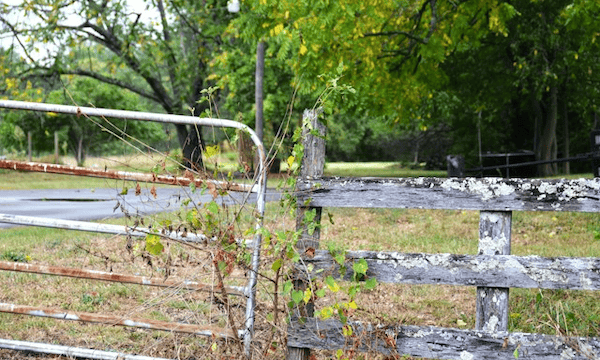
Thanks to KN Geetha, TP Vaani, JN Lheela and Lydia Jaynthi of GK Legal, and Roger Starnes of Unsplash for the image.
Claude assisted with drafting; Perplexity Pro fact-checked. The views and any errors are the author’s.
© GK Ganesan Kasinathan. All rights reserved. All site content is protected by copyright. No reproduction or use without prior written permission: gk@gkganesan.com.