
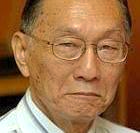
What Happens to a Lion That Won’t Sit Under the Throne? (Justice George Seah)
Bacon said judges are lions under the throne. George Seah read the sentence and crossed out three words.
Lions under the throne
In 1612, Sir Francis Bacon told judges exactly what they were. Lions, he said — “but yet lions under the throne”.1Francis Bacon, ‘Of Judicature’ in The Essayes or Counsels, Civill and Morall (1612; final edn 1625).
The full sentence reads: “Let judges also remember that Solomon’s throne was supported by lions on both sides: let them be lions, but yet lions under the throne; being circumspect that they do not check or oppose any points of sovereignty.”
It was meant as a compliment. Majestic, golden, magnificently maned — and house-trained.
The image has prowled through this series before. Justice Mahadev Shankar recited it, softening the lions to tigers.2Mahadev Shankar, ‘The Old Order Changeth, Yielding Place to New’ (2014) Praxis (Apr–Jun) 21: “We Judges are but his tigers under the throne.” Bacon’s original animals were lions. Tun Salleh Abas put it on the cover of his own book, where the lion beneath the throne has been snared.3Salleh Abas with K Das, Kebebasan Kehakiman: Singa di Bawah Takhta Dijerat — the subtitle translates as “the snared lion under the throne”.
Seah appears to have read Bacon’s sentence only as far as the comma
He was a lion, all right. But he was never a lion under the throne. He was a fierce lion under the Constitution and the Rule of Law — and the difference between those two sentences is the whole of his life, and most of this essay.
One word of care before we go on
Bacon’s “throne” is a metaphor for state power generally — the executive, the government of the day. It has nothing to do with our Rulers, who in 1988 were not the authors of anything that follows.
The boy from Miri
He was born George Edward Seah Kim Seng, in Miri, Sarawak, on 10 December 1931.4‘In Memoriam: Justice Datuk Seri George Seah’, Malaysian Bar, 22 April 2013 https://www.malaysianbar.org.my/article/news/in-memoriam/in-memoriam/in-memoriam-justice-datuk-seri-george-seah.
Miri was then an oil town at the far edge of empire. The schooling was mission-issue: St Columba in Miri, St Thomas in Kuching, St Francis in Malacca.5Ibid. The Old Testament, as we shall see, took.
He was called to the English Bar in 1955. On 9 May 1969 he was appointed a judge of the High Court of Borneo — the first member of the Sarawak Bar ever raised to the Bench.6Ibid; ‘Ex-Supreme Court judge dies at 81: Seah was first Sarawak Bar member to be elevated to Bench’ New Straits Times (April 2013), archived at the Judiciary’s digital repository https://eprints.kehakiman.gov.my/42469/.
He was thirty-seven.
He once joked to the Attorney-General, Tan Sri Abdul Kadir, that having started so young, he would qualify for his full judicial pension by 1984 — and would thereafter, theoretically, be working for half pay.7George Seah, ‘Colonels Judging the Generals?’ (2004) 24(8) Aliran Monthly https://m.aliran.com/archives/monthly/2004b/8k.html.
“George, that is true,” the Attorney-General replied, “but we need experienced judges in the higher judiciary.”
Nineteen years later, the Government would relieve him of the salary and the pension in a single motion. The Treasury view of judicial longevity has never been sentimental.
A man who dissented early, to get the practice in
In 1982 he sat on the Federal Court appeal in Merdeka University Berhad v Government of Malaysia.8Merdeka University Bhd v Government of Malaysia [1982] 2 MLJ 243 (FC), decided 6 July 1982: Suffian LP, Raja Azlan Shah CJ (Malaya), Salleh Abas and Abdul Hamid FJJ, Seah J dissenting.
Four of the most senior judges in the country — the Lord President among them — dismissed the appeal.
Seah dissented. Alone.
He would do it again
In Government of Malaysia v Lim Kit Siang he dissented with Tan Sri Eusoffe Abdoolcader,9Government of Malaysia v Lim Kit Siang; United Engineers (M) Bhd v Lim Kit Siang [1988] 2 MLJ 12 (SC). insisting that “the rule of locus standi must be developed to meet the changing times”.10Quoted in ‘In Memoriam: Justice Datuk Seri George Seah’ (n 4).
Abdoolcader deserves his moment here.
He was the most formidably learned judge of his generation, a man the profession mentioned in the same breath as the great masters of the common law, and this series has already paid him a full essay. He and Seah made a natural pair in dissent: one supplied the thunder, the other the granite.
And in Inchcape Malaysia Holdings Bhd v R B Gray, Seah held that an ouster clause — a statutory bolt on the courtroom door — cannot protect a tribunal that has got the law wrong.11Inchcape Malaysia Holdings Bhd v RB Gray & Anor [1985] 2 MLJ 297 (SC).
Notice the pattern
Standing for the citizen. Review despite the bolt on the door. A judge quietly enlarging the number of people the law would listen to.
Lions under the throne do not do this. They are circumspect, Bacon said, “that they do not check or oppose any points of sovereignty”.
Seah checked. Seah opposed. Seah got the practice in early.
1988: the year they moved the furniture
The story of the 1988 judicial crisis has been told in this series twice already — once through Salleh Abas, once through Abdoolcader — and this essay will not tell it a third time.12For the full narrative, see ‘What Happened During the Malaysian Judicial Crisis in 1988?’ https://www.gkg.legal/what-happened-during-the-malaysias-1988-judicial-crisis/.
What it will tell is the part nobody retells: how they tried to get George Seah out of town first.
In late June 1988, with the Lord President suspended and his challenge to the Tribunal heading for the courts, Seah found a letter on his chambers table. It was from the acting Lord President. Would he be free to sit in Kota Bharu?13George Seah, ‘Crisis in the Judiciary: The Hidden Story’ (2004) 24(4) Aliran Monthly https://m.aliran.com/archives/monthly/2004a/4m.html; republished by the Malaysian Bar, 13 May 2005 https://www.malaysianbar.org.my/article/news/legal-and-general-news/legal-news/crisis-in-the-judiciary.
He had just returned from sitting in Kuching and Kota Kinabalu. Three other Supreme Court judges were free in Kuala Lumpur. Yet the invitation came to him.
Seah later worked out why
With the seniors suspended or sitting on the Tribunal, he would shortly be the most senior judge left in the capital — and the senior judge in residence was, by practice, the one who heard urgent applications for interim orders under section 44 of the Courts of Judicature Act 1964.14George Seah, ‘Something’s Brewing in KL’ (2004) 24(5) Aliran Monthly https://m.aliran.com/archives/monthly/2004a/5h.html.
He was sent to Kota Bharu the way an inconvenient relative is sent upstairs to fetch something.
Being a conscientious judge, he went.
Then the plot tripped over its own shoelaces
Tan Sri Wan Suleiman, who was to preside there, telephoned to say he was staying in Kuala Lumpur — come back. The acting Lord President, through another judge, directed Seah to stay put and preside instead.
A request from a senior colleague. An order from the acting head of the judiciary. Most careers are built on knowing which of those to obey.
Seah flew home the same evening
His reasons, set out years later with the calm of a man laying cutlery, were these. He had consented to sit in Kota Bharu as a member of a panel. He had never consented to preside. And the acting Lord President had no power to direct him — because a judge of the Supreme Court is not a servant, and “the laws of master and servant do not apply to judges”.15George Seah, ‘The Suspension of the Supreme Court’ (2004) 24(7) Aliran Monthly https://m.aliran.com/archives/monthly/2004b/7i.html.
The Lord President, he wrote, is merely the first among equals
He may ask.
He may not command.
Hold that thought, because the Government did not.
The Saturday sitting
On Saturday, 2 July 1988, the High Court refused Salleh Abas even a two-day stay against the Tribunal that was about to report on him.16George Seah, ‘Drama in the Capital’ (2004) 24(6) Aliran Monthly https://m.aliran.com/archives/monthly/2004a/6f.html.
Counsel went straight to Wan Suleiman, the senior judge in residence. Wan Suleiman convened a special sitting of the Supreme Court that same morning: himself, Seah, Mohamed Azmi, Abdoolcader, Wan Hamzah. Five judges. Unanimous. The Tribunal was restrained from delivering its report until its own legality had been tested.17Ibid.
A sixth judge had been invited
He declined, explaining, “We would be staging a revolution.”18Ibid. Abdoolcader’s verdict on that remark — “preposterous” — is recorded in Seah, ‘Colonels Judging the Generals?’ (n 6).
Five judges granting an interim order to allow a suit to be heard: in any other decade, a Tuesday. In 1988, a revolution.
The order was sealed. The solicitors drove to Parliament House to serve it on the Tribunal — and found the gate locked against them. Wan Suleiman conferred with Abdoolcader, then telephoned the Deputy Inspector-General of Police, who instructed the constable to open the gate.19Seah, ‘Drama in the Capital’ (n 14).
It is the most Malaysian sentence in our constitutional history: the rule of law, that morning, hung on a padlock.
Within days, all five judges were suspended
Seah and Wan Suleiman were eventually removed. The other three were, in time, restored — which tells you the suspensions were divisible from the start.
Consider what Seah was actually charged with.
Not corruption.
Not incompetence.
The charge, he recorded, was that he preferred the request of the presiding judge to the direction of the acting Lord President — that he flew home when told to stay.20Seah, ‘The Suspension of the Supreme Court’ (n 12).
Read that again. He was removed from the highest court in the land for holding that a judge takes no orders without his consent.
They sacked him for knowing the difference between would you and you shall.
Bacon’s lion sits under the throne because it has been taught where to sit. Seah’s entire offence was the submission — maintained politely, in writing, to the end of his life — that no judge can be taught where to sit. Not by a Prime Minister, who cannot so much as summon the Lord President to his office. Not even by the Lord President himself, who is first among equals and nothing more.21Seah, ‘Something’s Brewing in KL’ (n 10).
He did not roar this. He footnoted it.
Colonels and generals
The tribunal that recommended removing Seah and Wan Suleiman was, in its majority, composed of three High Court judges: Datuk Edgar Joseph Jr, Dato’ Mohd Eusoff Chin and Dato’ Lamin.22Seah, ‘Colonels Judging the Generals?’ (n 6), Seah’s own account.
Seah did the arithmetic without raising his voice
Of the twenty-six High Court judges in Malaya that year, they ranked thirteenth, fourteenth and twenty-fifth. At least ten judges senior to them were passed over. “To use military jargon,” he wrote, “young colonels were appointed to sit in judgment against generals.”23Ibid.
The first essay in this series praised the judging of Edgar Joseph Jr, and takes back nothing. Both facts stand in the record, side by side, and the reader may hold them both.
That is what 1988 did to a whole profession: it did not merely remove judges.
It left sums like this lying about for the rest of us to step on.
Seah noted one more figure, without comment
The judges who sat on the substituted panels and tribunals of 1988 were, in the years that followed, elevated — some to the very court from which he had been removed.24Ibid.
He offered no adjective. By then he had learnt that arithmetic, laid down quietly, outlasts adjectives.
Sixteen years of silence, then five essays
His wages stopped. His pension — the one he had joked about with the Attorney-General — was cancelled.25GK Ganesan, ‘Would You Resign on a Point of Principle?’ (24 July 2018) https://www.gkg.legal/will-you-resign-on-a-point-of-principle/.
Then he did the most unfashionable thing available to a wronged man
Nothing. No press conferences.
No memoir hawked to publishers.
For sixteen years, silence.
And then, in 2004, at the age of seventy-two, he laid out his account in five short instalments in Aliran Monthly — “Crisis in the Judiciary”.26George Seah, ‘Crisis in the Judiciary’, Aliran Monthly vol 24 (2004), issues 4–8 (nn 9, 10, 12, 14, 6); republished by the Malaysian Bar, 13 May 2005 (n 9).
It is the strangest genre of document I know: a judgment delivered by the removed, upon the removers. Numbered points. Statutory provisions set out in full. The other side’s case stated fairly before it is dismantled. He tried his own cause, sitting alone, and he tried it better than the tribunal ever tried him.
He ended it with Socrates, who also declined to obey an order he believed wrong, and also paid for it.27Seah, ‘Colonels Judging the Generals?’ (n 6).
And in the fourth instalment, under a heading of his own choosing, he wrote the sentence the profession now remembers him by: “history will be the judge whether or not I was guilty of misbehaviour as charged for faithfully discharging the functions of a Judge of the Supreme Court of Malaysia”.28Seah, ‘The Suspension of the Supreme Court’ (n 12). The heading reads: “History will be my judge”.
History, it turned out, was quicker than usual
By 1990 Professor H P Lee of Monash had reviewed the charges and concluded that, far from abdicating his responsibility, “Datuk George Seah should have been commended for acting in a most proper and responsible manner”.29H P Lee, ‘A Fragile Bastion Under Siege — the 1988 Convulsion in the Malaysian Judiciary’ (1990) 17 Melbourne University Law Review 386.
The decimal place
I must now declare an interest. I knew him.
By the time I appeared before him, in 1996, the Bench had long been taken from him, and he sat as an arbitrator. He was sixty-four. I would have sworn he was eighty. Some men are aged by their years. He had been aged by his country.30Personal recollection of the author, who appeared as claimants’ counsel before Datuk Seri George Seah, sitting as arbitrator, in 1996; first recorded in Ganesan (n 21).
My seven clients were insurance agents, earning less than RM5,000 a month. The arbitration ground through more than fifteen sittings. In those days arbitrators charged about RM5,000 a sitting, and I wrote to him, anxious, asking that he bill us in instalments my clients could survive.
No reply. More sittings. No bill.
Then one morning, before we began, he slid a sheet of paper across the table to each counsel. An invoice. I stared at mine the way one stares at a winning lottery ticket — certain there had been a mistake, hoping there hadn’t.
He called my name. I looked up.
“Do you think I have gotten my decimal place wrong?”
“Yes, Sir. We have had more than fifteen sittings. Yet this bill is for RM3,000.”
“It is correct,” he said.
And as we rose that day: “This fee goes to the Church Cloister. I don’t take any of it.”
The man whose pension the State had cancelled was working for nothing, and giving the nothing away.
At the end of the arbitration he took both counsel for a cup of teh-O. Emboldened, I asked him the question I had been carrying for years.
If he had another chance at 1988, would he do anything differently?
He regarded his mug for a while. Then, in a quiet, steely voice:
“No. I would have acted with greater certainty. I would have acted earlier. And I would have been far stricter.”
There is your lion. Offered repentance, he chose escalation.
As he left, he handed me a handwritten note, citing a verse of the Old Testament on judges. I have kept the memory better than the citation, and I will not invent what I cannot verify.
But the verse that says what his life said is Deuteronomy 1:17:
“Ye shall not be afraid of the face of man; for the judgment is God’s.”31Deuteronomy 1:16–17 (KJV). The author no longer recalls the precise verse cited in the note; personal recollection (n 26).
A judge answering to that authority has no room left under anybody’s throne.
Twenty years too late
On 17 April 2008, Prime Minister Abdullah Ahmad Badawi stood before the surviving judges of 1988 and called them “towering judicial personalities”. The Government, he said, would make ex gratia payments in recognition of “the pain and loss they have endured” — an acknowledgement he himself admitted was “20 years too late”.32Speech of YAB Dato’ Seri Abdullah Ahmad Badawi, 17 April 2008, quoted in ‘In Memoriam: Justice Datuk Seri George Seah’ (n 4).
For Wan Suleiman and Abdoolcader, it was later than that. They were dead.
Seah was alive, and characteristically said little. He had told us all in 2004 who his judge was, and it was not the Government.
He died on Saturday, 20 April 2013, at eighty-one, at home in Kuala Lumpur, watching television with his family33‘Ex-Supreme Court judge George Seah dies at 81’ The Star (20 April 2013) https://www.thestar.com.my/News/Nation/2013/04/20/ExSupreme-Court-judge-George-Seah-dies-at-81/; ‘Former Supreme Court Judge passes away’ Borneo Post (24 April 2013) https://www.theborneopost.com/2013/04/24/former-supreme-court-judge-passes-way/. — the least dramatic exit available to a man to whom so much drama had been done.
Where the lion actually sat
A throne, when you think about it, is furniture. It can be moved, reupholstered, quarrelled over, carried out of the room — and whoever sits beside it sits at the pleasure of whoever sits upon it. A constitution is not furniture. It is the floor. You may carpet it, polish it, or neglect it, but every stick of furniture in the room stands on it — the throne included.
Bacon’s lion guards furniture. Seah’s lion stood on the floor. It declined to be rearranged with the chairs. It was more concerned to give its lifeblood to guard the Constitution.
That is why he could dissent alone in 1982, refuse an acting Lord President in 1988, and bill seven working men RM3,000 for fifteen sittings in 1996. It was all one act, performed three ways: the judgment is God’s, the Constitution’s, the law’s — anyone’s but the management’s.
Practitioners and law students should not take my word for this. His own account of 1988 — five short instalments, written at seventy-two, without one raised word — still sits in the Aliran archive and on the Malaysian Bar’s website, and it will teach you more about judicial character in an hour than a shelf of jurisprudence.34See n 24 for the full series; the Malaysian Bar’s republication (n 9) collects it under one title.
Asked whether he would take any of it back, he answered in eleven words, and the last six are the only summary this essay needs:
“I would have been far stricter.”
∞§∞
This article is written for a general readership and does not constitute technical or legal advice. Readers with legal questions are encouraged to seek independent legal advice.
The author thanks KN Geetha, TP Vaani, JN Lheela, and Lydia Jaynthi at GK Legal. The image is from public sources.
Claude, Anthropic’s AI, smoothed the drafting; Perplexity Pro checked the facts. The argument, the views, and the errors remain the author’s.
@Copyright reserved.
All content on this site, including but not limited to text, compilation, graphics, documents, and layouts, is the intellectual property of GK Ganesan Kasinathan and is protected by local and international copyright laws. Any use shall be invalid unless written permission is obtained by writing to gk@gkganesan.com.