
When does a Menteri Besar’s resignation take effect? [30/NS]
Does a Menteri Besar’s resignation take effect when the MB signs his letter, or when the Ruler accepts it?
A LETTER AT MIDNIGHT
At sixteen minutes past midnight on 17 November, a man arrived at Istana Hinggap in Seremban with a letter.
He said he was from a firm of lawyers. The letter, it was said, was the resignation of the Menteri Besar, Datuk Ismail Lasim.1Statement of the Pengelola Bijaya Diraja, Datuk Azizi Mohamad Ali, 17 November 2026, as reported by TVS, “Peletakan jawatan MB Negeri Sembilan perlu perkenan Tuanku Muhriz – Istana”, 17 November 2026, https://www.tvsarawak.my/2026/11/17/peletakan-jawatan-mb-negeri-sembilan-perlu-perkenan-tuanku-muhriz-istana/
Social media had heard the news two hours earlier.2Ibid. The palace statement took note of a social-media statement by the Barisan Nasional Secretary-General, Datuk Seri Dr Zambry Abd Kadir, at about 10 pm on 16 November.
By morning the palace had spoken. A Menteri Besar’s resignation, it said, must be submitted to the Yang di-Pertuan Besar, and takes effect only with His Highness’s consent. The letter’s authenticity had not yet been confirmed.3Utusan Malaysia, “Peletakan jawatan Ismail hanya berkuatkuasa dengan perkenan Yang di-Pertuan Besar”, 17 November 2026, https://www.utusan.com.my/nasional/2026/11/peletakan-jawatan-ismail-hanya-berkuatkuasa-dengan-perkenan-yang-di-pertuan-besar/; Kosmo, “Surat ‘resign’ 80 minit selepas istana perkenan Ismail menghadap”, 17 November 2026, https://www.kosmo.com.my/2026/11/17/surat-resign-80-minit-selepas-istana-perkenan-ismail-menghadap/
Most of us think of resignation as the simplest act in working life. You write the letter. You hand it in. You clear your desk.
So is the palace right? Does a Menteri Besar stop being one when his letter arrives, or only when the Ruler says yes?
The answer is older than Malaysia, and it is not the one most office workers would expect.
WHAT THE CONSTITUTION SAYS
Begin, as always, with the words.
Article XXXVIII(5) of the Laws of the Constitution of Negeri Sembilan ends with a short phrase: “any member of the Council may at any time resign his office.”4Laws of the Constitution of Negeri Sembilan 1959, Art XXXVIII(5) (2008 Reprint). The clause follows the federal model in the Eighth Schedule, Part I, s 2, Federal Constitution.
Article XXXVIII(4) adds that a Menteri Besar who loses the Assembly’s confidence must “tender” the Council’s resignation.5Ibid., Art XXXVIII(4).
That is all. There is no word on how a resignation is made, to whom it goes, or when it bites.
Other Malaysian constitutions are more talkative. A member of Parliament resigns “by writing under his hand addressed” to the Speaker.6Federal Constitution, Art 51. In Sabah, a member of the Cabinet resigns “by writing under his hand addressed to the Yang di-Pertua Negeri”.7Constitution of the State of Sabah, Art 7(2), as set out in Tan Sri Musa Hj Aman v Tun Datuk Seri Panglima Hj Juhar Hj Mahiruddin [2019] 10 MLJ 329 (HC).
Negeri Sembilan prescribes neither form nor address. Where a constitution falls silent, the common law speaks.
THE CASE FOR THE LETTER
The case for the letter deserves to be put at its strongest.
“At any time” sounds like a right, and a right is not a request. The Supreme Court of India read a similar grant this way. A judge who resigns “by writing under his hand” does a one-sided act. It needs no acceptance by the President.8Union of India v Gopal Chandra Misra (1978) 2 SCC 301; [1978] 3 SCR 12, 20 (SC, Constitution Bench, Sarkaria J).
Our own Federal Court once said that a member of Parliament holds his seat “at his own pleasure”.9Datuk Ong Kee Hui v Sinyium anak Mutit [1983] 1 MLJ 36 (FC, Salleh Abas FJ), on Art 51. And in ordinary employment, as every human resources manager knows, a resignation takes effect without anyone’s blessing.
On this view, the letter is the act. Everything after it is paperwork.
THE CASE FOR THE RULER’S CONSENT
The Indian court, however, did not stop there. It added a sentence which turns the whole inquiry. Resignation may be one-sided or two-sided, it said, “depending on the nature of the office and the conditions governing it.”10Ibid., [1978] 3 SCR 12, 21.
So the question is not what resignation means in general. It is what this office is.
The common law answered that for public offices long ago. In 1832 the King’s Bench described the officer who “cannot divest himself of an office by his own mere act”. He needs the authority that appointed him to accept the surrender.11R v Patteson (1832) 4 B & Ad 9; [1824–34] All ER Rep 239, 242 (KB). The Privy Council said much the same of the Jurats of Jersey: their resignations “should be accepted by the Crown.”12Re Jersey Jurats (1866) LR 1 PC 94.
The rule travelled well. Australia’s High Court held that an office held of the Crown is not vacated without the Crown’s consent. The officer there had “tendered” his resignation, and the word did a good deal of work.13Marks v Commonwealth (1964) 111 CLR 549 (HCA), especially Windeyer J; and see the note in (1965) 5 Melbourne University Law Review 97. Sri Lanka’s Supreme Court put it in one line. Unless a contrary intention appears, a resignation from an office under the Crown is ineffective until accepted.14Abeywickrema v Pathirana [1987] LRC (Const) 999 (SC Sri Lanka).
Westminster carried the idea to its logical extreme. Since 1624 the House of Commons has held that a member “cannot relinquish” his seat at all.15Erskine May, Parliamentary Practice, on vacation of seats; the resolution of 2 March 1624 (new style). See also the Hansard Society, “Why can MPs not simply resign their seats?”, 12 May 2026, https://www.hansardsociety.org.uk/publications/guides/why-can-mps-not-simply-resign-their-seats-why-must-they-apply-for-the-chiltern-hundreds A departing MP must still be appointed Steward of the Chiltern Hundreds, a Crown office with no duties, and leave by that side door.
Malaysia abolished that rule for its MPs, expressly, in Article 51. That is why Ong Kee Hui reads as it does. Nothing abolished it for a Menteri Besar.
WHY THIS OFFICE IS TWO-SIDED
Apply the Indian test to the Menteri Besar, and every answer points one way.
A judge’s independence needs an exit that he alone controls. A Menteri Besar is different. He is the Ruler’s appointee, chosen in His Highness’s judgment as the member likely to command the Assembly’s confidence.16Laws of the Constitution of Negeri Sembilan 1959, Art XXXVIII(2)(a); and see Art XL(2)(a). When he goes, the Ruler must choose again.
That choice cannot begin until the vacancy is certain. And the State cannot be left without a head of government, even for a minute.
Westminster treats this as a duty. In 2010, a Prime Minister who wished to go was told that he must stay in post until the Queen was able to send for someone else.17Anne Twomey, “Changing the Leader: The Constitutional Conventions Concerning the Resignation of Prime Ministers and Premiers” (2011) 39 Federal Law Review 330, 332. In Australia, a Prime Minister’s resignation usually takes effect only when a successor is commissioned.18Ibid.
Malaysian practice wears the same face. In 2020 the Sultan of Perak accepted his Menteri Besar’s resignation, and it took effect that day.19The Star, “Perak Sultan accepts Faizal’s resignation as MB”, 10 March 2020, https://www.thestar.com.my/news/nation/2020/03/10/perak-sultan-accepts-faizal039s-resignation-as-mb In December 2025 the Menteri Besar of Perlis said his resignation would take effect “upon receiving the consent” of the Raja.20Bernama, 25 December 2025, https://bernama.com/en/news.php?id=2506163 A Sabah court has called the conventions around a Chief Minister’s resignation “well-established”.21Datuk (Datu) Amir Kahar Tun Datu Mustapha v Tun Mohd Said Keruak [1995] 1 MLJ 169 (HC).
The palace’s statement, then, is not a novelty. It is the common law, wearing Negeri Sembilan dress.
WHAT CONSENT IS FOR
One question remains. If consent is needed, what is it for?
India shows the answer. In 1974 its Parliament amended the Constitution: a legislator’s resignation would take effect only when the Speaker accepted it.22Constitution of India, Art 190(3)(b), as amended by the Constitution (Thirty-third Amendment) Act 1974. The Supreme Court later explained that the Speaker’s task is to satisfy himself of two things. Is the resignation “voluntary”? Is it “genuine”?23Shrimanth Balasaheb Patil v Speaker, Karnataka Legislative Assembly (2020) 2 SCC 595 (SC).
Genuineness is precisely what the palace has said it is checking.
The common law adds a softer truth. Acceptance completes a resignation. It does not chain a willing leaver to his desk for ever. Windeyer J allowed that an officer may, in a proper case, be entitled to have his resignation accepted.24Marks v Commonwealth (1964) 111 CLR 549 (HCA), per Windeyer J, as summarised in (1965) 5 Melbourne University Law Review 97.
Receipt, verification and an orderly handover: that is the work consent does.
SO, WHEN DOES IT TAKE EFFECT?
When the Ruler accepts it.
The words “at any time” give a Menteri Besar the right to go. They do not let him go by courier. A Menteri Besar is the Ruler’s appointee, and the common law has long required the appointing hand to receive what it gave.
Until then he remains in office. The State is never without a government, even between midnight and breakfast.
No Malaysian court has yet decided the point for a Menteri Besar. When one does, it will find the common law has been waiting for it, patient as a Steward of the Chiltern Hundreds.
What a letter says is one question. Whose hand wrote it is another. The law, wisely, asks the second first.
If you know of a Malaysian State Constitution that says, in terms, when a Menteri Besar’s resignation takes effect, write to us at gkg.legal.
∞§∞
This is for general information only, not legal or technical advice. Obtain independent legal advice where needed.
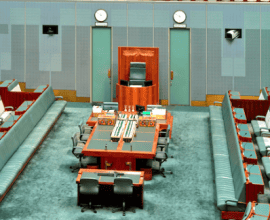
Thanks to KN Geetha, TP Vaani, JN Lheela and Lydia Jaynthi of GK Legal, and Alvaro Serrano of Unsplash for the image.
Claude assisted with drafting; Perplexity Pro fact-checked. The views and any errors are the author’s.
© GK Ganesan Kasinathan. All rights reserved. All site content is protected by copyright. No reproduction or use without prior written permission: gk@gkganesan.com.